
De Dion-Bouton: French automobile and engine pioneer
French motor company founded by Albert de Dion, Georges Bouton and Charles Trépardoux in the early 1880s. Known for steam cars, early petrol engines and the influential De Dion axle.

Overview
De Dion-Bouton was a pioneering French motor company established in the early 1880s by Count Albert de Dion, Georges Bouton and Charles Trépardoux. It began with experimental vehicles driven by steam and later produced compact, high-speed engines that helped shape early automobile design. The firm is remembered both for complete cars and for engines and components supplied to many other makers.
Image gallery
10 Images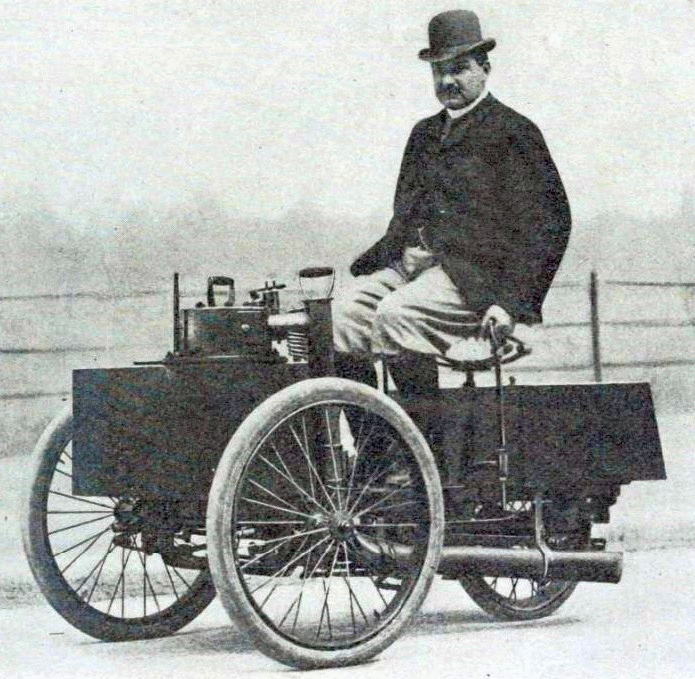


Origins and early technology
The founders started by building steam-powered road vehicles, a common approach in the very early days of horseless transport. These steam designs led naturally into experiments with other propulsion methods. De Dion-Bouton later introduced lightweight, high-revving internal combustion engines that were notable for their smoothness and reliability and that became widely adopted by small manufacturers.
Innovations and characteristics
- Propulsion: initial models used steam; the company later produced petrol engines and complete cars using the emerging internal combustion technology (internal combustion).
- Chassis and driveline: De Dion-Bouton promoted a distinctive rear axle layout known today as the De Dion axle, which separated wheel location from the differential to improve handling.
- Power units: its compact single- and twin-cylinder engines were prized for high rotational speed and were supplied to other makers.
Development and notable examples
The company moved from steam into petrol as the latter became practical and competitive. Among its historic vehicles is the four-wheeled De Dion-Bouton et Trépardoux "La Marquise," a steam-powered car built in the 1880s and often cited as one of the oldest running automobiles; this example was reported sold at auction in the 21st century and is frequently mentioned in accounts of early motoring. The firm also manufactured small, reliable petrol cars that became popular in the late 19th and early 20th centuries.
Uses, influence and legacy
Beyond complete cars, De Dion-Bouton became an important supplier of engines and components to the growing industry, helping standardize aspects of vehicle design. Their axle concept and compact engines influenced manufacturing practices and enabled many smaller companies to produce automobiles. The brand's early work bridged experimental steam vehicles and practical petrol-driven motorcars, marking a key transitional period in automotive history.
Further information
For broader context on the manufacturer's national background see French motor car history, for steam-era technology see steam propulsion, and for technical details on later engines consult materials about early internal combustion developments.
Related articles
Author
AlegsaOnline.com De Dion-Bouton: French automobile and engine pioneer Leandro Alegsa
URL: https://en.alegsaonline.com/art/117597
Sources
- brighton-early.com : "Brighton-Early : De Dion Bouton"
- money.cnn.com : "World's oldest running car to be auctioned"