
Bingo (Housie): rules, history, and regional variants
Bingo (also called housie) is a number-based game of chance played on printed or electronic cards. This article covers gameplay, common formats, history, social uses, and notable regional differences.
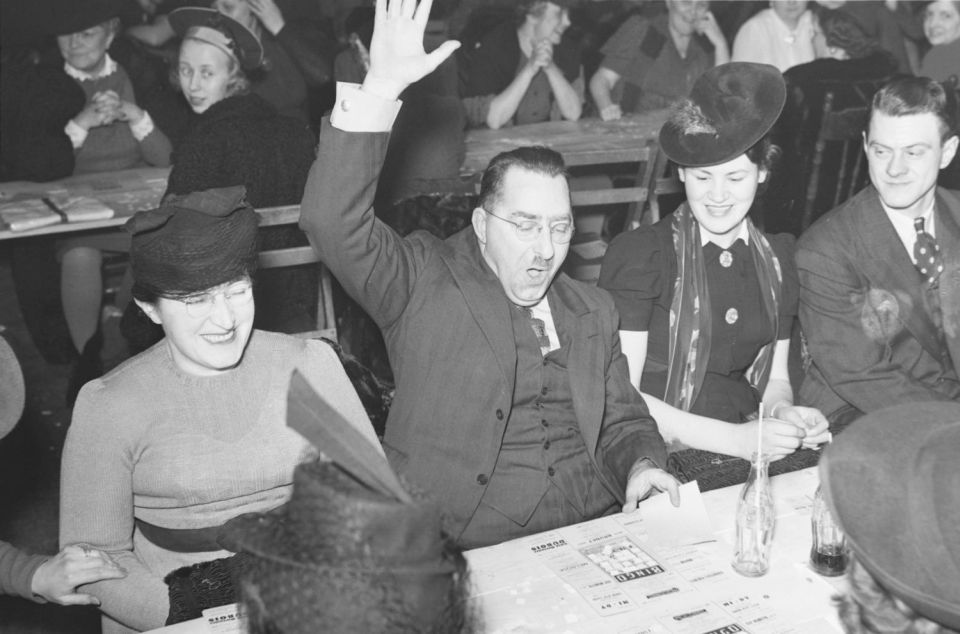
Bingo, often called housie in some countries, is a game in which players mark numbers on a card as numbers are drawn at random by a caller. The basic aim is to complete a pre‑defined pattern—commonly a line or the whole card—before other players. When a player completes the required pattern they signal the win audibly (for example by calling out "Bingo!" or "House!") so the result can be verified. Games are staged in community halls, churches, casinos and increasingly online; they range from informal social sessions to regulated commercial events.
Image gallery
8 Images


Equipment and common formats
The essential items for a traditional game are a set of cards, a method of drawing numbers, and markers. Cards can be printed on paper, cardboard, or presented electronically. Two internationally familiar formats are the 75‑ball and 90‑ball cards:
- 75‑ball (common in the United States): a 5×5 grid with a free central square; winning patterns include horizontal, vertical, diagonal lines, or predefined shapes.
- 90‑ball (common in the United Kingdom and parts of Europe): three rows of nine columns, with 15 numbers per card; typical prizes are awarded for completing one line, two lines and the full card (full house).
Other variants exist, such as 80‑ball pattern bingo used in some casinos and 30‑ball "speed" bingo for short games. Marking tools include daubers (ink markers) for paper cards and automated daubing for electronic play. The caller announces random draws, historically using numbered balls but now sometimes using computerized random number generators.
History and development
The origins of bingo trace back to number‑drawing lottery games in Italy during the 16th century; the Italian public lottery Il Gioco del Lotto d'Italia is an early forerunner and a direct ancestor of later social lotto games in Europe. From Italy the pastime spread to France, where an upper‑class version called Le Lotto became fashionable, and later to England and other countries. In North America a similar parlour pastime evolved into the game known as "beano" in the early 20th century and, according to popular accounts of the period, acquired the name "bingo" after an excited player shouted the word instead of "beano." Over the 20th century bingo became widely associated with charity fundraising, community entertainment and later commercial bingo halls; in the 21st century it has moved strongly into online platforms.
Regional rules and practices
Regional rules and customary formats vary. In the UK, the classic 90‑ball game uses strips of tickets designed so a set of six cards covers the numbers 1–90; common prize stages are single line, two lines and full house. Operators often sell entry or participation fees in accordance with local regulations and licensed halls have defined prize distribution and accounting rules.
In the US, the 75‑ball format is widespread; games are played for cash or other prizes and can include dozens of possible patterns and jackpots. American bingo also has a long association with charitable organizations and community fundraising, with many licensed bingo operations run by non‑profits and veterans' groups.
Many countries add local features: pattern bingo, speed rounds, themed nights, or multi‑card play where players manage several cards simultaneously. Electronic bingo terminals and online rooms allow automatic checking and rapid multiple‑card play while preserving the same basic mechanics.
Uses, culture and notable facts
Bingo serves multiple functions: it is a social activity for varied age groups, a practical fundraising mechanism for charities and clubs, and a gaming product offered by commercial venues and websites. The game’s simplicity and low barrier to entry make it popular in community centers, retirement homes and schools. Modern bingo has also entered popular culture and media, often symbolizing communal leisure or lively fundraising events. Regulatory frameworks differ widely: some jurisdictions treat bingo as a form of lottery with strict prize and reporting rules, while others permit commercial operation under gaming law.
Variations and strategy
Although bingo is primarily a game of chance, players develop informal strategies: choosing different cards to spread number coverage, using multiple cards to increase the chance of a win, and playing sessions with varied patterns to keep games engaging. Pattern variation—such as four corners, postage stamp, or blackout (coverall)—adds tactical variety but does not change the underlying random nature of the draws.
For historical context and more details on early European lotto games see Il Gioco del Lotto d'Italia. For practical rules applicable where you play, consult local halls or licensed operators, as exact procedures and legal requirements can differ substantially between jurisdictions.
Author
AlegsaOnline.com Bingo (Housie): rules, history, and regional variants Leandro Alegsa
URL: https://en.alegsaonline.com/art/11602
Sources
- en.oxforddictionaries.com : "bingo - Definition of bingo in English by Oxford Dictionaries"
- freebingonodeposit.me.uk : freebingonodeposit.me.uk