
Bill Doak — Major League Baseball Pitcher and Glove Innovator
Bill Doak (born 1891) was a leading pitcher for the St. Louis Cardinals in the 1910s–1920s, a two-time ERA leader and the player credited with inspiring the modern baseball glove design.
William "Bill" Doak was a prominent Major League pitcher active in the 1910s and 1920s. He was born in Pittsburgh in 1891; contemporary sources often cite January 28 and the year 1891 in accounts of his early life. Doak spent the prime of his career with the St. Louis Cardinals, where he established himself as one of the National League's more reliable starters.
Image gallery
2 Images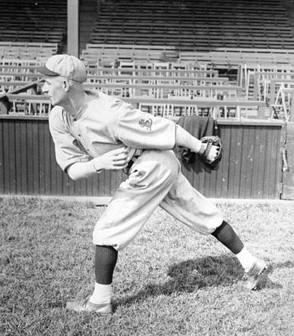

Career overview and achievements
Doak compiled several standout seasons as a member of the Cardinals. In 1914 he posted a remarkable campaign that included a 20–6 record and a league-leading 1.72 earned run average, an achievement often noted in summaries of that season (1914 ERA). He won 20 games again in 1920 and returned to lead the National League in ERA once more in 1921, demonstrating longevity across the dead-ball and early live-ball eras. After more than a decade with St. Louis, he was traded to the Brooklyn Robins in mid-1924.
Style and characteristics
Doak was respected for his steady command and ability to limit opponents' scoring. He pitched through a period of significant change in baseball, adapting his approach as offensive conditions evolved. Contemporary reports and later summaries emphasize his consistency as a starter and his knack for inducing weak contact rather than relying solely on strikeouts.
Innovation: the glove connection
Outside the box score, Doak is widely associated with an important equipment change. He is credited with suggesting that a web or pocket be added between the thumb and forefinger of fielding gloves to improve catching. Manufacturers adopted versions of this idea, and players began using gloves constructed with a defined pocket—an alteration that helped modernize fielding equipment and remains part of glove design today.
Legacy and context
Doak's place in baseball history rests on both his statistical accomplishments and his practical influence on equipment. He represented the typical early-20th-century pitcher who bridged eras and left a tangible legacy in how players handled the ball. He is still referenced in histories of the Cardinals and in discussions of the development of the baseball glove.
Notable facts
- Several of Doak's best seasons came with the Cardinals; he spent eleven seasons there before his mid-1924 trade.
- He led the National League in ERA in more than one season, including 1914 and 1921 (NL leader).
- Following his time in St. Louis, he continued to pitch in the majors with Brooklyn and other clubs during the 1920s.
For further reading, contemporary box scores and team histories provide detailed season-by-season data and accounts of Doak's role on his teams; summaries and equipment histories discuss his influence on glove design. Representative references and archival pages can be found via general baseball reference resources and team histories (biographical, team records, season statistics).
Related articles
Author
AlegsaOnline.com Bill Doak — Major League Baseball Pitcher and Glove Innovator Leandro Alegsa
URL: https://en.alegsaonline.com/art/115213