
871 (number)
871 is an odd composite integer; a semiprime equal to 13×67. It is squarefree and deficient, with notable representations in various bases and appearance as years 871 BC and AD 871 in history.
871 is a natural number that follows 870 and precedes 872. In arithmetic terms it is an odd composite integer and, more specifically, a semiprime because it is the product of two prime numbers: 13 and 67. Those prime factors are distinct, so 871 is squarefree. The number is not a perfect, triangular, or palindromic number in base ten.
Image gallery
2 Images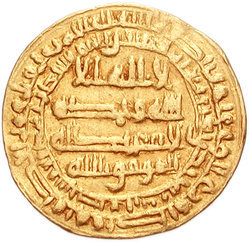

Mathematical properties
- Prime factorization: 871 = 13 × 67.
- Divisors: 1, 13, 67, 871; sum of proper divisors = 81, so 871 is a deficient number (81 < 871).
- Euler totient: φ(871) = φ(13)·φ(67) = 12·66 = 792.
- Classification: odd, composite, semiprime, squarefree.
As a semiprime, 871 belongs to the family of numbers that are the product of exactly two primes; such numbers are of interest in factorization studies and elementary number theory. The small set of divisors and the relatively large totient reflect the fact that its prime factors are moderately sized.
Representations and simple tests
- Base 10: 871
- Binary: 1101100111
- Octal: 01547
- Hexadecimal: 0x367
- Roman numerals: DCCCLXXI
Divisibility by small primes is easily checked: 871 is divisible by 13 and by 67, but not by 2, 3, 5, or 11. The digit sum (8+7+1=16) shows it is not divisible by 3 or 9; it is not a Harshad number in base ten. Because its only prime factors are distinct, it is not a prime power and does not carry repeated prime factors.
Years and historical notes
The sequence of three-digit integers like 871 also refers to calendar years. In historical contexts, 871 AD lies within the period of Viking activity and Anglo-Saxon consolidation in England; 871 BC falls in the early first millennium BCE in the Iron Age, a broad era with regional developments in the Near East and Mediterranean. References to the numeral 871 in history typically point to events dated to those years rather than properties of the number itself.
Occurrences and distinctions
Beyond pure arithmetic, 871 appears as an identifier in numbering systems (catalogs, model numbers, route numbers) simply because it is a three-digit integer. Mathematically it is unremarkable compared with primes or special figurate numbers, but as a semiprime it can serve as a simple example in discussions about factorization, the totient function, and the classification of integers by divisor properties.
Related articles
Author
AlegsaOnline.com 871 (number) Leandro Alegsa
URL: https://en.alegsaonline.com/art/113087