
786 — number, cultural symbol, and uses
786 is an integer with mathematical features (2·3·131) and cultural meanings—widely used in South Asian Islam as a numeric shorthand and as a telephone area code; it appears in historical and practical contexts.
786 is a natural number that sits between 785 and 787. In ordinary arithmetic it is an even composite integer with several elementary mathematical properties that make it of modest interest to number enthusiasts. Beyond mathematics the three-digit sequence 786 carries cultural and practical associations in a number of regions and contexts.
Image gallery
1 Image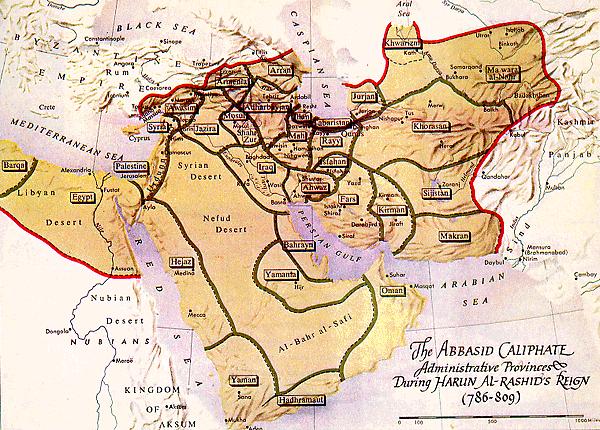
Mathematical characteristics
From a numeric viewpoint, 786 factors as 2 × 3 × 131, so it is the product of three distinct primes. Because it is the product of three different prime factors, 786 qualifies as a sphenic number. It is also an abundant number: the sum of its proper divisors exceeds the number itself. In base systems 786 is written 1100010010 in binary and 0x312 in hexadecimal; the sum of its decimal digits is 21.
Cultural and historical associations
In parts of South Asia and among some Muslim communities, the numerals 786 are popularly used as a shorthand representation of the opening phrase "Bismillah al-Rahman al-Rahim" ("In the name of God, the Most Gracious, the Most Merciful"). This association arises from traditions of letter-to-number mappings (abjad numerology) and long-standing popular practice. The use of 786 in place of the phrase has been treated as a convenience, a protective talisman, or a matter of custom; at the same time some religious authorities discourage numeric substitution, regarding the practice as superstitious or inappropriate in place of the actual words.
Practical uses and appearances
- Telephony: 786 is a North American telephone area code assigned as an overlay for the Miami, Florida region, where it is used alongside other area codes.
- Identifiers: the sequence occurs in addresses, vehicle registrations, and consumer products where number patterns are chosen for cultural or marketing reasons.
- Calendrical note: the year 786 AD is recorded in medieval chronologies and is known in Islamic history as the year when leadership of the Abbasid Caliphate passed to Harun al-Rashid.
Because 786 bridges numeric, cultural and administrative domains it can appear in many different settings—from mathematical tables to public signage and private use. Its meanings depend strongly on context: in arithmetic it is an ordinary composite number; in culture it may carry spiritual or communal significance.
Notable distinctions worth remembering are the clear mathematical facts (prime factorization and sphenic status) versus the socially constructed meanings attached by particular communities. When 786 is used as a symbol, the reasons are historical and popular rather than derived from any mathematical property of the number itself.
Related articles
Author
AlegsaOnline.com 786 — number, cultural symbol, and uses Leandro Alegsa
URL: https://en.alegsaonline.com/art/113054