
Year 350 (Common year of the Julian calendar)
An overview of the year 350 (CCCL): political upheavals in the Roman Empire, power struggles in northern China, and wider cultural and religious developments of the mid-4th century.
Overview
The year 350 (CCCL) falls in the middle of the 4th century and is recorded in the Julian calendar as a common year beginning on Monday. It was a period marked by rapid political change across several regions: the western Roman provinces experienced military usurpation and regime shifts, northern China saw the end of one short-lived state and the rise of local warlords, and religious disputes continued to shape institutions across the Roman world. For calendar notation see CCCL and the Julian calendar.
Image gallery
3 Images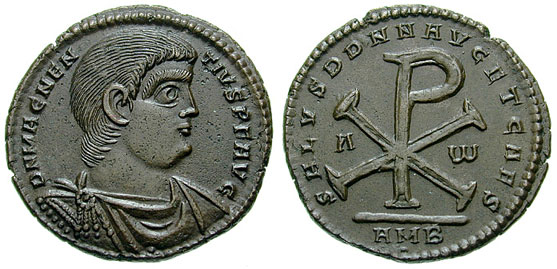


Major events
Several notable developments illustrate the turbulence of 350:
- Roman Empire: A Western Roman general rebelled and seized power in the provinces of Gaul and Britain, overthrowing the reigning western emperor. Rival claimants appeared: a short-lived usurper took control of Rome for a brief interval, while an Illyrian commander was proclaimed by local forces in the Balkans. The eastern emperor responded diplomatically and militarily to these threats, setting the stage for further conflict in subsequent years.
- Northern China and the Sixteen Kingdoms: The collapse of one regional regime and violent power struggles led to the emergence of new polities. A military leader established a brief state in northern China amid campaigns against ruling elites; these events contributed to widescale population displacement and ethnic tensions.
- Frontiers and Persia: Tensions along the Roman–Persian frontier persisted, with periodic incursions and diplomatic maneuvers under the Sasanian ruler that shaped eastern policy for Rome.
Religion, society, and culture
Religious debates within Christianity remained prominent. The Arian controversy and disputes over episcopal authority continued to influence imperial and local politics. Bishops and councils carried significant weight in public affairs, and theological disagreements overlapped with dynastic and military conflicts.
Significance and aftermath
The events of 350 did not resolve the empire's divisions; rather, they intensified military confrontation and political fragmentation that would dominate the next few years. In East Asia, the upheavals of this year contributed to shifting ethnic and territorial boundaries during a prolonged era of fragmentation. Collectively, developments in 350 reflect a wider pattern of 4th-century transitions in government, religion, and regional power.
Notable facts
- The year is commonly referenced in Roman numerals as CCCL.
- Contemporary chroniclers and later historians often treat this period as one of recurring usurpations and short-lived regimes rather than stable succession.
Related articles
Author
AlegsaOnline.com Year 350 (Common year of the Julian calendar) Leandro Alegsa
URL: https://en.alegsaonline.com/art/112838