
2014 Oso mudslide (Washington)
A catastrophic slope failure on March 22, 2014 near Oso, Washington, that devastated a rural neighborhood, killed dozens, covered about a square mile and prompted wide-ranging rescue, recovery and hazard reviews.
Overview
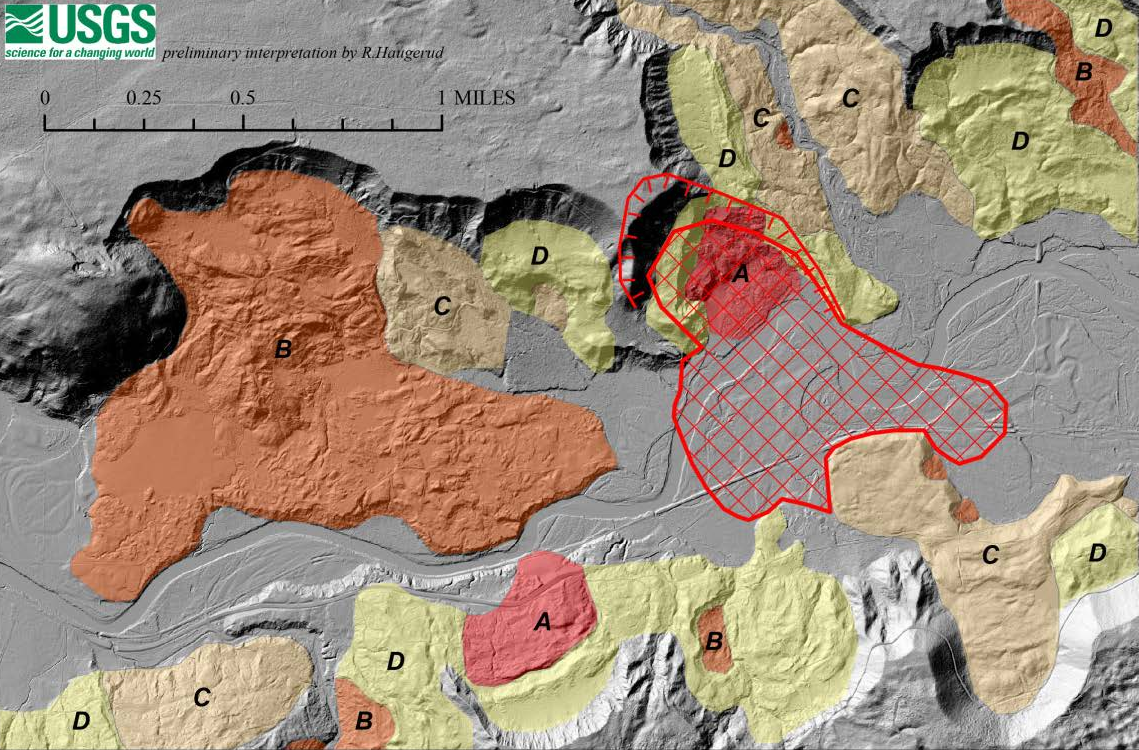
On March 22, 2014 a massive landslide occurred on the north side of the North Fork Stillaguamish River near the small community of Oso, in Snohomish County, Washington. The slide swept through a rural neighborhood, destroying many homes and buildings and covering roughly a square mile of terrain. The event killed dozens of residents and injured others, and it remains one of the most deadly landslides in recent U.S. history.
Image gallery
7 Images


Causes and site characteristics
The failure was a rapid, deep-seated slope collapse that mobilized a large volume of soil, organic material and debris. Heavy seasonal precipitation and saturated soils preceded the event, and the hillside had a history of smaller slides and instability. Because multiple natural factors combined with the local geology, investigators examined both natural triggers and any human influences such as land use changes and forestry activity.
Immediate response
Local, state and federal emergency teams responded with search-and-rescue operations, road closures and evacuations. State Route 530, which passed near the slide area, was closed and remained affected for an extended period. Rescue crews worked under difficult conditions of unstable ground and continuing hazards while the community grappled with loss and displacement.
Aftermath and investigations
State and federal agencies conducted studies to document causes, map hazard zones and recommend changes to planning and permitting. The slide temporarily blocked the river in places, prompting efforts to manage flood risk. In the years that followed the event prompted reviews of hazard mapping, emergency notification procedures and land‑use policies in known landslide-prone areas.
Significance and legacy
- The Oso slide highlighted the potential for rapid, large-volume slope failures in temperate, forested landscapes.
- It increased public and official awareness of landslide risk and the limits of existing hazard maps and emergency systems.
- Memorials and community efforts continue to remember those lost and to support long-term recovery for affected families.
The event is widely studied as an example of catastrophic slope collapse affecting a small community and has informed subsequent research, emergency planning and land-use decisions in the Pacific Northwest and beyond.
Related articles
Author
AlegsaOnline.com 2014 Oso mudslide (Washington) Leandro Alegsa
URL: https://en.alegsaonline.com/art/112530