
1885
Year marked by imperial expansion, colonial treaties, scientific advances (notably Pasteur's rabies vaccine), the Canadian transcontinental railway completion, and significant political unrest worldwide.
Overview
1885 was a year in which imperial expansion, scientific innovation and political conflict intersected across several continents. European powers completed diplomatic arrangements that accelerated the partition of Africa, colonial armies subdued or annexed territories in Asia and Southeast Asia, and breakthroughs in medicine and engineering signalled technologies that would transform everyday life in the coming decades.
Image gallery
10 Images





Politics and colonial expansion
The diplomatic settlement that followed the Berlin Conference (1884–85) continued to shape the map of Africa; one of the most consequential outcomes was international recognition of the Congo Free State under King Leopold II, an arrangement that soon led to large-scale exploitation and severe humanitarian abuses. In Asia and Indochina, the Sino–French conflict drew to a close with agreements that reinforced French influence in Vietnam, and the Third Anglo–Burmese War resulted in British annexation of Upper Burma.
In Africa and the Middle East, the fall of Khartoum and the death of General Charles Gordon during the Mahdist uprising in January 1885 marked a dramatic moment in imperial conflict. In North America the Canadian Pacific Railway reached completion, knitting the nation coast to coast and coinciding with the North-West Rebellion in which the Métis leader Louis Riel was captured and later executed, events that had long-term political consequences in Canada.
Science, medicine and technology
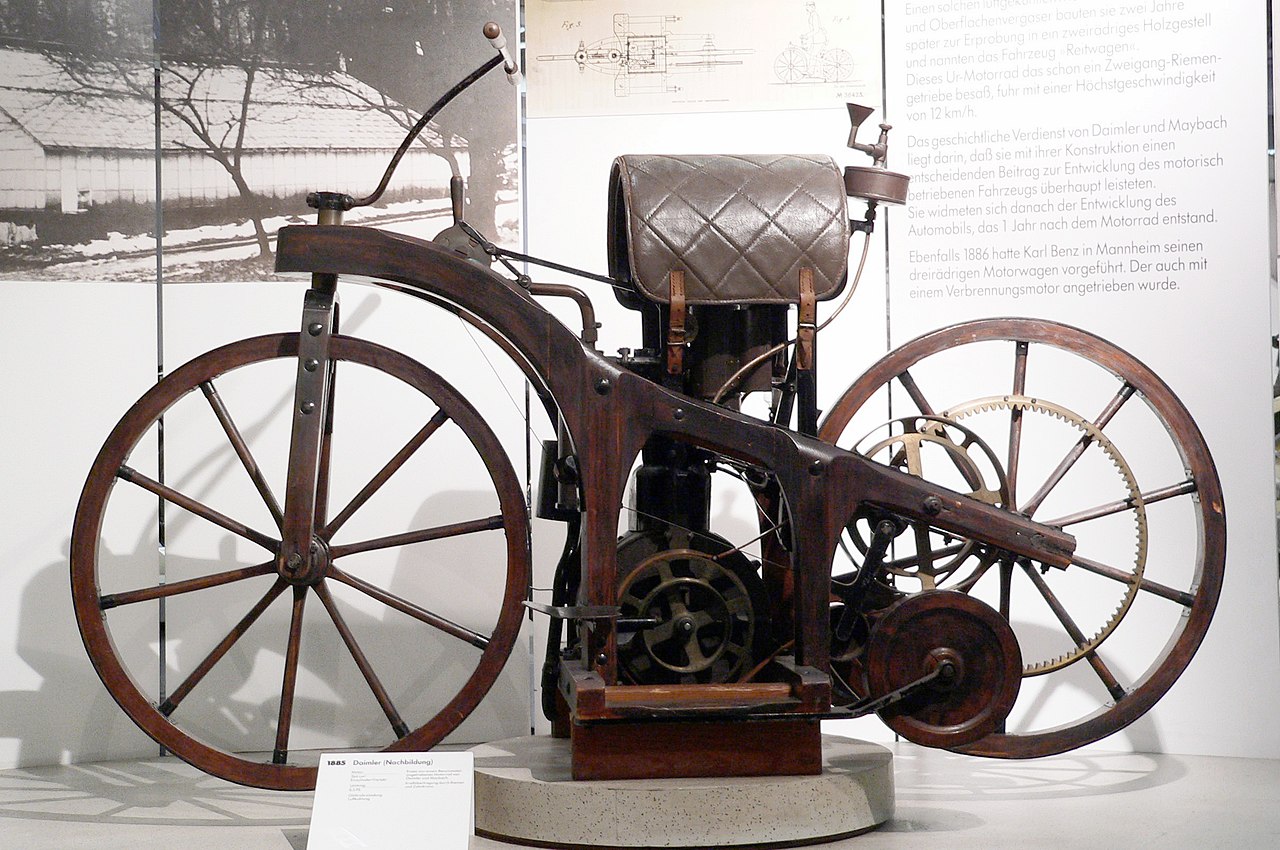
Medical practice took a visible step forward when Louis Pasteur and his team administered an antirabies treatment in 1885; the successful prevention of rabies in a human patient demonstrated the practical impact of laboratory research on public health. In transport and mechanical engineering, inventors such as Karl Benz and Gottlieb Daimler were developing early gasoline-powered vehicles and motorized bicycles that are widely cited as precursors to the modern automobile and motorcycle.
Society, culture and economy
Railways and steam shipping continued to integrate regional economies, accelerate urban growth and expand markets for industrial goods. Cultural life reflected both confidence in progress and anxieties about rapid change; literature, visual arts and popular press commented on social issues from urbanization to labor conditions. Industrialization and imperial policies together intensified debates about rights, representation and economic distribution in several countries.
Notable events and legacy
- Recognition of the Congo Free State, initiating a controversial chapter in central African history.
- Conclusion of hostilities in the Sino–French conflict and consolidation of French influence in Indochina.
- British annexation of Upper Burma after the Third Anglo–Burmese War.
- Fall of Khartoum and the death of General Charles Gordon during the Mahdist uprising.
- Completion of the Canadian Pacific Railway and the North-West Rebellion involving Louis Riel.
- Practical application of Pasteur's rabies treatment and continued advances toward motorized transport.
Though no single year contains every turning point, 1885 stands out for its mixture of geopolitical reordering and technological progress. The decisions, conflicts and innovations of this year helped shape political boundaries, public-health practice and transportation technologies that would have profound effects in the decades that followed.
Related articles
Author
AlegsaOnline.com 1885 Leandro Alegsa
URL: https://en.alegsaonline.com/art/111855