
1345 (number)
Overview of the integer 1345: factorization, divisors, arithmetic functions, representations in bases, classification as a semiprime and deficient number, and brief note on the year 1345.
1345 is a positive integer that follows 1344 and precedes 1346. It is an odd composite number whose simplest arithmetic description is its prime factorization and basic divisor structure. It appears both as a pure number in elementary number theory and, when written as a date, as the year AD 1345 in historical sources.
Image gallery
10 Images





Prime factorization and divisors
Prime factorization: 1345 = 5 × 269. Both factors are prime and distinct, so 1345 is a semiprime and is squarefree. Its complete set of positive divisors is 1, 5, 269 and 1345. The sum of all divisors (σ) is 1620; the sum of proper divisors is 275, which is less than 1345, so the number is classified as deficient.
Arithmetic functions and representations
- Euler's totient: φ(1345) = φ(5)·φ(269) = 4·268 = 1072.
- Number of divisors (τ): 4. Sum of divisors (σ): 1620. Sum of proper divisors: 275.
- Digital sum: 1+3+4+5 = 13 (digital root 4). Last digit 5 implies divisibility by 5.
- Binary representation: 10101000001. Hexadecimal: 0x541. Roman numeral: MCCCXLV.
- Sum of two squares: 1345 = 36² + 7². This representation is consistent with the sum-of-two-squares theorem because no prime factor congruent to 3 mod 4 appears to an odd power.
Classification and remarks
Because 1345 is the product of two distinct primes it is a semiprime and squarefree. It is not a perfect power, not abundant, and not a Carmichael number. It is not a Blum integer (Blum integers require both prime factors to be congruent to 3 mod 4); here both prime factors are ≡1 mod 4. The relatively small representation as 36² + 7² makes 1345 a convenient example when illustrating representations of integers by quadratic forms.
Year and cultural note
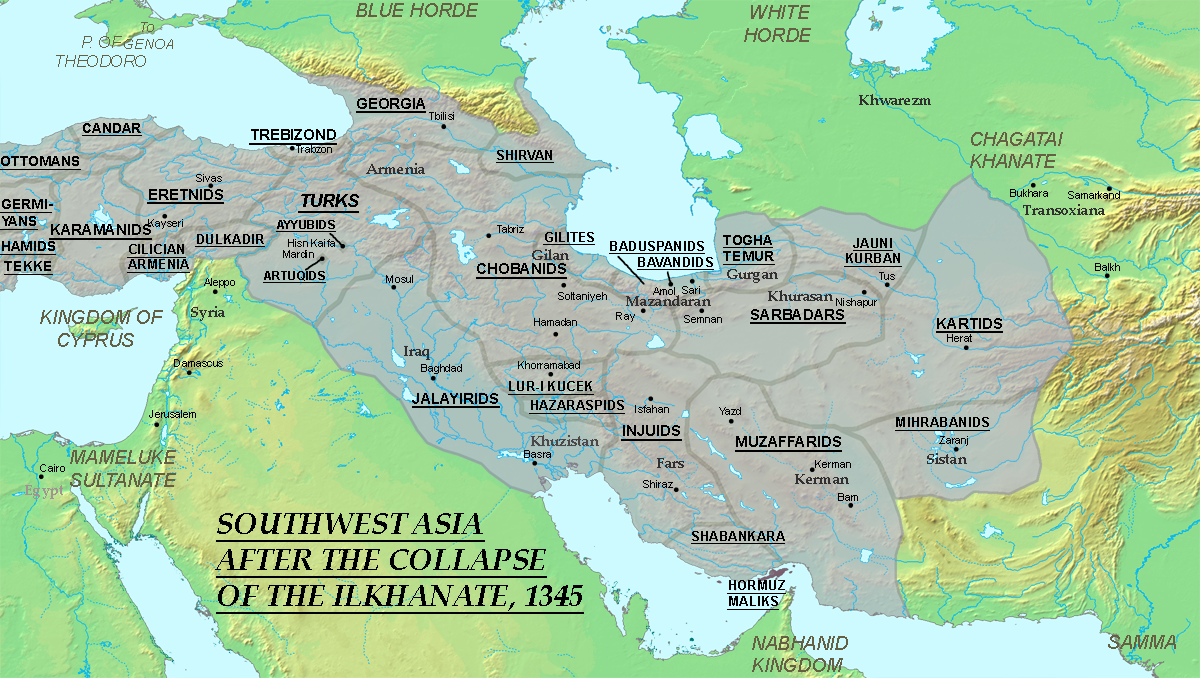
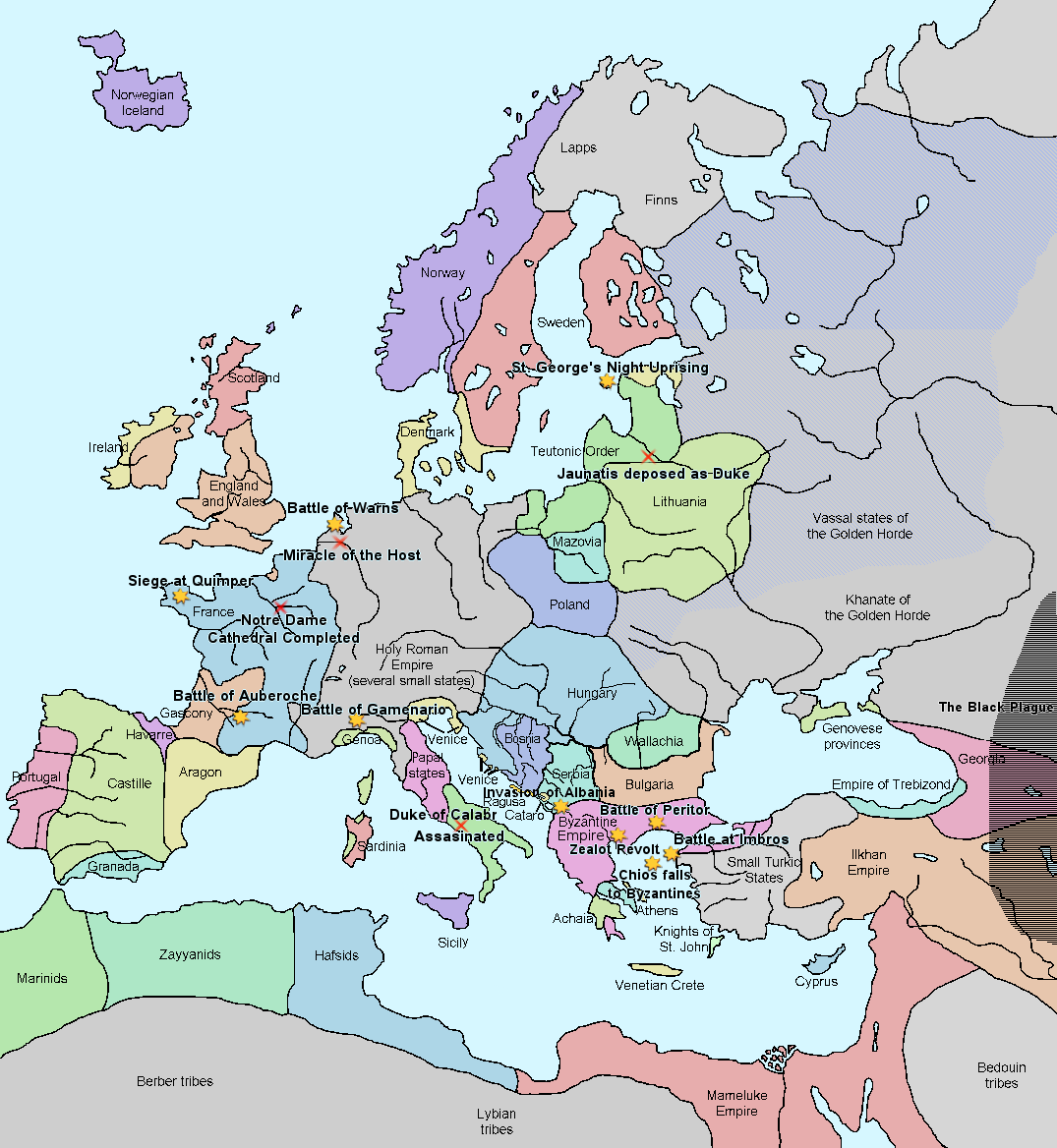
When encountered in textual or archival contexts, the numeral "1345" may denote the calendar year AD 1345. That year lies in the mid-fourteenth century, a period of significant political and social developments in many regions; whether the numeral refers to the year or the abstract integer depends on context. In mathematical writing, 1345 is typically treated in the manners summarized above.
Related articles
Author
AlegsaOnline.com 1345 (number) Leandro Alegsa
URL: https://en.alegsaonline.com/art/111272