
1156 — the number and the year
1156 is an integer notable as a perfect square (34^2), with specific divisor structure and numeral representations; it is also a year marked in medieval European history by the Privilegium Minus.
1156 is an integer that appears both as a mathematical object and as a label for a year in the Common Era. In arithmetic it is best known as the square of 34: 34 × 34 = 1156. As a year, 1156 (written MCLVI in Roman numerals) belongs to the mid-12th century and is associated with political developments in medieval Europe.
Image gallery
2 Images
Mathematical properties
Factored into primes, 1156 = 2^2 × 17^2, so it is a perfect square and a composite number whose prime factors themselves are squared. Because the exponent pattern is (2,2), 1156 has (2+1)(2+1) = 9 positive divisors. These divisors are: 1, 2, 4, 17, 34, 68, 289, 578, and 1156.
Key arithmetic characteristics include: the sum of all positive divisors σ(1156) = 2149, so the sum of proper divisors (2149 − 1156 = 993) is less than the number itself and 1156 is therefore a deficient number. It is the 34th square number and not triangular. In common numeral systems its binary representation is 10010000100, octal 2204, and hexadecimal 0x484 (which reads palindromically in base 16).
Year 1156 (Common Era)
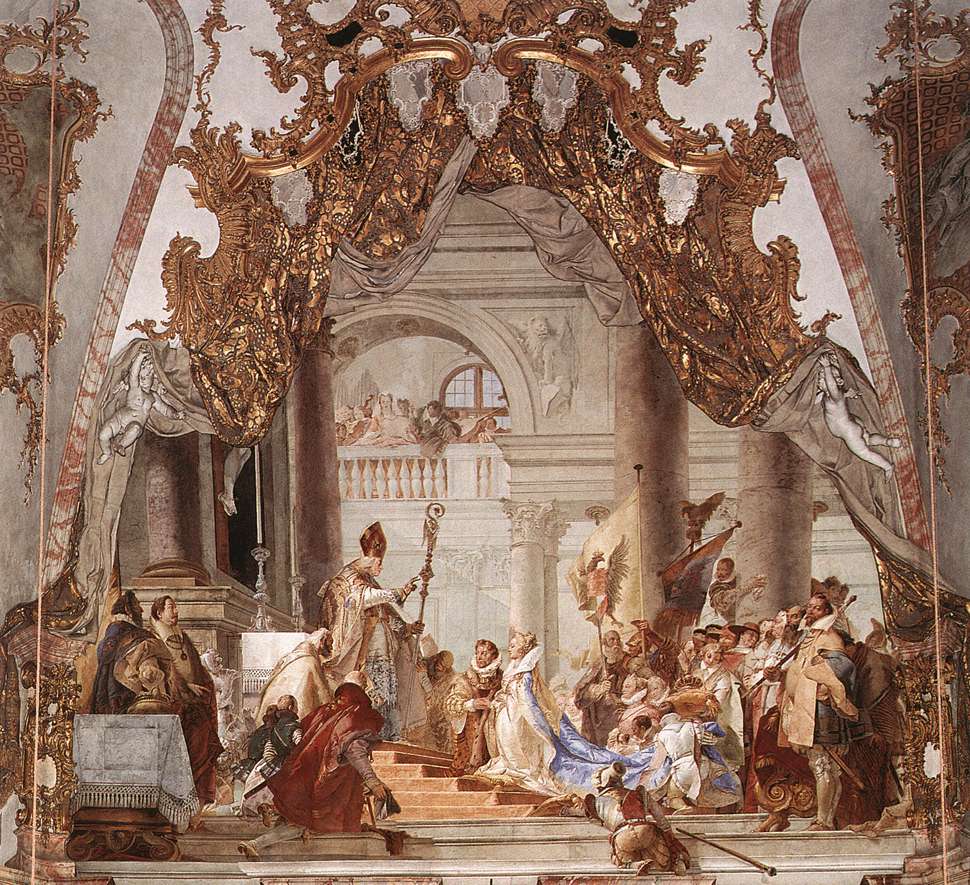
When used as a year designation, 1156 CE falls in the High Middle Ages. One widely cited event from that year is the issuing of the Privilegium Minus by Emperor Frederick I (Barbarossa), which elevated the March of Austria to a duchy and altered its succession rules; this act significantly shaped the political status of Austria within the Holy Roman Empire. The year also sits amid broader 12th-century developments in medieval politics, church affairs and regional state formation across Europe.
Because 1156 is short numerically and historically, it often serves as a simple identifier across many contexts: catalogue numbers, model or project names, or dates in archival sources. In mathematics classrooms it provides a compact example illustrating perfect squares, divisor functions and prime factorization.
Notable distinctions — 1156 is a perfect square of a composite integer (34), has exactly nine divisors, and is deficient. As a year, it is remembered principally for territorial and constitutional changes in central Europe rather than for a single universally celebrated event.
Related articles
Author
AlegsaOnline.com 1156 — the number and the year Leandro Alegsa
URL: https://en.alegsaonline.com/art/111070