
108 (number)
108 is an integer with mathematical, cultural, and practical significance: composite (2^2·3^3), abundant and refactorable, notable in geometry and religion, and used as an emergency number in India.
108 is a natural number that follows 107 and precedes 109. In common notation it appears as 108, in Roman numerals as CVIII, and in binary as 1101100. It is composite, even, and built only from the prime factors 2 and 3. The atomic number 108 designates the synthetic element hassium in the periodic table, while in modern life the three-digit sequence 108 is recognised as the emergency services number in several parts of South Asia.
Image gallery
1 Image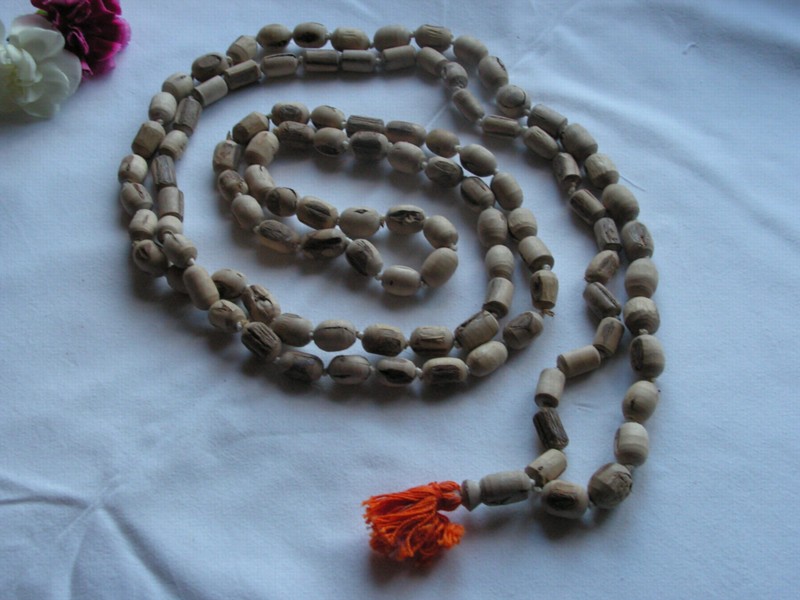
Mathematical properties
Factored into primes, 108 = 2^2 × 3^3. Its positive divisors are 1, 2, 3, 4, 6, 9, 12, 18, 27, 36, 54 and 108, a total of 12 divisors. The sum of all divisors is 280, so the sum of proper divisors (excluding 108 itself) is 172, which exceeds 108; therefore 108 is an abundant number. It is also semiperfect, since a subset of its proper divisors (for example 54 + 36 + 18) sums to 108, and refactorable because the number of its divisors (12) evenly divides 108. In base-10 digit terms, 108 is a Harshad number because 108 is divisible by the sum of its digits (1+0+8 = 9).
Appearance in geometry and arithmetic
The angle of 108 degrees occurs naturally in regular pentagons: each interior angle of a regular pentagon measures 108°. That value also appears in constructions related to the golden ratio and pentagonal symmetry. Common integer representations include octal 154 and hexadecimal 6C, and 108 is a 3-smooth number (its prime factors are only 2 and 3), which makes it frequent in combinatorial and tiling contexts where powers of 2 and 3 arise.
Cultural, religious and practical uses
Across South and East Asia, 108 carries spiritual and ritual significance. Many Hindu, Buddhist and yogic traditions use a mala of 108 beads for counting recitations or mantras. Buddhist temples in Japan customarily ring bells 108 times at the end of the year to symbolize the dispelling of 108 worldly desires. Beyond religious practice, the sequence appears in modern infrastructure: for example, 108 is an emergency telephone number in India. For general reference on several aspects of the number, see this source.
Because 108 connects arithmetic structure, geometric occurrences, cultural symbolism and practical use, it is an example of how a simple integer can be important in many different human contexts.
Related articles
Author
AlegsaOnline.com 108 (number) Leandro Alegsa
URL: https://en.alegsaonline.com/art/110997