
TV tuner card
A TV tuner card receives television signals for a computer, enabling live viewing, recording, timeshifting and capture of analog or digital broadcasts via internal or external interfaces.
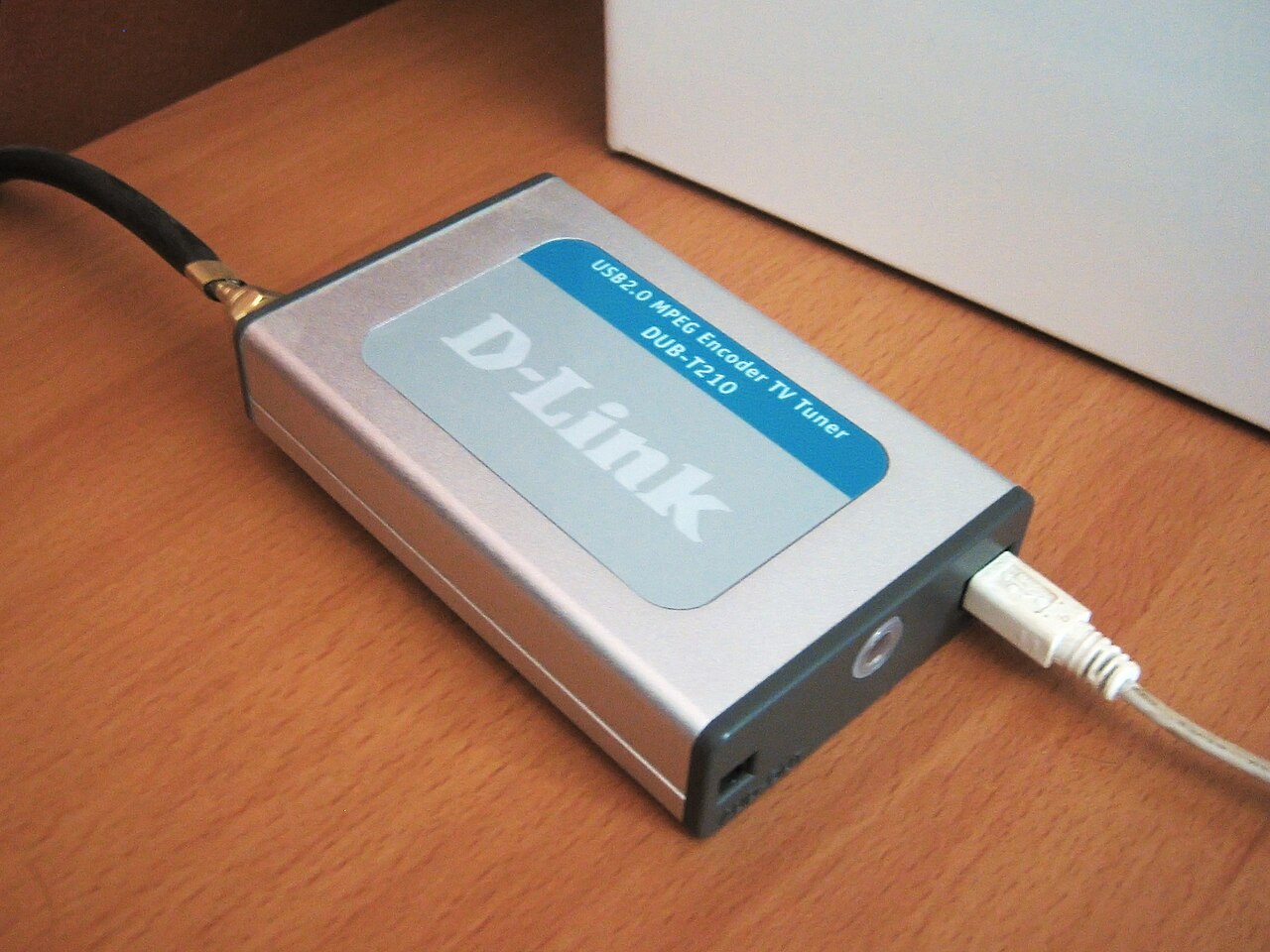
A TV tuner card is a computer peripheral designed to receive television broadcasts and make them viewable and recordable on a personal computer. Most tuner cards also offer video capture and encoding functions, so a PC can act as a personal video recorder (PVR) or digital video recorder (DVR). Tuner products range from internal expansion cards that install in PCI or PCI Express slots to external USB, ExpressCard or networked devices that attach to a laptop or HTPC.
Image gallery
3 Images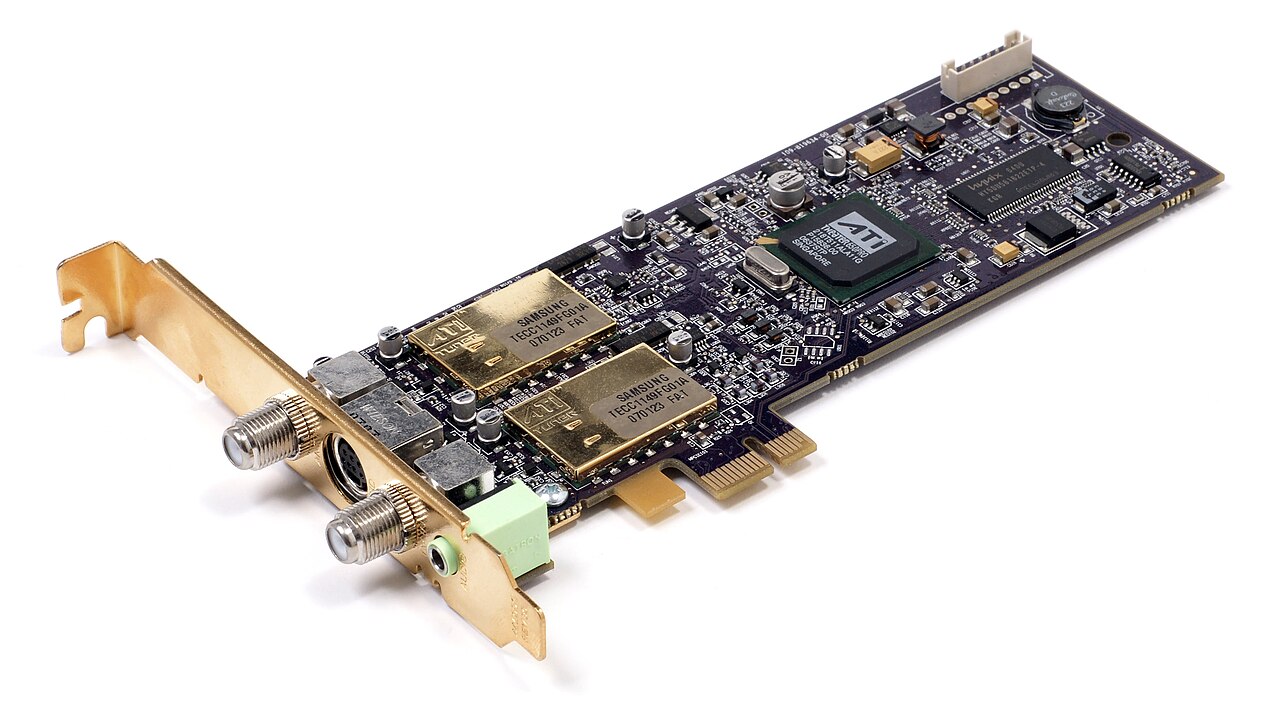

Characteristics and components
A typical tuner card contains an RF tuner, an analog front end (filters and an analog‑to‑digital converter), a demodulator and interface logic to send decoded streams to the host system. Some cards include a hardware encoder that compresses video into formats such as MPEG or H.264 to reduce CPU load. Lower‑cost models may perform demodulation and encoding in software using the host CPU, while higher‑end cards carry dedicated processors and tuners for multiple simultaneous channels.
Standards and signal types
Tuners are built for the broadcast systems in use where they are sold. Legacy analog formats include NTSC, PAL and SECAM; digital standards include DVB‑T, DVB‑C and DVB‑S family variants in many regions, and ATSC or QAM in others. There are differences between terrestrial, cable and satellite front ends: connector types, IF ranges, required demodulators and support for conditional access or smart card modules on pay services.
Form factors and connectivity
Internal cards commonly use PCI or PCIe interfaces and can provide multiple tuners in a single board. Portable systems often use USB or ExpressCard tuners for ease of installation. Networked or IPTV tuner gateways exist to deliver television streams over a local network to multiple devices. Choice of form factor affects latency, bandwidth and the number of channels that can be recorded simultaneously.
Uses, software and features
- Live TV viewing integrated with media center applications and graphical program guides (EPG).
- Recording, scheduled recordings and timeshifting (pause/rewind live TV).
- Multiple tuners to record different channels at once, and capture of composite/component video from external sources.
- Extras such as FM radio reception, infrared remote support and hardware decryption on some cable/satellite models.
Installation, drivers and practical considerations
Compatibility with the intended broadcast standard and the operating system is essential; driver support and available client software determine user experience. Open source and vendor drivers exist for many platforms, but feature support (hardware encoding, EPG integration, conditional access) can vary. When choosing a tuner, consider the number of tuners needed, whether hardware encoding is required to spare CPU cycles, the connector and cabling, and whether conditional access or subscription services will impose additional modules or smart cards.
For general guides, compatibility lists and software recommendations see related resources. Always observe local laws and licensing terms when recording or redistributing broadcast content.
Questions and answers
Q: What is a TV tuner card?
A: A TV tuner card is a device that enables a computer to receive television signals.
Q: What other function do most TV tuners have besides receiving television signals?
A: Most TV tuners function as video capture cards, which allows them to record television programs onto a hard disk.
Q: What are the interfaces for TV tuner cards?
A: The interfaces for TV tuner cards are commonly either PCI bus expansion card or the newer PCI Express (PCIe) bus, but other interfaces such as PCMCIA, ExpressCard, or USB devices also exist.
Q: What is an analog front end on a TV tuner card?
A: The analog front end is a component of a TV tuner card that includes a tuner and an analog-to-digital converter, along with demodulation and interface logic.
Q: Do all TV tuner cards have an onboard processor?
A: No, some lower-end TV tuner cards do not have an onboard processor and rely on the computer's CPU for demodulation.
Q: Can video cards double as TV tuners?
A: Yes, some video cards such as the ATI All-In-Wonder series can also function as TV tuners.
Q: What is a DVB-S2 tuner card?
A: A DVB-S2 tuner card is a type of TV tuner card that is designed specifically for receiving satellite television signals in high definition.
Related articles
Author
AlegsaOnline.com TV tuner card Leandro Alegsa
URL: https://en.alegsaonline.com/art/102204