
Tigran Petrosian: World Chess Champion and Master of Prophylaxis
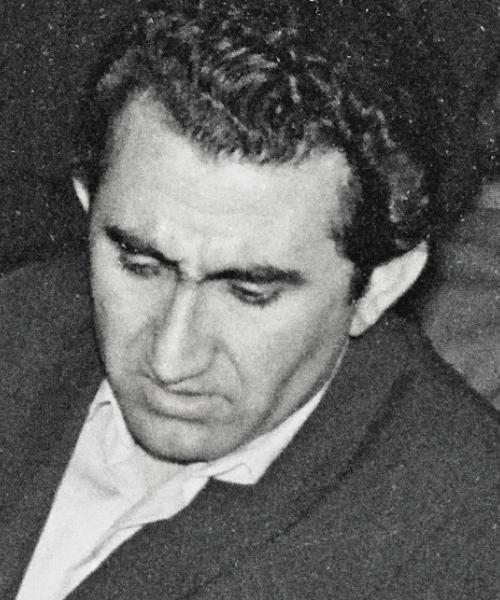
Tigran Petrosian (1929–1984) was a Soviet Armenian grandmaster, World Chess Champion from 1963–1969, celebrated for his defensive, prophylactic style and major contributions to modern positional play.
Tigran Vartanovich Petrosian was born on 17 June 1929 in Tbilisi and raised in Yerevan. Of Armenian descent, he rose from modest origins — early reports describe him working as a street cleaner before his chess talent became his profession — to become one of the great figures of twentieth‑century chess. Petrosian was World Chess Champion from 1963 until 1969 and remained a dominant figure in Soviet and international play through the 1950s, 1960s and 1970s.
Image gallery
10 Images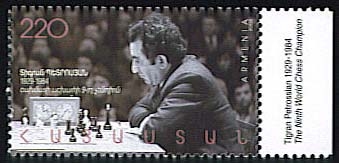


Early career and rise
Petrosian earned the USSR national master title in 1947 and moved to Moscow the same year, where his play improved rapidly. A high finish in the USSR championship led to participation in the international qualifying cycle: he played in the Interzonal stage in Stockholm and then in the 1953 Candidates tournament in Zurich, after which he was awarded the International Grandmaster title by FIDE. He won the Soviet Championship on multiple occasions and established himself as a contender at the highest level.
Playing style and contributions
Petrosian is best known for a cautious, prophylactic approach that prioritized positional safety, long‑term maneuvering and defensive resourcefulness. He had an uncanny ability to anticipate opponents' threats and to neutralize them before they materialized, a pattern later described with the term "prophylaxis." While he could handle tactical complications, his games are often admired for their strategic clarity, subtle piece placement and endgame technique. Several opening ideas and lines carry his name or were influenced by his practice, reflecting his careful handling of imbalances and avoidance of speculative risks.
World Championship and major matches
After a long period as a top contender — during which contemporaries such as Vasily Smyslov and Mikhail Tal won and lost the world title — Petrosian won the Candidates cycle and defeated the reigning champion to become the World Champion in 1963. He held the title through the rest of the decade, ceding it in 1969. Throughout this era he faced and overcame many of the strongest players of his time and played a central role in Soviet chess dominance.
Later career and legacy
Even after losing the world title, Petrosian remained a top grandmaster, winning the Soviet Championship several times (including in 1959, 1961, 1969 and 1975) and continuing to compete internationally. His influence extends beyond his results: coaches, theoreticians and later champions studied his games for their instructive defensive techniques and positional insights. Petrosian's name appears in chess literature and theory, and his style helped shape a generation of players who prize prophylaxis and strategic solidity over speculative attacks.
Notable facts
- He was awarded the grandmaster title following his performance in the early 1950s Candidates events.
- Petrosian combined a defensive philosophy with deep tactical awareness, making him unusually hard to beat at his peak.
- His life intersected with many leading figures of Soviet chess; contemporaries included world champions and recurring challengers to the title.
- Petrosian died in Moscow on 13 August 1984, leaving a legacy of instructive, strategically rich games studied by players and historians.
For further reading and collections of his games, see specialist chess histories and anthologies that analyze Petrosian's most instructive encounters and his contribution to opening and endgame theory. His career remains a touchstone for players who emphasize prophylaxis, positional judgment and defensive mastery.
Tbilisi and Georgia mark his birthplace; his biography and tournament records are covered in many chess databases and histories for those seeking game‑by‑game study.
Petrosian's story illustrates how a humble background can lead to the highest levels of competitive achievement and intellectual influence in a global sport.
Questions and answers
Q: Who was Tigran Petrosian?
A: Tigran Petrosian was a chess player who was born in Tbilisi, Georgia in 1929, and became World Chess Champion in 1963.
Q: Where was Tigran Petrosian brought up?
A: Tigran Petrosian was brought up in the capital of Armenia, Yerevan.
Q: What was Tigran Petrosian's occupation before his chess career?
A: Before his chess career, Tigran Petrosian was a street cleaner.
Q: When did Tigran Petrosian get the USSR national master title?
A: Tigran Petrosian got the USSR national master title in 1947.
Q: When did Tigran Petrosian qualify for the World Championship Candidates tournament?
A: Tigran Petrosian qualified for the World Championship Candidates tournament in Zurich in 1953.
Q: How many times did Tigran Petrosian win the Soviet Championship?
A: Tigran Petrosian won the Soviet Championship four times, in 1959 (Tbilisi), 1961 (Moscow), 1969 (Moscow), and 1975 (Yerevan).
Q: When did Tigran Petrosian become the new challenger to Botvinnik?
A: Tigran Petrosian became the new challenger to Botvinnik in 1962, after winning the Candidates tournament.
Related articles
Author
AlegsaOnline.com Tigran Petrosian: World Chess Champion and Master of Prophylaxis Leandro Alegsa
URL: https://en.alegsaonline.com/art/99840
Sources
- time.com : "Chess: Tigran and the Tiger - TIME"
- books.google.com : "Close-up: Tigran Petrosian"