
Thylacine (Tasmanian tiger): biology, history and extinction
Extinct carnivorous marsupial once native to Australia, Tasmania and New Guinea. Overview of its appearance, fossil record, decline, cultural role, and ongoing research.
The thylacine was a carnivorous marsupial carnivore native to the Australian region. Often called the Tasmanian tiger because of the dark stripes on its rump, it was also labeled the Tasmanian wolf or Tasmanian hyena in early European accounts. Scientifically distinctive, the thylacine combined features of a dog-like hunter with a marsupial reproductive system; it is commonly described simply as a marsupial to emphasize that difference from placental mammals.
Image gallery
10 Images


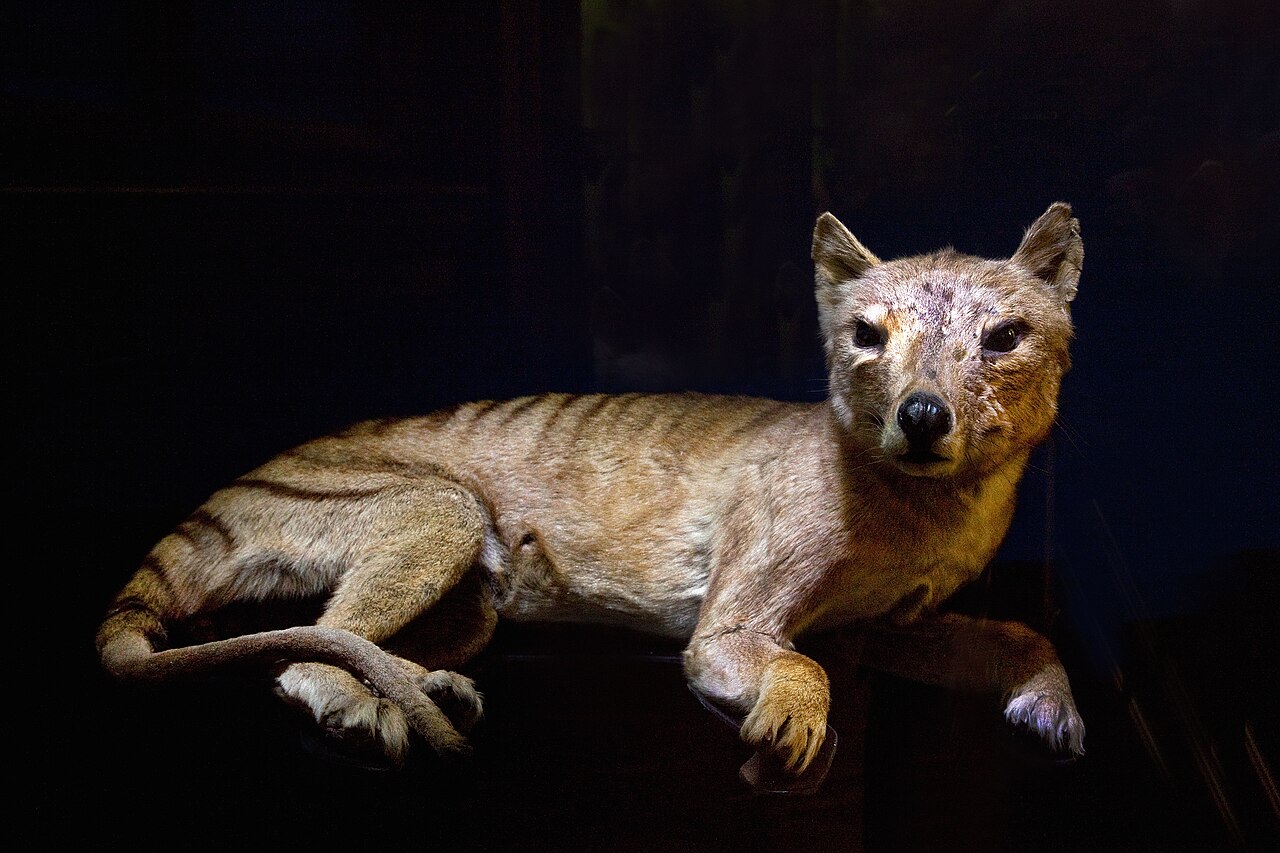


Appearance and habits
Adult thylacines were medium-sized predators with a long, stiff tail, a narrow snout, and a pouch for rearing young. Key characteristics included:
- Size and build: roughly the size of a medium dog with a lean, muscular body and a stiff, kangaroo-like tail.
- Coat and markings: sandy to brown fur with 12–20 dark transverse stripes across the lower back and rump that gave rise to the common name.
- Reproduction: females had a rear-opening pouch similar to other marsupials; litters were small and young were carried until more developed.
- Behavior: largely nocturnal and crepuscular, thought to be solitary or to hunt in small family groups; diet consisted mainly of small to medium vertebrates.
First-hand observations came from both wild sightings and captive animals; museums and early naturalists kept specimens and notes that are still referenced by researchers studying thylacine anatomy and ecology (historic specimens).
Distribution and fossil record
Fossil and archaeological evidence shows thylacines once ranged across mainland Australia and into New Guinea as well as Tasmania. They were present in a variety of habitats from grasslands to forests. Notably, rock paintings and Indigenous art in parts of northern Western Australia and the Northern Territory preserve images that many researchers associate with thylacine-like animals: see paintings in Western Australia and the Northern Territory. The Riversleigh fossil deposits in north Queensland are particularly important; Riversleigh fossils and work by research teams show thylacine ancestors among marsupial carnivores for millions of years, and fossil bones indicate an ancient lineage that long predates European arrival.
Decline and extinction
European settlement accelerated the thylacine's decline through direct persecution, habitat change, and competition with introduced species. In Tasmania, bounties and widespread trapping targeted thylacines, driven by perceived threats to livestock. The last widely accepted captive individual died in Hobart on 7 September 1936, kept at the Hobart zoo under care that is now heavily scrutinized. Captive history and records from facilities and collectors provide much of what we know about behavior in captivity (captivity records).
Legacy, sightings and research
Reports of possible thylacine sightings continue to surface, and the species has become a potent symbol in conservation discussions about human-caused extinctions and the protection of endemic fauna. Contemporary research draws on old specimens, historical photographs and film, and genetic analyses to understand thylacine biology and population history. Debates over de-extinction and restoration are active but speculative; while genetic sequencing offers insights, recreating a living thylacine raises complex scientific and ethical questions.
The thylacine remains important culturally and scientifically: it features in Tasmanian identity, Indigenous knowledge, and as a cautionary example in wildlife management. For further background and primary references, see historical collections and specialist accounts linked in many museum and academic resources Australia overview and New Guinea context.
Questions and answers
Q: What is a Thylacine?
A: A Thylacine is a carnivorous marsupial animal that was also known as Tasmanian tiger, Tasmanian wolf, and Tasmanian hyena.
Q: When did the last known Thylacine die?
A: The last known Thylacine died in a Hobart zoo on 7 September 1936.
Q: Where did Thylacines once live?
A: Thylacines once lived across Australia and New Guinea.
Q: Where are paintings of Thylacines found?
A: Paintings of Thylacines are found in the north of Western Australia and in the Northern Territory.
Q: What have scientists discovered at Riversleigh in north Queensland?
A: Scientists have discovered the fossil bones of Thylacines that are at least 30 million years old at Riversleigh in north Queensland.
Q: What kind of animal is Thylacine?
A: Thylacine is a mainly meat-eating marsupial animal.
Q: What are some other names for Thylacine?
A: Some other names for Thylacine are Tasmanian tiger, Tasmanian wolf, and Tasmanian hyena.
Related articles
Author
AlegsaOnline.com Thylacine (Tasmanian tiger): biology, history and extinction Leandro Alegsa
URL: https://en.alegsaonline.com/art/99740
Sources
- species.wikimedia.org : Thylacinus cynocephalus
- bucknell.edu : Mammal Species of the World
- parks.tas.gov.au : parks.tas.gov.au
- amonline.net.au : "Indigenous Peoples and the Thylacine"
- amonline.net.au : "Is there a fossil Thylacine?"
- naturalworlds.org : The last known Tasmanian tiger was named "Benjamin"
- amonline.net.au : "What did the thylacine look like?"