
Thumbelina: Hans Christian Andersen’s tiny heroine and her story
Overview of Andersen’s 1835 tale "Thumbelina" (Tommelise), its plot, characters, origins, themes, reception and adaptations in children’s literature and popular culture.
Overview
"Thumbelina" is a short fairy tale first published on 16 December 1835 by the Danish publisher C. A. Reitzel. The story tells of a very small girl, born from a flower, who endures a sequence of adventures among field and forest creatures until she finds love and a place where she belongs. The original Danish title, Tommelise, is still used in Denmark and in studies of Andersen’s work. The tale is often described simply as a fairy tale and is one of Andersen’s early and most widely read narratives.
Image gallery
2 Images
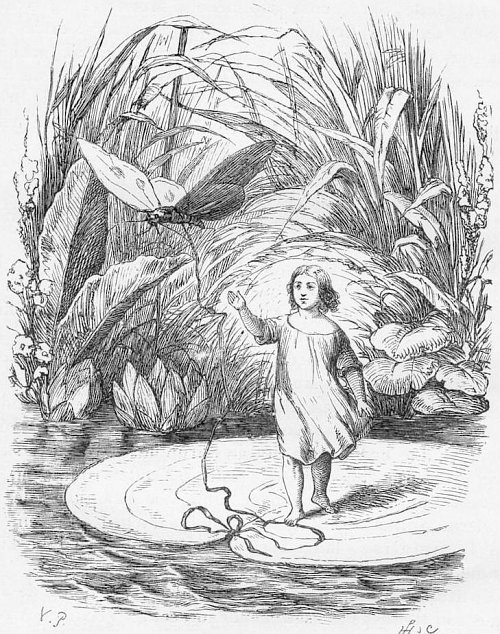
Plot and principal characters
The narrative follows Thumbelina from her miraculous birth to her eventual marriage to a flower-fairy prince about her size. Along the way she meets a toad who wishes her to marry her son, a kindly but blind mole who offers shelter underground, a helpful field mouse, and a swallow who becomes her companion. These encounters test her resilience and character and lead her from peril to safety. Key figures include the tiny heroine herself, the amphibian suitor, the mole (a representation of subterranean comfort), and the prince who mirrors her own miniature world.
Origins, influences and publication history
Andersen wrote original tales but drew on older motifs of very small people—stories such as English "Tom Thumb" and the six-inch Lilliputians of Gulliver’s Travels were familiar in European culture and may have influenced his concept. "Thumbelina" was published as part of Andersen’s early collection Fairy Tales Told for Children, a three-book series issued between 1835 and 1837 that included other well-known stories such as The Tinderbox, The Princess and the Pea, The Little Mermaid and The Emperor’s New Clothes. Contemporary Danish critics sometimes criticized Andersen’s informal style and the departure from overt moralizing, although some reviewers praised individual tales; one early commentator called "Thumbelina" "delightful".
Themes, style and interpretation
On the surface the tale is a simple adventure suitable for children, but critics and readers have long noted recurring themes: vulnerability and endurance, the search for belonging, and a close relationship between the human figure and the natural world. Andersen’s prose mixes conversational tone with imaginative detail; he emphasizes small-scale wonder and the logic of a child’s perspective. Interpretations vary—some read Thumbelina as an emblem of feminine fragility and independence, others as a celebration of empathy toward animals and plants.
Adaptations and cultural influence
"Thumbelina" has been adapted many times for stage, screen and music. Notable adaptations include an animated film and various television and stage versions that rework characters and plot points for different audiences. Examples include an animated feature adaptation and a live-action television production that brought the tale to new generations. For information on specific productions and critical overviews, see resources linked to Andersen’s biography and the tale’s reception; general reference pages and adaptation listings often appear alongside discussions of Andersen’s life and works.
Notable facts and distinctions
- Andersen’s tale is an original composition rather than a direct retelling of folk material, though it uses common folkloric motifs.
- The story’s size motif places it in dialogue with earlier miniature-people narratives while keeping a distinct, sentimental voice.
- Translations and adaptations have varied in tone—some emphasize romance, others the ecological or coming-of-age aspects.
For readers who want primary-source context and scholarly commentary, consult pages dedicated to Hans Christian Andersen, critical surveys that discuss contemporary reviewers (see critical reception), and resources that trace cinematic and televised retellings (for example, an entry on an adaptation can be found at film and TV adaptations). Short encyclopedia entries and collections include cross-references to related tales and influences such as mole-centered episodes in literature and larger works that inspired Andersen’s imagination.
Questions and answers
Q: Who wrote "Thumbelina"?
A: "Thumbelina" was written by Hans Christian Andersen.
Q: When was the tale first printed?
A: The tale was first printed by C. A. Reitzel on 16 December 1835 in Copenhagen, Denmark.
Q: What is the story of "Thumbelina" about?
A: The story of "Thumbelina" is about a tiny girl who has several adventures with creatures of field and forest before meeting and falling in love with a flower-fairy prince just her size.
Q: How many booklets did Andersen print between 1835 and 1837?
A: Andersen printed nine fairy tales between 1835 and 1837 in a series of three booklets called Fairy Tales Told for Children.
Q: Did the Danish critics like Andersen's tales?
A: No, the Danish critics did not like their casual style and their lack of morals. One critic liked "Thumbelina", however, calling it "delightful".
Q: Has the tale been adapted to other media?
A: Yes, the tale has been adapted to an animated movie and a live-action television programme.
Q: Where may have Andersen taken some inspiration from when writing “Thumbelina”?
A: Andersen may have taken some inspiration from tales such as "Tom Thumb" and the six-inch tall Lilliputians in Gulliver's Travels when writing “Thumbelina”.
Related articles
Author
AlegsaOnline.com Thumbelina: Hans Christian Andersen’s tiny heroine and her story Leandro Alegsa
URL: https://en.alegsaonline.com/art/99697