
Three Mile Island accident (1979): partial core meltdown and consequences
A 1979 accident at the Three Mile Island nuclear plant in Pennsylvania that produced a partial core meltdown in Unit 2, prompted regulatory reforms, an extensive cleanup, and enduring public debate over nuclear power.
Overview
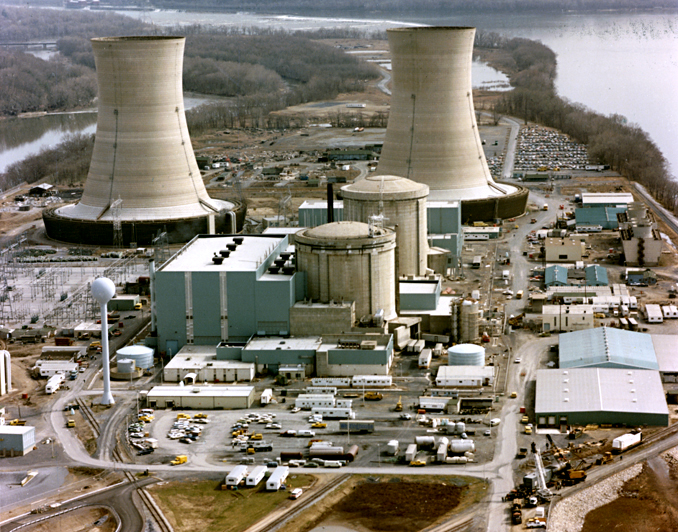
The Three Mile Island accident took place on March 28, 1979, at the Three Mile Island Nuclear Generating Station near Harrisburg, Pennsylvania. A sequence of equipment malfunctions, design limitations, and human actions combined to produce a loss-of-coolant condition and a partial core meltdown in Unit 2, a pressurized water reactor of roughly 900 MWe rating. While the plant's containment structures prevented a catastrophic release of radioactivity and large-scale acute health effects were not demonstrated, the incident had profound regulatory, social, and policy consequences for the civilian nuclear industry in the United States.
Image gallery
9 Images


Background and plant
The Three Mile Island complex contained two operating units and sat near the state capital; its location and visibility ensured that events there received intense public and media attention. The plant and reactor design have been described in many technical and policy reviews; the affected unit, Unit 2, was a pressurized water reactor, and post-accident analyses examined both plant systems and human factors in detail (see general plant information at Three Mile Island plant and reactor type description at reactor type).
Sequence of events and technical factors
The initiating event was a failure in secondary systems that removed heat from the reactor, followed by an automatic reactor shutdown. A relief valve on the primary system became stuck open and allowed coolant to escape; however, indicators available in the control room did not clearly show the valve's position. Operators, relying on ambiguous instrument readings and in some cases outdated procedures, took actions that reduced core cooling. As portions of the core overheated, fuel rod cladding was damaged and some core material melted.
Hydrogen was produced by high-temperature reactions inside the reactor pressure vessel, creating a gas-filled region that concerned experts because of the potential, if oxygen were introduced, for combustion or pressure transients. Although some feared that such events could challenge the pressure vessel or containment, the vessel ultimately retained its integrity and the containment limited off-site releases. The release that did occur consisted largely of small amounts of volatile radioisotopes.
Emergency response and public reaction
Plant operators, state and federal officials, and emergency teams took actions to stabilize the unit and to monitor the surrounding area for radiation. Communication difficulties, conflicting statements from authorities, and uncertainty about the reactor's condition contributed to public alarm. Many residents sought information or chose to evacuate temporarily; local recommendations ranged from sheltering to voluntary evacuation. The disparity of messages and the lack of clear lines of authority were later cited as major shortcomings in crisis management.
Investigations and findings
Comprehensive investigations by regulatory bodies, independent panels, and later historians concluded that the accident resulted from a combination of technical failures, inadequate control-room information, insufficient operator training for severe accidents, and organizational weaknesses in regulation and utility oversight. Reviews emphasized the role of human factors, the need for clearer instrumentation and procedures, and the importance of emergency preparedness and public communication. J. Samuel Walker and other commentators argued that the event exposed systemic regulatory weaknesses and contributed to heightened public scrutiny of nuclear power (see broader industry context at nuclear industry resources).
Cleanup, costs and timeline
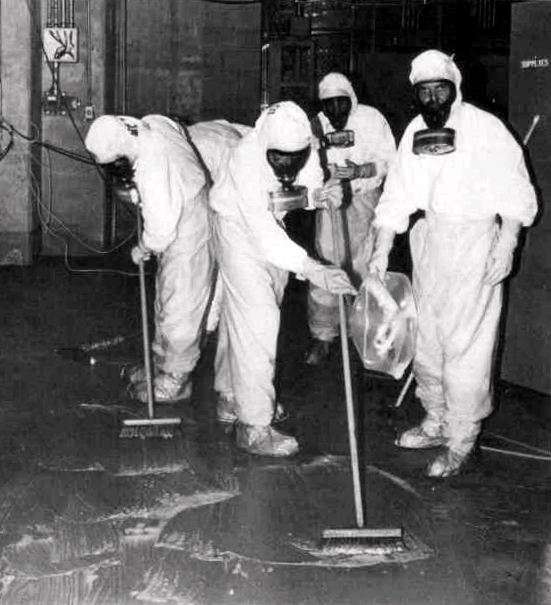
Decontamination and recovery of the damaged unit was a long and technically challenging process. Removal of damaged fuel and cleanup of contaminated systems required specialized remote-handling techniques and strict radiation protection measures. The cleanup of Unit 2 took about 11 years and cost on the order of US$1 billion. Lessons learned during cleanup informed improvements in radiation protection, waste handling, and accident management practices across the industry.
Health studies and environmental monitoring
Extensive environmental monitoring and epidemiological research followed the accident to assess possible effects on the surrounding population. Reviews of this research have produced mixed conclusions: many broad reviews found little or no detectable increase in population-level cancer rates that could be confidently attributed to the releases, while some localized or smaller studies suggested small differences that are difficult to interpret because of statistical uncertainty and potential confounding factors. Overall, analysts stress caution in attributing long-term health outcomes to the accident, noting that any increase, if present, would be small and hard to separate from background rates (summaries of health-related work are available at health study summaries).
Regulatory and industry consequences
The accident prompted major changes in nuclear regulation, operator training, control-room design, and emergency planning in the United States. The Nuclear Regulatory Commission and utilities implemented stricter requirements for operator qualifications, technical specifications, severe-accident management guidance, and public communication. The event strengthened anti-nuclear sentiment and activism and is commonly cited as a turning point that slowed or halted new nuclear construction for many years (see discussion of public movements at anti-nuclear movement history).
Legacy and significance
Three Mile Island remains a seminal case study in industrial safety, risk communication, and regulatory policy. It illustrates how complex technological systems interact with organizational practices and public perception. For energy policy, the accident contributed to a long pause in new nuclear plant orders in the United States and reshaped priorities for safety culture, human factors engineering, and emergency preparedness. Local historical and civic resources continue to document the event and its aftermath (regional perspectives are available at local Harrisburg sources).
Key points
- Date and place: March 28, 1979; Three Mile Island, near Harrisburg, Pennsylvania.
- Unit affected: Unit 2, a pressurized water reactor (approximate electrical rating ~900 MWe).
- Damage: Partial core meltdown with significant fuel damage and hydrogen production inside the pressure vessel.
- Containment and releases: Pressure vessel and containment held; off-site releases were limited to relatively small amounts of volatile isotopes.
- Aftermath: Extensive cleanup (about 11 years) and substantial regulatory and industry reforms.
The Three Mile Island accident remains relevant for those studying technological risk, emergency response, and public policy, and continues to be examined as an example of how technical, human, and institutional factors together shape the outcome of industrial crises.
Questions and answers
Q: What was the date of the Three Mile Island accident?
A: The Three Mile Island accident occurred on March 28th, 1979.
Q: Where did the Three Mile Island accident take place?
A: The Three Mile Island accident took place at the Three Mile Island Nuclear Power Plant in Pennsylvania.
Q: How large was Unit 2's pressurized water reactor?
A: Unit 2's pressurized water reactor had a capacity of 900 MWe.
Q: What caused the crisis at the TMI plant?
A: The crisis at the TMI plant was caused by several minor equipment failures that were drastically compounded by operator errors.
Q: What was the greatest source of concern during the TMI crisis?
A: During the TMI crisis, there was a great concern about a hydrogen bubble that had formed in the top of the pressure vessel which held the core. It was feared that this bubble could become flammable or explosive and potentially rupture the pressure vessel and force damaged reactor core into containment building.
Q: Was there any breach of containment as a result of this incident? A: In spite of a partial meltdown occurring, there was no breach of containment structure as a result of this incident. Only "tiny amounts" of volatile radiation escaped to atmosphere.
Q: How long did it take to clean up after this incident and how much did it cost? A: It took 11 years to clean up after this incident and it cost approximately US$1 billion.
Related articles
Author
AlegsaOnline.com Three Mile Island accident (1979): partial core meltdown and consequences Leandro Alegsa
URL: https://en.alegsaonline.com/art/99648
Sources
- americanscientist.org : March Madness (Book review)
- world-nuclear.org : Three Mile Island: 1979
- thebulletin.org : Documenting Three Mile Island
- encyclopedia.com : "Three Mile Island: A Nuclear Crisis in Historical Perspective (Book review)"
- doi.org : 10.1111/j.1540-6563.2005.00122.x
- leonardo.info : "Three Mile Island: A Nuclear Crisis in Historical Perspective (Review)"