
Thomas Rogers — Mayflower passenger and Leiden Separatist
English-born Thomas Rogers (c.1572–winter 1620/21) was a Leiden Separatist and Mayflower passenger who sailed with his son in 1620, signed the Mayflower Compact, and died in the colony's first winter.
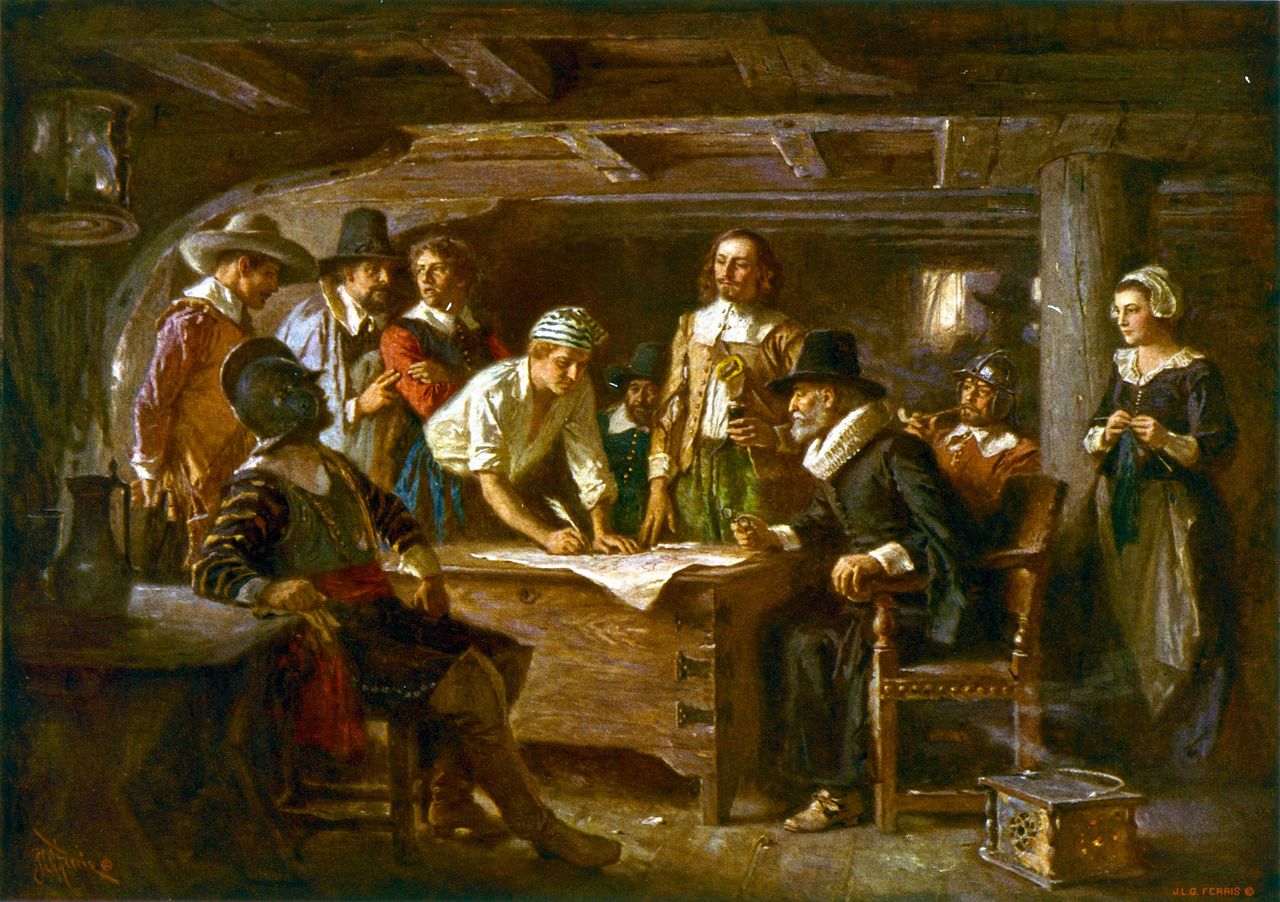
Thomas Rogers (born about 1572) was an English emigrant who joined the Leiden Separatist community and sailed to New England aboard the Mayflower in 1620. He and his eldest son were among the passengers who signed the Mayflower Compact, the brief agreement that established a basic civil government for the new settlement. Rogers represents the many working-class households who left England for religious freedom and a chance at a new life.
Image gallery
2 Images
Origins and move to Leiden
Rogers is thought to have been born near Watford; contemporary notes associate him with the area around Watford and other records place his origins in Watford, England. Like other Separatists, his family left England after the 1610s when nonconformist worship was increasingly restricted. Rogers settled in the Dutch city of Leiden in the Netherlands, where an expatriate English congregation maintained its community life while planning eventual emigration.
Occupation and household
In Leiden Rogers became a citizen and a tradesman. Contemporary accounts identify him as a merchant dealing in camlet, a woven luxury cloth. Camlet traditionally involved silk blended with finer fibres such as camel’s hair, and it was sold as an upscale textile in early modern markets. Despite his trade, Rogers and his family appear to have lived modestly and struggled financially in Leiden.
The Mayflower voyage and the Compact
Thomas Rogers embarked on the Mayflower in 1620 with his oldest son (commonly identified in passenger lists as Joseph). The crossing was hazardous and crowded; after landing at Cape Cod the male passengers drafted and signed the Mayflower Compact to provide unity and lawful order. Rogers is recorded among the signatories, reflecting his role as a head of household and participant in the colony’s founding governance.
Death and legacy
Rogers did not survive long in Plymouth. He died in the colony’s first winter (1620–1621), one of many settlers who succumbed to disease, exposure, and shortage. His son, who had accompanied him, survived and contributes to the Rogers family’s continuation in New England. Historically, Thomas Rogers is remembered as part of the broader story of religious migration, early colonial hardship, and the communities that shaped New England’s beginnings.
Notable facts
- Rogers purchased property and became a citizen in Leiden: see transaction records noting he purchased a house there.
- His religious affiliation is tied to the Separatists, the group that sought congregational independence from the Church of England.
- Camlet, the fabric he traded, was prized for combining silk with hairs such as camel’s hair to produce a durable, lustrous cloth.
For further introductory reading on the context of Rogers’ life, the Leiden community, and the Mayflower Compact, consult specialized sources and archival passenger lists held by historical and genealogical organizations. Primary records remain the basis for most details about lesser-known Mayflower passengers like Thomas Rogers.
Questions and answers
Q: Who is Thomas Rogers?
A: Thomas Rogers was a passenger on the Mayflower and one of the signatories of the Mayflower Compact.
Q: Where was Thomas Rogers born?
A: Thomas Rogers was born near Watford, England.
Q: Who were William and Elanor Rogers?
A: William and Elanor Rogers were Thomas Rogers' parents.
Q: Why did the Rogers family move to Leiden, Netherlands?
A: The family moved to Leiden Netherlands from England after 1613 because they were Separatists and their religion had become illegal in England.
Q: What was Thomas Rogers' occupation?
A: Thomas Rogers was a merchant of camlet, a luxury fabric made from silk and camel’s hair.
Q: Was the Rogers family wealthy?
A: No, the Rogers family were very poor.
Q: How many Rogers family members travelled on the Mayflower?
A: Thomas Rogers and his oldest son travelled on the Mayflower.
Related articles
Author
AlegsaOnline.com Thomas Rogers — Mayflower passenger and Leiden Separatist Leandro Alegsa
URL: https://en.alegsaonline.com/art/99534
Sources
- americanancestors.org : americanancestors.org/pilgrim-families-thomas-rogers/
- findagrave.com : Memorial for Thomas Rogers