
Thomas Newcomen and the First Practical Atmospheric Steam Engine
English ironmonger and inventor Thomas Newcomen (1664–1729) built the first practical atmospheric steam engine to pump water from mines, an important step in early steam technology and industrial mechanisation.
Overview
Thomas Newcomen (baptised 24 February 1664 – 5 August 1729) was an English ironmonger and inventor who developed the first practical atmospheric steam engine for pumping water from flooded mines. Newcomen's engine provided a dependable mechanical solution to a long‑standing industrial problem and served as a working foundation for later refinements in steam technology.
Image gallery
3 Images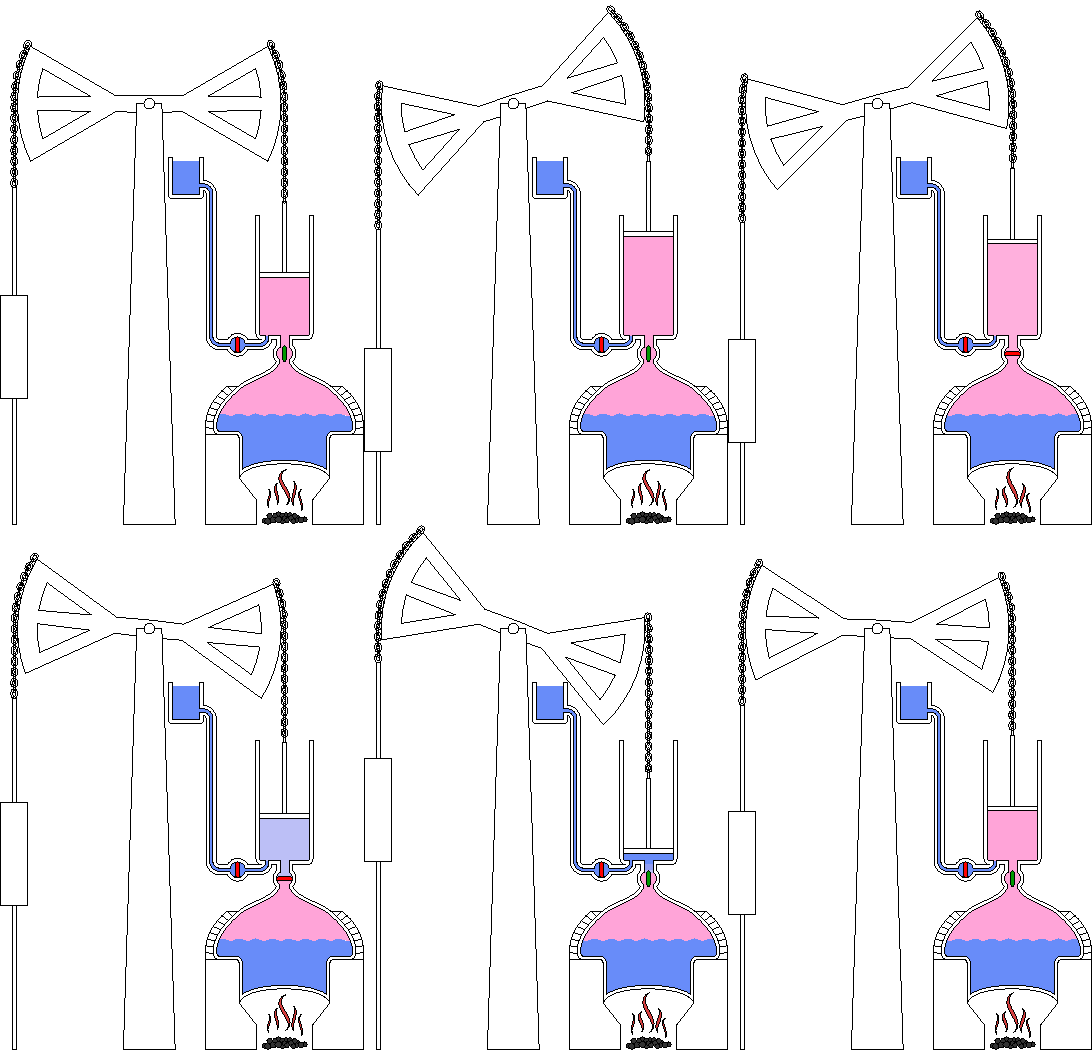

Early life and trade
Newcomen was born in Dartmouth, Devon, into a merchant family and worked as an ironmonger supplying hardware and tools to local trades. He was also a Baptist lay preacher. His trade brought him into close contact with mine owners and engineers, exposing him to the frequent problem of water inundation in mineral workings, especially in the coal and tin districts of Britain.
Problem addressed
Flooding in mines limited the depth to which miners could work and increased costs and danger. Before Newcomen, a variety of mechanical pumps and horse‑driven winding gear were used, but these were often inadequate for deep shafts. Newcomen sought a machine that could deliver steady, heavy pumping power at the mine face and that could be maintained by local craftsmen.
Design and operation
Newcomen's machine is commonly described as an atmospheric engine. It worked by admitting steam into a vertical cylinder beneath a piston and then condensing the steam by injecting cold water. Condensation produced a partial vacuum in the cylinder so that atmospheric pressure forced the piston down. The piston was connected by a beam to pump rods that operated the mine pumps. Key features of the design included:
- a vertical cylinder and piston
- a large reciprocating beam to transfer motion
- a surface pump connected by rods down the shaft
- a simple injection condenser where water condensed the steam
Construction and spread
Newcomen collaborated with artisans and instrument makers to build engines after the first successful trials in the early 18th century. Engines of his type were robust and comparatively simple to construct from the ironwork and woodworking skills available at the time. As a result, the design spread to many mining districts and to drainage and water‑supply installations where steady pumping was required.
Efficiency, limitations and fuel
Although effective, Newcomen engines were not fuel efficient: they required large quantities of coal relative to the work produced because each stroke involved cooling the main cylinder. In districts where coal was cheap the engines were economical, but in other locations fuel cost limited their application. The engines were valued, however, for reliability and ease of repair.
Later developments and legacy
In the later 18th century, inventors made important improvements. James Watt introduced a separate condenser and other refinements that reduced fuel consumption substantially. Watt and his partner Matthew Boulton commercialised these enhancements and established a royalties system that helped spread the improved machines. Despite Watt’s later prominence, historians recognise Newcomen’s engine as the crucial practical bridge from experimental steam devices to industrial application.
Survival and study
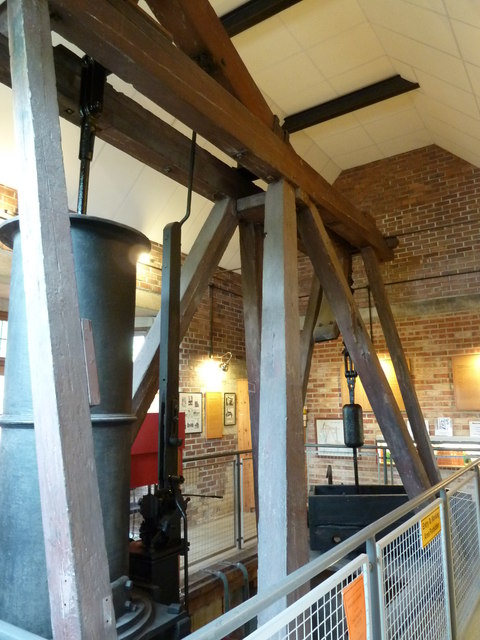
A small number of original Newcomen engines and several modern reconstructions survive in museums and at historic sites, where they are studied as early examples of large‑scale mechanical engineering. Museums and specialised histories of mining and technology provide further reading and context for Newcomen’s contribution to the early stages of the Industrial Revolution.
For introductory accounts and technical overviews consult museum catalogues and standard histories of mining technology that discuss the transition from hand and horse power to steam power in the 18th century.
Questions and answers
Q: Who was Thomas Newcomen?
A: Thomas Newcomen was an English inventor who made the first practical steam engine for pumping water.
Q: When was Thomas Newcomen born?
A: Thomas Newcomen was born in February 1664.
Q: What was Thomas Newcomen's occupation before becoming an inventor?
A: Thomas Newcomen was an ironmonger and a Baptist lay preacher.
Q: What problem was Newcomen trying to solve with his steam engine?
A: Newcomen was trying to improve ways to pump out the water from coal and tin mines.
Q: What did Newcomen's ironmonger's business specialize in?
A: Newcomen's ironmonger's business specialized in tools for the mining industry.
Q: How efficient was Newcomen's first steam engine?
A: Newcomen's first steam engine was not very efficient, and used a lot of coal.
Q: Who got substantial royalties for their steam engines that were more fuel efficient?
A: James Watt and his partner Matthew Boulton got substantial royalties because their steam engines saved so much on fuel bills.
Related articles
Author
AlegsaOnline.com Thomas Newcomen and the First Practical Atmospheric Steam Engine Leandro Alegsa
URL: https://en.alegsaonline.com/art/99529
Sources
- blog.sciencemuseum.org.uk : "In pursuit of power"
- sciencemuseum.org.uk : sciencemuseum.org.uk/