
Thomas Henry Huxley: Victorian anatomist, educator, and public advocate for science
Overview of T. H. Huxley (1825–1895): his life, comparative anatomy, support for Darwin, role in scientific education and public debates, coinage of 'agnostic', and lasting influence.
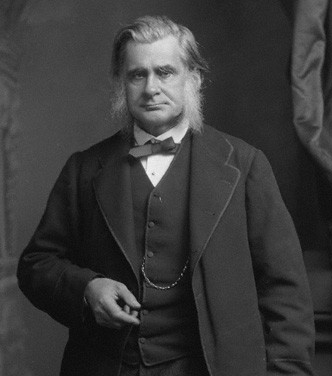
Thomas Henry Huxley (1825–1895) was a prominent English scientist and biologist best known for his work in comparative anatomy and for his energetic public defense of evolutionary ideas. Born in Ealing, then in Middlesex, Huxley combined laboratory skill with popular exposition, serving on numerous public bodies and helping to shape British scientific institutions in the Victorian era.
Image gallery
10 Images




Early life and self-education
Huxley received little formal schooling and was largely self-taught, developing a disciplined habit of study and practical observation. He trained as a surgeon in the Royal Navy, where exposure to marine and comparative specimens prompted his interest in anatomy and the relationships between species. His personal trajectory — from modest origins to leading scientist and public figure — became a model for professional science in Britain.
Scientific work and ideas
Huxley made significant contributions to the understanding of anatomical structure and classification. He investigated the anatomy of vertebrates, articulated distinctions between major groups, and emphasized rigorous method in morphology. He argued for the evolutionary relationship between humans and other primates and explored the origin of birds from small carnivorous reptilian ancestors, an idea that anticipated later paleontological discoveries. Huxley also wrote influential essays and textbooks that clarified biological concepts for students and the educated public.
Public role, Darwin, and the 'Bulldog' label
Although Huxley was initially cautious about some details of Charles Darwin's theories, he quickly became one of Darwin's most energetic public supporters. The sobriquet "Darwin's Bulldog" later came into use to describe his advocacy, though it was not a contemporary label. Huxley famously debated the Bishop of Oxford, Samuel Wilberforce, in a widely reported public exchange in 1860; the episode enhanced public awareness of the evolutionary controversy and raised Huxley's national profile. He maintained a sustained correspondence and friendship with leading scientists of the day, including the Irish physicist John Tyndall.
Education, institutions, and public commissions
Beyond research, Huxley played a major role in reforming scientific education and promoting professional standards. He served on many public committees — ten Royal Commissions by some counts — and argued for laboratory-based training and broader access to scientific knowledge. His efforts influenced museums, schools, and university teaching, helping establish biology as a distinct academic discipline and raising the status of scientific careers.
Religion, philosophy, and the term 'agnostic'
Huxley engaged vigorously in debates about the relationship between science and religion. Rejecting both dogmatic atheism and conventional theism, he advocated intellectual humility about metaphysical claims and coined or popularized the term agnostic to express a position of suspended judgment about the existence of deities. He opposed extreme clerical interference in scientific matters and argued that empirical inquiry and moral life should be kept distinct where appropriate.
Legacy, family, and notable facts
Huxley's influence endured through students, institutional reforms, and public discourse. He died in Eastbourne, in Sussex, leaving a large body of essays, lectures, and anatomical studies. He was associated with many contemporary institutions and controversies, and three of his grandsons later became prominent public figures in the 20th century. Huxley's career combined specialist scholarship with civic engagement: he helped define what it meant to be a modern professional scientist in Britain and remains a central figure in the history of biology.
Selected contributions and contexts
- Comparative anatomy and zoology: systematic study of vertebrate structure and classification (comparative anatomy).
- Championing evolution: public defense of Charles Darwin's ideas and debate participation that popularized evolutionary discussion (Darwin, evolution).
- Science education and policy: participation on advisory bodies and Royal Commissions (Royal Commissions), promotion of laboratory teaching and curricula reform.
- Philosophy of knowledge: articulation of an 'agnostic' stance toward metaphysical claims (religion, agnosticism).
For further reading and archival sources consult biographies, collected essays, and institutional histories (see notices of his life in contemporary press and scientific correspondence). Huxley's example illustrates how a single figure can bridge specialized research, educational reform, and sustained public engagement in science. Additional contexts include his relationships with contemporaries such as Irish and British scientists, his participation in public controversies over teaching and belief, and his lasting role in narratives of Victorian science (public debates, clerical opponents, human origins). Minor biographical details, such as places of birth and death, are often cited in reference works (Middlesex, Ealing, Eastbourne), and his familial connections are occasionally noted (descendants). Huxley's tenure as a public intellectual, his methods in natural history, and his promotion of rigorous scientific education remain central themes in assessments of nineteenth-century science (biologist, reptilian ancestors, regional context, scientific life, collaborators).
Questions and answers
Q: Who was Thomas Henry Huxley?
A: Thomas Henry Huxley was an English biologist who specialised in comparative anatomy. He is sometimes referred to as Darwin's Bulldog for his support of Charles Darwin's theory of evolution.
Q: Where was he born?
A: He was born in Ealing, Middlesex.
Q: What did Huxley do to help the theory of evolution?
A: Huxley publicly supported the theory of evolution and had a famous debate with Bishop Samuel Wilberforce which many thought he won, which helped further his career and the acceptance of the theory.
Q: How did he contribute to scientific education?
A: Huxley developed scientific education in Britain and fought against more extreme forms of religion, which had a big effect on how people thought about the world.
Q: What term did Huxley use to describe his beliefs about God?
A: Huxley used the term agnostic to say that he did not know if there is a god or not. We continue to use this term today.
Q: Who was John Tyndall?
A: John Tyndall was an Irish physicist who was a close friend of Thomas Henry Huxley for many years.
Q: What other ideas did Huxley have that are now known to be true? A: One of his ideas was that birds evolved from small carnivorous dinosaurs, which is now known to be true.
Related articles
Author
AlegsaOnline.com Thomas Henry Huxley: Victorian anatomist, educator, and public advocate for science Leandro Alegsa
URL: https://en.alegsaonline.com/art/99504