
Beautiful Dreamer — Stephen Foster's lullaby-like ballad and its legacy
A concise overview of Stephen Foster’s “Beautiful Dreamer”: its origins, musical features, reception, and lasting role in American popular and parlor-song traditions.
Overview
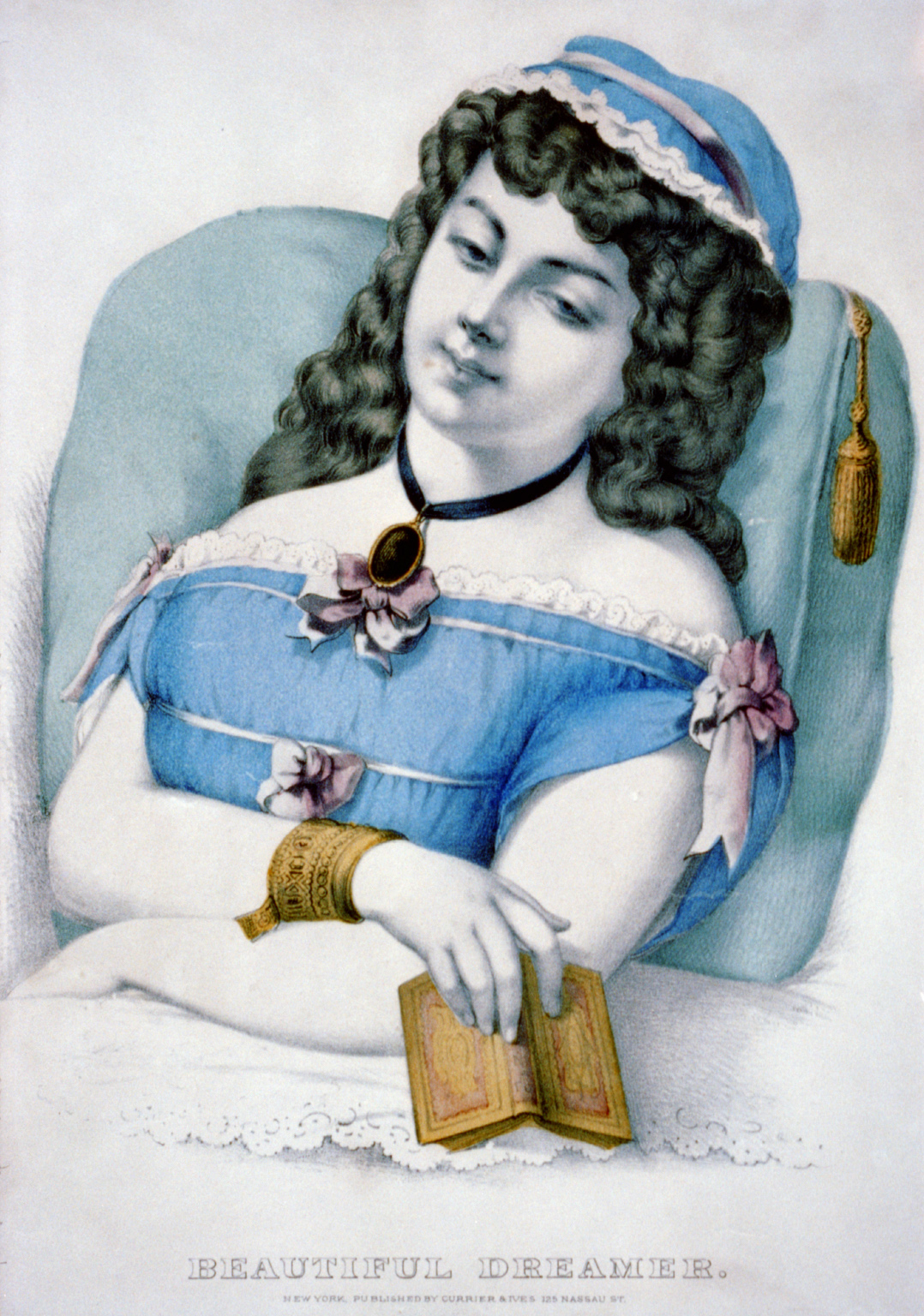
"Beautiful Dreamer" is a short, lyrical song written by American composer Stephen Foster around 1862 and published posthumously in 1864 by the music firm William A. Pond & Co. Often promoted as Foster’s final composition, that assertion remains unproven but has become part of the song’s folklore. Its simple, flowing melody and gentle accompaniment helped the song become a staple of nineteenth-century parlor music and to retain a presence in recordings, arrangements, and popular culture into the twentieth and twenty-first centuries.
Image gallery
2 Images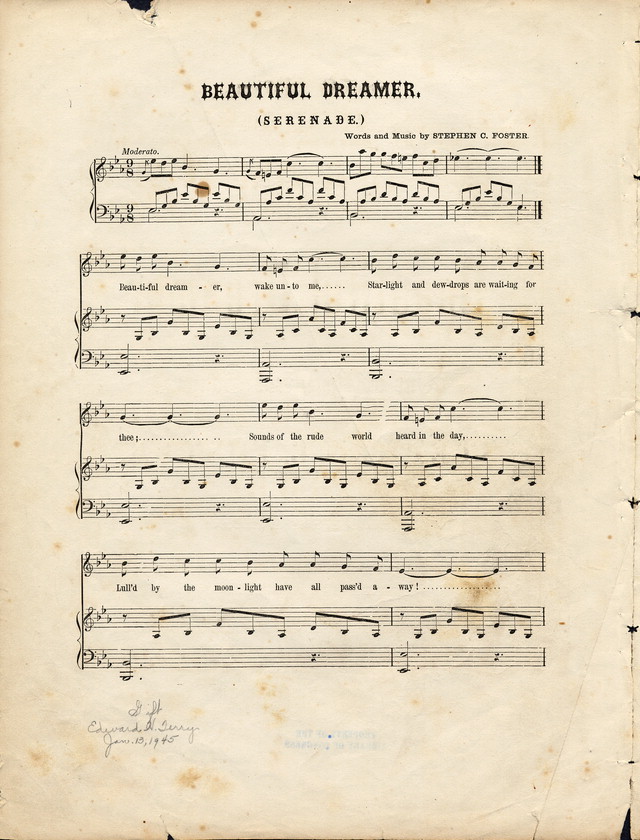
Musical characteristics
The song is set in a triple meter that produces a lullaby-like sway. The vocal line is predominantly songful and diatonic, with an arpeggiated piano accompaniment that evokes the bel canto style of nineteenth-century vocal writing—an effect that makes the piece feel both intimate and operatic. Lyrically, Foster uses maritime and natural imagery—mists, waves, and sea-birds—to create a dreamy atmosphere. The identity of the addressee, the "dreamer," is left ambiguous: the lyrics can be read as addressing someone asleep, or as a tender tribute to the dead. That ambiguity contributes to the song’s capacity to be performed in a range of expressive contexts.
History and context
Composed during the era of the American Civil War, the song draws on the mid-nineteenth century’s appetite for sentimental parlor songs and simple, memorable tunes suitable for home performance. Foster, sometimes called the father of American popular song, wrote many pieces that joined formal Western art-music traits with accessible melodies intended for broad audiences. Music publishers such as William A. Pond & Co. helped disseminate his work after his death, ensuring that pieces like "Beautiful Dreamer" reached music buyers and amateur performers across the United States and beyond. For background on the composer, see Stephen Foster.
Reception and criticism
Public reaction to "Beautiful Dreamer" has been largely favorable: it became widely sung in parlors, adapted in numerous arrangements, and recorded by a variety of performers over many decades. Critical opinion, however, has been mixed. Some scholars and critics have dismissed the song as overly sentimental or saccharine, and a few have likened its idiom to later popular-song traditions—for example, comparisons to the mainstream pop style of composers such as Irving Berlin emphasize its commercial, crowd-pleasing qualities rather than any avant-garde innovation.
Uses, arrangements, and legacy
- Commonly included in collections of American parlor songs and Foster anthologies.
- Arranged for solo voice and piano, choral ensembles, instrumental recital, and brass or string adaptations.
- Appeared in recordings, film and television soundtracks, and occasional popular-culture references or parodies that play on its gently mournful mood.
Despite divided critical estimates, "Beautiful Dreamer" endures because of its direct melodic appeal and emotional flexibility: performers can emphasize its tenderness, its elegiac qualities, or its lullaby character. The song encapsulates much of what made mid-nineteenth-century American popular song widely appealing—an approachable tune, evocative imagery, and a setting that invites both private performance and public nostalgic memory.
Questions and answers
Q: When was "Beautiful Dreamer" written and published?
A: "Beautiful Dreamer" was written about 1862 and was first published (posthumously) in 1864.
Q: Who published "Beautiful Dreamer"?
A: "Beautiful Dreamer" was published by William A. Pond & Co.
Q: What is "Beautiful Dreamer" about?
A: "Beautiful Dreamer" is a song about dissolution.
Q: Is "Beautiful Dreamer" Stephen Foster's last song?
A: It has been promoted as Foster's last song, but that distinction cannot be confirmed.
Q: What is the rhythm of "Beautiful Dreamer"?
A: "Beautiful Dreamer" has a triple rhythm.
Q: What imagery is shared between "Open They Lattice, Love" and "Beautiful Dreamer"?
A: The imagery of the sea and marine life is shared between "Open They Lattice, Love" and "Beautiful Dreamer".
Q: How has "Beautiful Dreamer" been described by a musicologist?
A: "Beautiful Dreamer" has been described by one musicologist as "saccharine" and "[smacking] somewhat of the idiom of Irving Berlin."
Related articles
Author
AlegsaOnline.com Beautiful Dreamer — Stephen Foster's lullaby-like ballad and its legacy Leandro Alegsa
URL: https://en.alegsaonline.com/art/9934