
Thermophile
Organisms adapted to life at high temperatures. Covers definitions, temperature ranges, cellular adaptations, habitats, evolutionary context, and industrial and scientific uses.
Overview
A thermophile is an organism adapted to grow and reproduce at relatively high temperatures. Often described as a subgroup of extremophiles, thermophiles generally show optimal growth at temperatures substantially above those tolerated by most life. Many thermophilic species belong to the domain Archaea, while thermophilic bacteria such as members of the genus Thermus are also common. In broad terms thermophiles thrive where geological or biological processes raise temperatures above ambient.
Image gallery
2 Images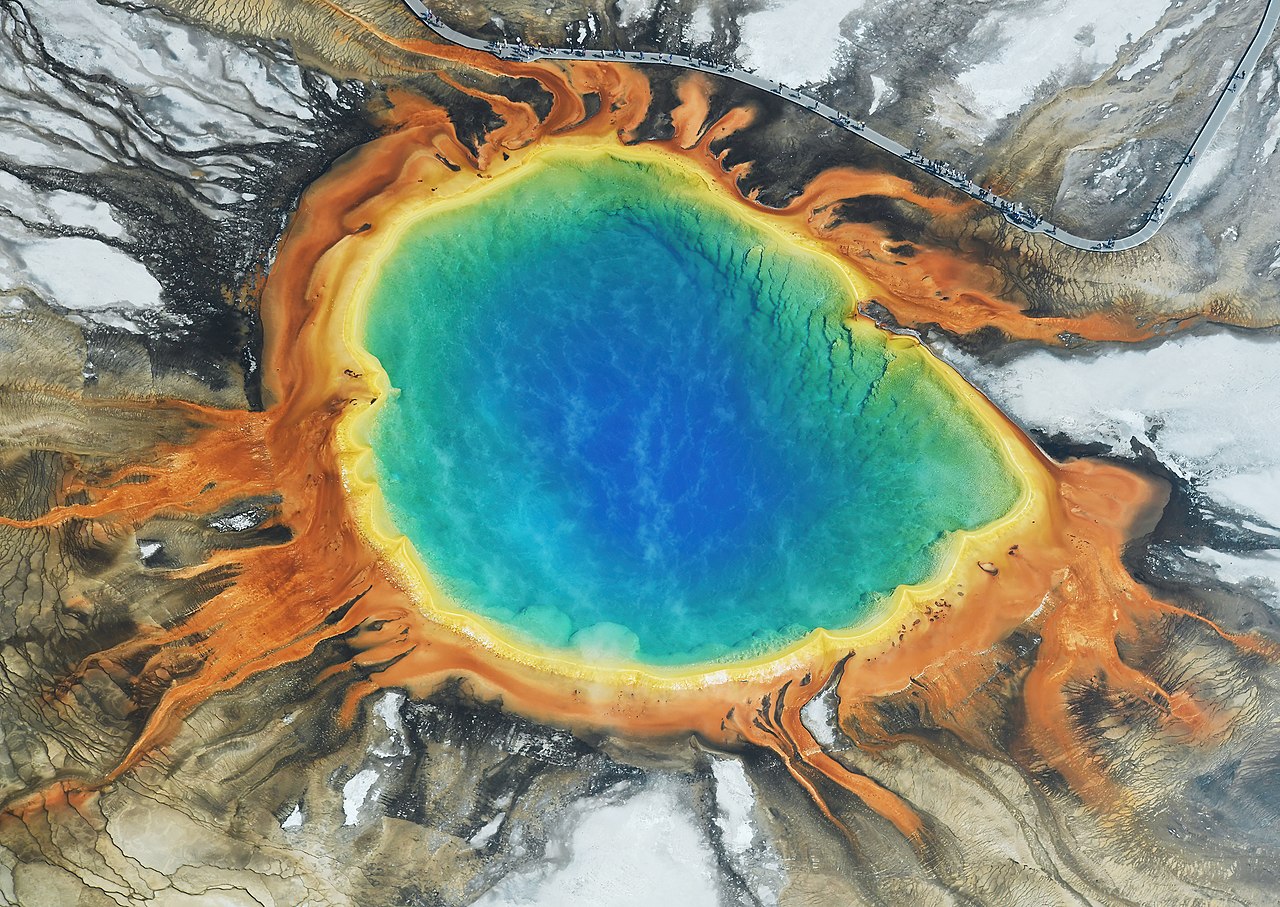

Temperature ranges and classification
Definitions vary, but thermophiles typically have growth optima in roughly the 40–80 °C range; organisms with optima above about 80 °C are commonly called hyperthermophiles and can persist up to near 120 °C in specialized niches. Some texts use the terms moderate thermophile, thermophile and hyperthermophile to indicate increasing temperature preferences. Temperature tolerance depends on both the species and on growth conditions such as pressure and available nutrients.
Cellular and molecular adaptations
Thermophiles maintain functional cells at high temperature through multiple stabilizing features. Proteins often have more compact folds, extra ionic interactions and amino‑acid substitutions that reduce thermal denaturation. Specialized molecular chaperones and efficient DNA repair systems help protect and refold macromolecules. Many hyperthermophiles possess the enzyme reverse gyrase, associated with stabilizing DNA at very high temperatures. Membrane lipids are altered to resist heat: many archaeal thermophiles have ether-linked, often cyclic, lipids while thermophilic bacteria tend to increase saturated fatty acids to maintain membrane integrity.
Natural habitats and distribution
Thermophiles are found in geothermally heated environments and in biologically warmed niches. Classic examples include hot springs and fumaroles in places such as Yellowstone National Park, and the mineral‑rich ecosystems of deep‑sea hydrothermal vents. Geothermal soils and caves, and human‑managed or natural decomposing biomass such as compost, peat deposits and some bog microhabitats can also reach temperatures that support thermophiles. These habitats are scattered across the Earth and occur wherever heat and suitable chemistry coincide, including volcanic regions and subseafloor sites influenced by tectonic activity. Geothermal activity provides stable heat sources, while decaying organic matter can create transient hot microenvironments.
Ecology and evolution
Thermophiles occupy ecological roles from primary producers (in chemolithoautotrophic communities at vents) to decomposers in hot compost heaps. Their distribution and diversity inform questions about the early evolution of life: some researchers suggest that thermally tolerant biochemistry could reflect ancient conditions on the early Earth, though thermophily has evolved independently in multiple lineages. As a result, modern thermophiles include both deeply branching groups and more recently adapted species.
Industrial and scientific importance
Thermophiles are valuable sources of thermostable enzymes used in biotechnology and industry. A well‑known example is the heat‑stable DNA polymerase from a thermophilic bacterium that enabled robust DNA amplification methods. Thermostable proteases, lipases and cellulases are used in processes such as high‑temperature biocatalysis, detergent formulations, biofuel production and high‑temperature waste treatment. Studying thermophiles also advances understanding of protein folding, membrane biochemistry and the limits of life, and contributes to disciplines such as astrobiology.
Studying and culturing thermophiles
Research on thermophiles combines field sampling at hot sites with laboratory enrichment cultures under controlled heat and chemical conditions. Isolation can require specialized equipment to maintain elevated temperatures and, for deep‑sea species, high pressure. Modern molecular methods such as metagenomics reveal thermophile diversity beyond what can be cultured, expanding knowledge of their metabolic capabilities and ecological roles.
Further notes
- Thermophily is not restricted to one domain: both archaea and bacteria include thermophilic species.
- Oxygen requirements vary: thermophiles may be aerobic, anaerobic or microaerophilic depending on species and habitat.
- Practical applications continue to grow as new thermostable biomolecules are discovered.
For introductory overviews and site‑specific information see general resources on extremophiles, geothermal microbiology such as geothermal studies, and regional guides to locations like Yellowstone and deep‑sea vent research sites.
Questions and answers
Q: What is a thermophile?
A: A thermophile is an organism that thrives at relatively high temperatures, between about 40 and 120°C (104 and 248°F).
Q: What kind of extremophile is a thermophile?
A: A thermophile is a type of extremophile.
Q: What type of organisms are many thermophiles?
A: Many thermophiles are archaea.
Q: What does the text say about thermophilic eubacteria?
A: The text says that thermophilic eubacteria may have been among the earliest bacteria.
Q: Where are thermophiles found?
A: Thermophiles are found in various geothermally heated parts of the Earth's surface, including hot springs like those in Yellowstone National Park and deep sea hydrothermal vents.
Q: What are some examples of decaying plant matter that makes higher temperatures?
A: Peat bogs and compost are examples of decaying plant matter that makes higher temperatures.
Q: What temperature range qualifies an organism as a thermophile?
A: An organism is considered a thermophile if it thrives at relatively high temperatures, between about 40 and 120°C (104 and 248°F).
Related articles
Author
AlegsaOnline.com Thermophile Leandro Alegsa
URL: https://en.alegsaonline.com/art/99310
Sources
- pnas.org : "Cell proliferation at 122°C and isotopically heavy CH4 production by a hyperthermophilic methanogen under high-pressure cultivation"
- ui.adsabs.harvard.edu : 2008PNAS..10510949T
- doi.org : 10.1073/pnas.0712334105
- ncbi.nlm.nih.gov : 2490668
- pubmed.ncbi.nlm.nih.gov : 18664583
- linkinghub.elsevier.com : "Phylogenetic construction of 17 bacterial phyla by new method and carefully selected orthologs"
- doi.org : 10.1016/j.gene.2008.10.006
- ncbi.nlm.nih.gov : 2648810
- pubmed.ncbi.nlm.nih.gov : 19000750