
Thermal physics: an introduction to heat, entropy, and statistical behavior
Study of heat, work, temperature, and the microscopic origins of thermodynamic behavior; unites thermodynamics, statistical mechanics, and kinetic theory with practical applications.
Overview
Thermal physics examines how macroscopic phenomena such as temperature, pressure, and heat arise from microscopic motion and interactions. It is an umbrella area that brings together thermodynamics, statistical mechanics, and kinetic theory to explain energy transfer, equilibrium, and fluctuations. The subject bridges purely phenomenological laws with probabilistic descriptions of many-particle systems and is central to both basic physics education and applied sciences.
Image gallery
1 Image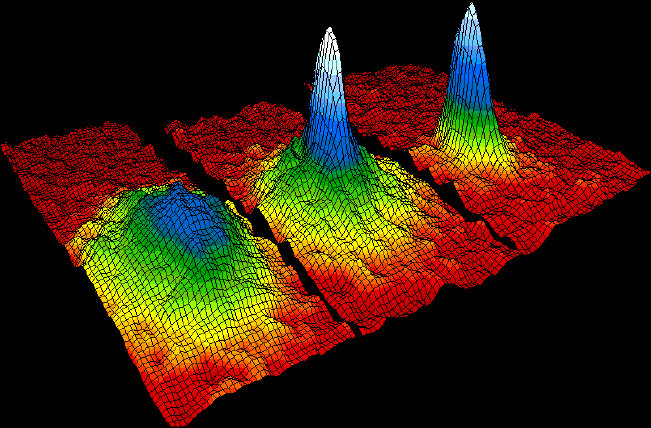
Core components and concepts
Each component contributes a different perspective: macroscopic conservation laws and state variables in thermodynamics; microscopic ensembles and probability distributions in statistical mechanics; and particle-level motion and collisions in kinetic theory. Together they address how systems exchange heat, perform work, and relax toward equilibrium.
- Key principles: zeroth through third laws of thermodynamics, energy conservation, and the concept of entropy.
- Statistical tools: microcanonical, canonical and grand canonical ensembles; partition functions; Boltzmann and Gibbs formulations.
- Kinetic ideas: mean free path, velocity distributions (e.g., Maxwell–Boltzmann), and transport coefficients such as viscosity and thermal conductivity.
Historical development
The field emerged in the nineteenth century from attempts to understand heat engines and the nature of heat. Early thermodynamic laws grew from empirical work on steam engines; later, the atomic hypothesis and Boltzmann's probabilistic reasoning gave rise to statistical mechanics. Kinetic theory provided a concrete microscopic picture that linked particle motion to pressure and temperature. Over decades these strands converged into the modern curriculum known as thermal physics.
Applications and examples
Thermal physics underpins a wide range of practical and theoretical areas: design of engines and refrigerators, materials processing, atmospheric and climate science, semiconductor device behavior, and chemical reaction thermodynamics. Examples include calculating heat capacities from microscopic models, estimating diffusion rates from kinetic theory, and predicting phase transitions using ensemble methods.
Distinctions and pedagogical role
Unlike a course focused exclusively on thermodynamics or statistical mechanics, thermal physics emphasizes how macroscopic laws follow from microscopic statistics and dynamics. It trains students to move between qualitative thermodynamic intuition and quantitative microscopic calculation. When consulting further reading, many texts treat thermodynamics and statistical mechanics together, while some curricula include additional kinetic-theory material via kinetic theory modules. Introductory expositions often begin with heat transfer and equilibrium concepts before introducing ensembles and transport phenomena.
For concise introductions and deeper treatments, readers may follow standard textbooks and review articles that connect phenomenological laws to microscopic foundations, and explore applied problems in engineering and physical chemistry. Whether approached from the macroscopic or microscopic side, thermal physics remains essential for understanding how collective behavior emerges from many interacting particles.
Questions and answers
Q: What is thermal physics?
A: Thermal physics is a subject that combines the study of thermodynamics, statistical mechanics, and kinetic theory.
Q: Who is thermal physics designed for?
A: Thermal physics is typically designed for physics students.
Q: What is the purpose of thermal physics?
A: The purpose of thermal physics is to provide a general introduction to three core heat-related subjects.
Q: Which three subjects does thermal physics cover?
A: Thermal physics covers thermodynamics, statistical mechanics, and kinetic theory.
Q: How do some authors define thermal physics?
A: Some authors define thermal physics loosely as a summation of only thermodynamics and statistical mechanics.
Q: Is thermal physics a broad or narrow subject?
A: Thermal physics is a broad subject that covers various topics related to heat.
Q: How can studying thermal physics benefit students?
A: Studying thermal physics can benefit students by helping them understand the fundamental laws and principles that govern heat-related phenomena in nature.
Related articles
Author
AlegsaOnline.com Thermal physics: an introduction to heat, entropy, and statistical behavior Leandro Alegsa
URL: https://en.alegsaonline.com/art/99294