
Thecodontosaurus — Early sauropodomorph ("socket‑toothed" lizard)
Thecodontosaurus was an early sauropodomorph dinosaur first recognized from fossils in southwest England. This article summarizes its anatomy, discovery, environment, classification and scientific significance.
Overview
Thecodontosaurus, whose name means "socket‑toothed lizard," is one of the earliest known dinosaurs and is usually placed among the basal sauropodomorphs. It lived during the Late Triassic, a period when the first dinosaurs were diversifying. Thecodontosaurus is important for understanding the early evolution of sauropodomorphs and the shift from small, bipedal ancestors toward the large, long‑necked herbivores that dominated later Mesozoic ecosystems.
Image gallery
10 Images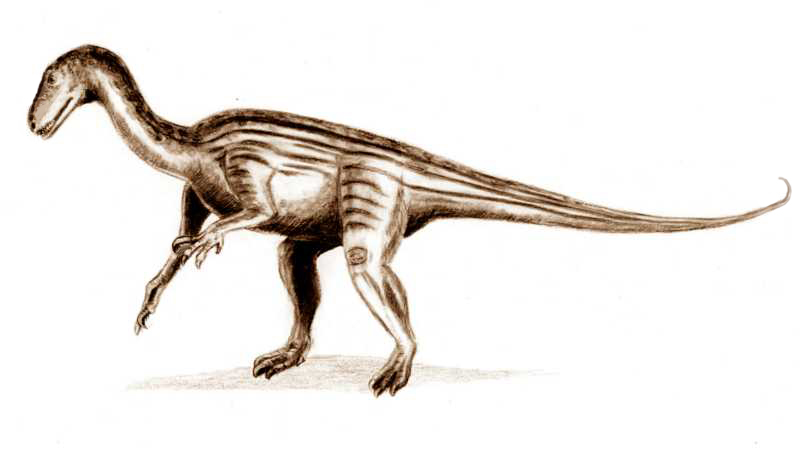



Anatomy and characteristics
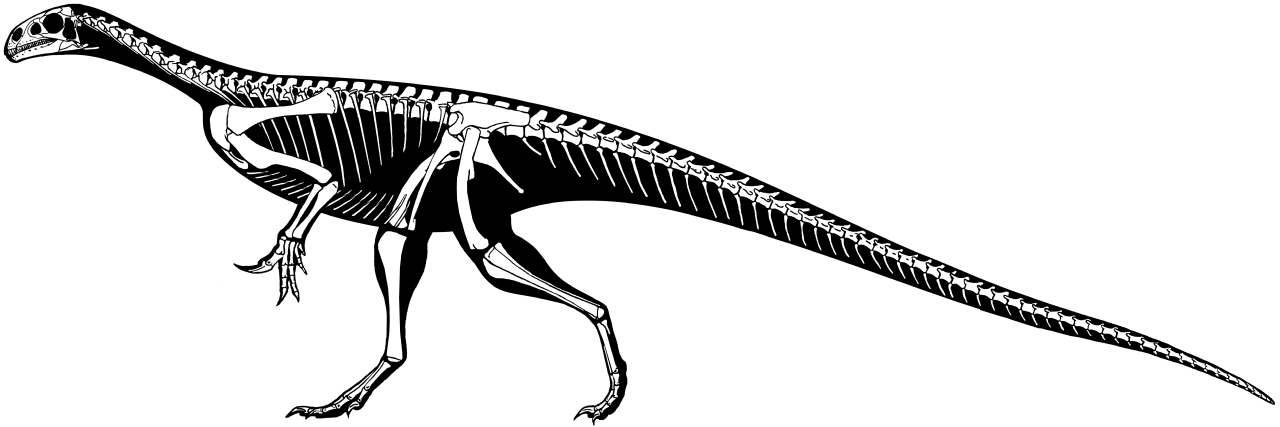
Fossils of Thecodontosaurus show a relatively small, lightly built animal with a lightly built skull, recurved leaf‑shaped teeth, and long hind limbs suggesting it could run bipedally. Its forelimbs were shorter but capable of grasping, indicating it may have been a facultative quadruped when browsing. Distinctive features include the socketed (thecodont) tooth implantation referenced in its name and anatomical traits that place it near the base of the sauropodomorph lineage.
Key traits
- Light, gracile skeleton consistent with an agile animal.
- Leaf‑shaped teeth suggesting a primarily herbivorous or omnivorous diet.
- Bipedal posture with proportions that hint at transitional locomotion styles.
Discovery and scientific history
Thecodontosaurus was first described from fossils found in the Bristol region of southwest England and was recognized early in the history of paleontology. Its remains were among the first dinosaur discoveries in Britain and have been studied repeatedly as new techniques and ideas about dinosaur relationships developed. Historical collections and modern reexaminations have refined its anatomy and its position on the dinosaur family tree.
Paleoenvironment and behavior
During the Late Triassic, the global climate was generally warm and many continental interiors were seasonally dry. Thecodontosaurus inhabited what would have been a relatively dry landscape with seasonal variations in rainfall. Its dental and limb morphology suggest it fed on plants, possibly supplemented by small animals or insects, and that it was agile enough to escape predators or move between food sources.
Classification and significance
As a basal sauropodomorph, Thecodontosaurus helps illustrate early stages in the evolution of a group that would later include very large herbivores. Its mix of primitive and derived traits provides insight into the anatomical changes that occurred as sauropodomorphs evolved longer necks, larger bodies and more specialized herbivorous dentitions. Thecodontosaurus remains a reference point in discussions of early dinosaur diversity and Triassic ecosystems.
For more general context see dinosaur information, the Late Triassic period, Earth's paleoclimate and typical desert-like environments of that time.
Questions and answers
Q: What is Thecodontosaurus?
A: Thecodontosaurus was an early dinosaur that lived during the Upper Triassic.
Q: When did Thecodontosaurus live?
A: Thecodontosaurus lived during the Upper Triassic.
Q: What is the meaning of Thecodontosaurus?
A: Thecodontosaurus means "socket-toothed lizard".
Q: In what kind of environment did Thecodontosaurus live?
A: Thecodontosaurus lived during a time when the Earth was relatively warm and much of the land was dry and desert-like.
Q: When did dinosaurs start to appear?
A: Dinosaurs started to appear around the time that Thecodontosaurus lived.
Q: How significant is Thecodontosaurus in the history of dinosaurs?
A: Thecodontosaurus is significant in the history of dinosaurs because it was one of the earliest known dinosaurs.
Q: Was Thecodontosaurus one of the largest dinosaurs?
A: No, Thecodontosaurus was not one of the largest dinosaurs. It was relatively small, only about the size of a large dog or a small cow.
Related articles
Author
AlegsaOnline.com Thecodontosaurus — Early sauropodomorph ("socket‑toothed" lizard) Leandro Alegsa
URL: https://en.alegsaonline.com/art/99184