
Theatre of Ancient Greece
Public, religiously rooted drama developed in ancient Greece (c. 6th–3rd centuries BC). It created tragedy, comedy and satyr plays, shaped stagecraft and civic ritual, and influenced Western theatre.
The theatre of ancient Greece was a public art form that combined religious ritual, civic life and theatrical performance. Flourishing from about the mid-6th century BC into the Hellenistic age, it established dramatic genres and stage practices that still inform modern theatre. Playwrights organized their work into distinctive types such as tragedy, comedy and satyr plays, and productions were presented as part of communal festivals.
Image gallery
10 Images


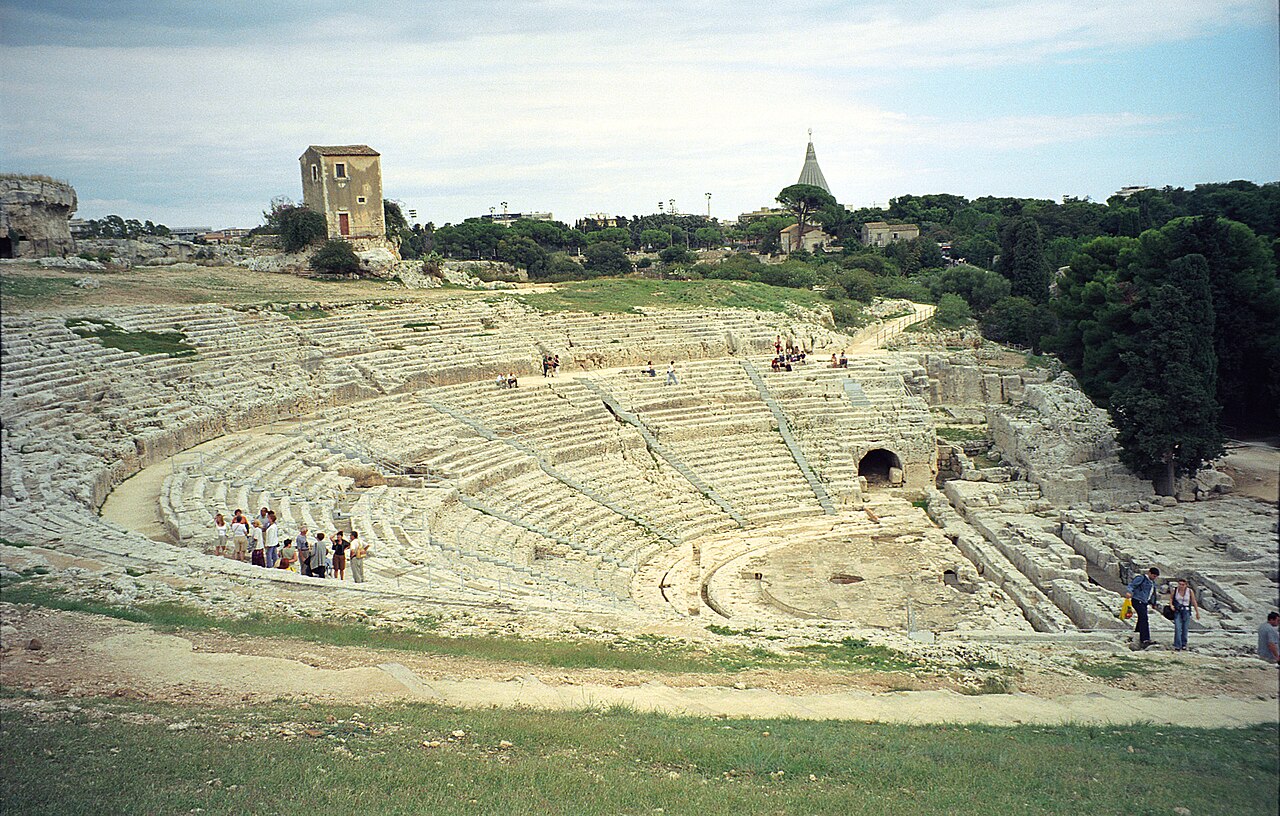


Architecture and stagecraft
Performances took place in purpose-built open-air theatres that combined functional design with good acoustics. Key parts of the theatre included:
- Theatron — the seating area for spectators.
- Orchestra — the circular space where the chorus danced and sang.
- Skene — a backdrop building that provided dressing rooms and visual context for scenes.
- Parodos — passageways used for actors and chorus entrances and exits.
Stage devices and techniques such as the mechane (a crane) and the ekkyklema (a wheeled platform) allowed dramatic revelations and miraculous appearances. Costumes, elevated footwear and large masks amplified voice and expression so even distant spectators could follow the action.
Genres and dramatic form
The three principal forms — tragedy, comedy and the shorter satyr plays — each had characteristic tones and structures. Tragedy treated serious myths and ethical dilemmas, often in linked tetralogies; comedy ranged from political satire to social farce; satyr plays offered lewd, musical relief after a tragic cycle. The chorus, a collective of performers, provided commentary, ritual chorus-songs and interaction with the actors, shaping pace and spectacle.
Religious and civic context
Theatre was entwined with religious festivals, most famously the City Dionysia in Athens, which honored the god Dionysus. During such gatherings playwrights submitted dramatic works to competition, judged by officials, and prizes were awarded. Drama served as public education, communal mourning, satire and civic self-definition. The institution also reflected social boundaries: performers and chorus participants were male citizens in many contexts, and only men acted on stage; still, the dramatic world included a wide range of characters and social situations.
People, practice and performance
Actors and chorus members followed conventions that emphasized clear enunciation and stylized movement. Only male performers commonly appeared on stage, with male choruses and actors portraying female roles. Masks helped signal age, gender and social status, enabling a small number of actors to inhabit multiple characters. costume and movement conventions made plays legible to large audiences.
Playwrights, legacy and survivals
Athens was the cultural hub for drama, and its festivals spread the form across Greek lands. Among the major tragedians were Aeschylus, who expanded dramatic possibilities by introducing a second actor; Sophocles, known for character-focused plays and the addition of a third actor; and Euripides, who experimented with psychological realism. Comic tradition survives in works by Aristophanes, whose plays lampooned politics and society. Surviving texts such as "Oedipus Rex," "Medea," "The Frogs" and others continue to be read and performed worldwide, and the principles of Greek theatre—formal structure, chorus, and interplay of civic ritual and dramatic spectacle—remain central to the history of Western drama.
For further reading on the origins, performance practices and the surviving corpus, consult specialized studies and museum catalogues that explore how these plays were staged, received and adapted over centuries. The ancient theatre of Greece thus stands as both a religious practice and a foundational artistic tradition that shaped later European stagecraft and dramatic theory.
city-state | drama | Dionysia | actors
Questions and answers
Q: What period was the theatre of ancient Greece at its best?
A: The theatre of ancient Greece was at its best from 550 BC to 220 BC.
Q: What genres did they invent?
A: They invented the genres of tragedy (late 6th century BC), comedy (486 BC) and satyr plays.
Q: Where did drama have a central role during this period?
A: Drama had a central role in the city-state of Athens during this period.
Q: What festival was theatre part of?
A: Theatre was part of a festival called the Dionysia, which honoured the god Dionysus.
Q: Who were allowed as actors in Ancient Greek theatre?
A: Only men were allowed as actors in Ancient Greek theatre.
Q: How did people know which character an actor played?
A: People knew which character an actor played because they wore masks.
Q: Who are some famous writers from this time period? A: Some famous writers from this time period are Aeschylus, Sophocles, Euripides for tragedies, and Aristophanes for comedies.
Related articles
Author
AlegsaOnline.com Theatre of Ancient Greece Leandro Alegsa
URL: https://en.alegsaonline.com/art/99175
Sources
- cartage.org.lb : Fonseca, Reuben Ancient Greek Theater
- cliojournal.wikispaces.com : The nature of Athenian democracy
- tau.ac.il : Dr. Eli Rozik page
- books.google.com : The roots of theatre: rethinking ritual and other theories of origin
- perseus.uchicago.edu : Herodotus, Histories, 6/21
- content.grin.com : Paper on the Athens Theatre
- didaskalia.net : Didaskalia.net
- didaskalia.net : Didaskalia.net
- commons.wikimedia.org : Ancient Greek theatre