
The Vision of Escaflowne: anime, adaptations, and cultural impact
Overview of the 1996 anime Tenkuu no Escaflowne, its themes, characters, mecha, and adaptations including manga, a PlayStation game, and a 2000 film.
The Vision of Escaflowne (Japanese title: Tenkuu no Escaflowne, literally "Escaflowne of the Heavens") is a Japanese animated television series produced by Sunrise and first broadcast in Japan beginning April 2, 1996. The 26-episode TV run blends fantasy, mecha, romance and adventure elements, and is noted for mixing shōjo emotional focus with large-scale battles and science-fantasy worldbuilding.
Image gallery
1 Image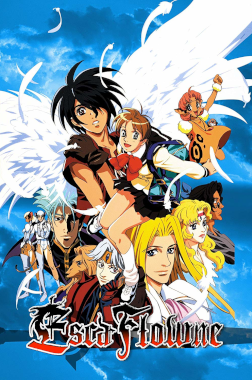
Overview and themes
The story centers on a high-school girl from Earth, Hitomi, who is mysteriously transported to the world of Gaea, where she becomes entwined with Van, a prince and pilot, and a mysterious giant mecha known as Escaflowne. The series explores themes of fate, identity, love and the costs of war while combining romantic drama with action set pieces. Musically, the show is also well-regarded for its soundtrack.
Key elements and characteristics
- Genre blend: Fantasy and mecha with romantic and mystical undertones.
- Mecha design: Giant armored machines called Guymelefs, with Escaflowne as the central suit.
- Main characters: Hitomi (an ordinary girl with precognitive talent) and Van (a conflicted young leader).
- Tone: The TV series balances character-driven scenes with political intrigue and battle choreography.
The show was directed by Kazuki Akane at Sunrise and earned attention for its visual style, score, and the way it appealed to diverse audiences by mixing typically gendered genre conventions.
Adaptations, versions and history
Beyond the original television series, Escaflowne spawned multiple media adaptations: two separate manga adaptations, a PlayStation video game, and a 2000 theatrical film that reimagines the TV plot with different pacing and character interpretations. The movie offers an alternate, condensed retelling with a darker aesthetic, while the various manga versions and the game present their own takes on the characters and events.
The franchise helped popularize cross-genre anime in the 1990s and remains notable for its imaginative setting and emotional storytelling. For official information, production details, and further reading, see the series' official pages and resources: Official series page, production notes and credits, and adaptations and releases.
Questions and answers
Q: What is The Vision of Escaflowne?
A: The Vision of Escaflowne is a Japanese anime television show that aired in Japan on April 2, 1996.
Q: What does Tenkuu no Escaflowne mean?
A: Tenkuu no Escaflowne means Escaflowne of the Heavens.
Q: Who made The Vision of Escaflowne?
A: The Vision of Escaflowne was made by Sunrise and directed by Kazuki Akane.
Q: How many episodes does Escaflowne have?
A: Escaflowne has 26 episodes.
Q: What are the other media based on Escaflowne?
A: The other media based on Escaflowne are two mangas, a videogame that was made for Playstation, and a movie.
Q: When was The Vision of Escaflowne aired in Japan?
A: The Vision of Escaflowne was aired in Japan on April 2, 1996.
Q: What is The Vision of Escaflowne about?
A: The text does not provide information on what The Vision of Escaflowne is about.
Related articles
Author
AlegsaOnline.com The Vision of Escaflowne: anime, adaptations, and cultural impact Leandro Alegsa
URL: https://en.alegsaonline.com/art/99055
Sources
- animenewsnetwork.com : "The Vision Of Escaflowne BD+DVD - Review"