
The Tsar's Bride: Rimsky-Korsakov's Historical Opera
An overview of Nikolai Rimsky-Korsakov's opera The Tsar's Bride (1898–1899): composition, libretto, musical character, premiere, setting and its place in Russian operatic repertoire.
Overview
The Tsar's Bride (Russian: Tsarskaya nevesta) is a lyric historical opera by Nikolai Rimsky-Korsakov (his tenth). Composed in 1898 and first staged in 1899, it is a compact dramatic work in four acts that draws on a 19th‑century play by Lev Mei. The libretto was prepared by Il'ya Tyumenev, who adapted Mei's drama to the operatic stage.
Image gallery
2 Images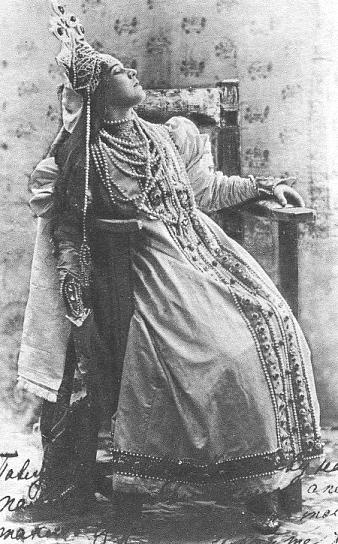

Setting, source and libretto
The action is set in Moscow during the late 16th century against the atmosphere of Ivan IV's court and the social tensions of the period. Tyumenev's text follows Mei's original scenario, turning the spoken drama into scenes suited to lyrical expression and ensemble writing. The result emphasizes personal tragedy and courtly intrigue rather than epic spectacle.
Musical characteristics
Rimsky-Korsakov's score is notable for its clear vocal lines, careful orchestration and effective use of chorus and folk-like elements. Compared with some of his more fantastical operas, this piece is restrained and concentrated: the music serves dramatic psychology and ensemble interaction. Critics and performers have praised its melodic refinement and the way orchestral color supports rather than overwhelms the singers.
Principal roles and dramatic outline
- Principal characters include the heroine and her suitors, members of the court and representatives of the tsar's retinue.
- The plot revolves around love, jealousy, social rank and the consequences of decisions made under sovereign power.
- Scenes range from intimate arias and duets to larger choral tableaux that evoke both domestic life and the public rituals of the court.
Premiere, performance history and reception
The premiere took place in Moscow in 1899 at the Private Russian Opera associated with S. I. Mamontov, a company that championed Russian-language repertoire and new works. Since its debut the opera has remained a part of the Russian stage repertoire and has been recorded and staged internationally, though it is less frequently performed abroad than some of Rimsky-Korsakov's more spectacular or fairy-tale operas. Modern productions often highlight the work's psychological realism and its balance of lyrical moments with dramatic momentum.
Significance and distinctions
The Tsar's Bride occupies a distinctive place in Rimsky-Korsakov's output as a historical drama that combines folk-inflected melodies, polished orchestration and compact dramaturgy. For those exploring Russian opera, it offers a contrast to both the grand historical epics and the composer's mythic fantasies, providing an accessible example of late 19th‑century Russian musical theatre.
Further information on the work, its score and translations of the libretto can be found in specialized catalogs and reference sources on Russian opera (opera overview, composer biography, libretto and sources).
Questions and answers
Q: What is The Tsar's Bride?
A: The Tsar's Bride is an opera composed by Nikolai Rimsky-Korsakov.
Q: How many operas did Nikolai Rimsky-Korsakov write before The Tsar's Bride?
A: The Tsar's Bride was the tenth opera that Nikolai Rimsky-Korsakov wrote.
Q: Who is the author of the libretto for The Tsar's Bride?
A: Il’ya Tyumenev is the author of the libretto for The Tsar's Bride.
Q: What book inspired the story of The Tsar's Bride?
A: The story of The Tsar's Bride was based on a book called "The Tsar's Bride" by Lev Mei.
Q: When was The Tsar's Bride composed?
A: The Tsar's Bride was composed in 1898.
Q: Where was the first performance of The Tsar's Bride held?
A: The first performance of The Tsar's Bride took place in 1899 at the Moscow theater of the Private Opera of S.I. Mamontov.
Q: Who wrote the story of "The Tsar's Bride"?
A: Lev Mei wrote the story of "The Tsar's Bride".
Related articles
Author
AlegsaOnline.com The Tsar's Bride: Rimsky-Korsakov's Historical Opera Leandro Alegsa
URL: https://en.alegsaonline.com/art/99010