
The Tale of Peter Rabbit: Beatrix Potter's Classic Children's Book
Overview of Beatrix Potter's The Tale of Peter Rabbit: story, creation, publication, illustrations, reception, merchandising, adaptations and cultural legacy.
The Tale of Peter Rabbit is a short illustrated children's story created by English author and artist Beatrix Potter. First written as a private letter and drawing for a small child, the tale follows the mischievous young rabbit Peter as he disobeys his mother's warning, slips into Mr. McGregor's garden, is pursued, and eventually returns home. The combination of succinct narrative, restrained watercolor illustration and a gentle moral about curiosity and consequence has made the book familiar to generations of readers.
Image gallery
6 Images



Origins and publication
Potter originally composed the tale as a handwritten illustrated letter for a five-year-old named Noel Moore, son of her former governess Annie Moore. After several publishers declined, Potter privately printed a small edition in 1901 and revised the text and images. The story was accepted and commercially published by Frederick Warne & Co. in 1902. That publication established Potter's career as both writer and illustrator of picture books.
Illustration, style and subject
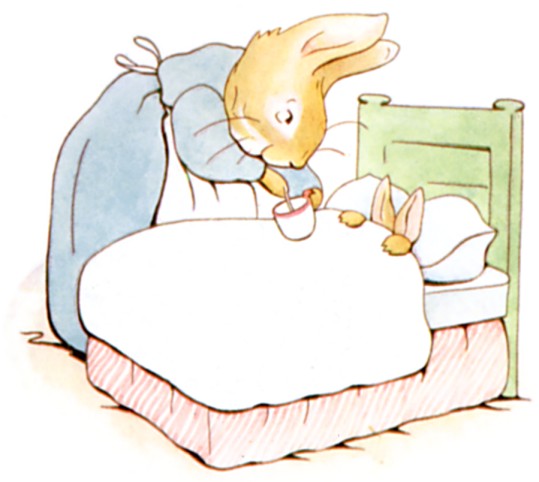
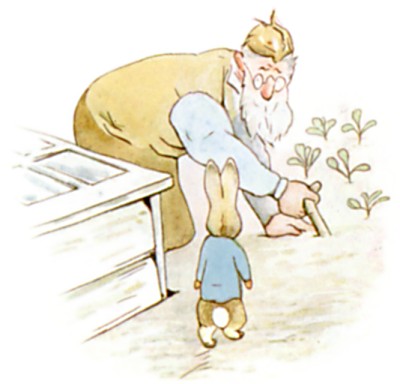
Potter's art combines careful observation of animals and plants with delicate washes of watercolor and precise ink work. Her interest in natural history informed the realistic but personified appearance of her characters. The text is economical and episodic, using repeated phrases and a clear rhythm that suits read-aloud performance. Peter is drawn and described as an imperfect, impulsive figure rather than an idealized child, a feature that helped the tale feel lively and modern for its time.
Themes and interpretation
The narrative centers on curiosity, disobedience and the consequences that follow, but it also foregrounds domestic comfort and parental care. Scholars and readers note themes of risk within a cultivated human environment: the cultivated beds of Mr. McGregor become both a place of temptation and danger. The book has been discussed in broader accounts of children's literature and literary histories that consider how Potter's characters complicate conventional notions of the child or hero. In the social context of the early 20th century, Peter's impulsive, animal form offered an alternative to the era's typical model of the confident young white male protagonist.
Reception, editions and translations
The Tale of Peter Rabbit was quickly successful. It was reprinted many times and has been translated into numerous languages; later accounts credit the book with tens of millions of copies sold worldwide and translations into several dozen languages. Its commercial success supported Potter's further books and her development as an influential figure in children's publishing.
Merchandise, adaptations and media
Potter was an early example of an author who extended a literary character into objects and products. In 1903 she had a small cloth doll made of Peter, and thereafter many kinds of merchandise appeared: toys, dishes and food-themed tableware, clothing, and later moving-image items such as videos. Publishers and licensees produced games including an early board game and numerous playsets. The tale has been adapted for stage and screen and appears in diverse forms, from a balletic presentation credited in 1971 as a ballet element to a contemporaneous movie adaptation, and it has been retold in episodic television series over the decades.
Legacy and broader influence
Beyond sales and merchandising, Potter's work influenced the picture-book form by demonstrating how a single creator could control both text and image. Her carefully observed visual style and succinct storytelling offered a model followed by later author-illustrators. Peter Rabbit became a durable cultural icon, appearing in children's rooms, on household goods and in educational contexts. Critics and historians continue to examine the tale for its approach to childhood, animal characterization and the relationships between literature, commerce and popular culture.
Later history and conservation
Potter used proceeds from her books to buy farmland in the English Lake District and became active in farming and land conservation; much of the property she acquired was later given to the National Trust. Her interest in rural life and landscape informed both her illustrations and her reputation as a steward of the countryside. The association of the books with particular places and objects has helped preserve editions, letters and related materials in libraries and specialist collections.
For readers seeking more information, resources on the author, publishing history and critical interpretation are available in biographical works and archival guides, including materials that place the book in the wider context of early 20th-century children's publishing and changing ideas about fictional protagonists and childhood behaviour. See author resources at Beatrix Potter, publisher histories at Frederick Warne & Co., and scholarly discussions addressing themes such as the conventional hero and social context in literary histories.
Questions and answers
Q: What is The Tale of Peter Rabbit about?
A: The Tale of Peter Rabbit is a children's picture book written and illustrated by Beatrix Potter. It follows the adventures of disobedient, playful young Peter Rabbit as he is chased around the garden of Mr. McGregor before eventually escaping and returning home to his mother.
Q: Who wrote and illustrated The Tale of Peter Rabbit?
A: The Tale of Peter Rabbit was written and illustrated by Beatrix Potter.
Q: For whom was the story originally written?
A: The story was originally written for five-year-old Noel Moore, who was the son of Annie Moore, who had been Potter's governess in 1893.
Q: How many times has it been printed since its initial publication?
A: Since its initial publication in 1902, it has been printed many times and has sold 45 million copies worldwide.
Q: What kind of merchandise featuring Peter Rabbit has been produced?
A: Merchandise featuring Peter Rabbit such as toys, dishes, food, clothing, videos and other products have all been produced since its initial publication in 1902.
Q: How did Beatrix Potter change traditional literature with her characterisation of Peter Rabbit?
A: At that time, the traditional literary hero was usually a brave, clever young white male but Potter greatly changed this with her depiction of disobedient little rabbit Peter Rabbit as the hero in her book which challenged these conventions at that time.
Q: In what other media forms has The Tale Of Peter Rabbit appeared?
A:The tale has also appeared in a 1971 ballet movie and television series since its original publication in 1902.
Related articles
Author
AlegsaOnline.com The Tale of Peter Rabbit: Beatrix Potter's Classic Children's Book Leandro Alegsa
URL: https://en.alegsaonline.com/art/98953
Sources
- prnewswire.co.uk : Worker's Press acknowledge Frederick Warne's intellectual property rights