
The Story of the Kelly Gang — pioneering Australian feature film (1906)
A concise encyclopedia article on The Story of the Kelly Gang (1906): its production, plot subject, surviving material, rediscovery, restoration and cultural significance as an early feature film.
Overview
The Story of the Kelly Gang is widely regarded as the world’s first feature-length narrative film. Released in Australia on 26 December 1906, the picture dramatized the life and last stand of the bushranger Ned Kelly (1855–1880) and ran for an original length of about 4,000 feet, roughly 70 minutes by contemporary projection speeds. It was written and directed by Charles Tait and produced in and around Melbourne, drawing on newspaper reporting and popular accounts to structure its episodes.
Image gallery
8 Images



Subject and structure
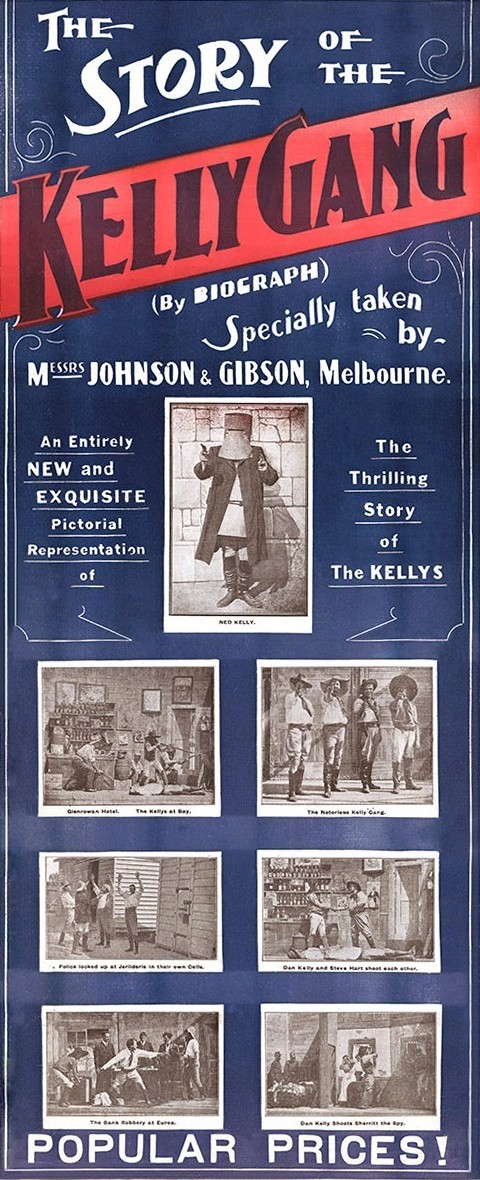
The film presented a sequence of scenes that followed Kelly’s gang from petty crime to their fatal confrontation. Audiences at the time were shown the events in discrete tableaux, often accompanied by a program that summarized the action so viewers could follow the narrative easily. The program booklet surviving from the period divides the work into six scenes and reproduces contemporary press accounts to frame the dramatization, reflecting the early cinema habit of blending reportage and theatrical re-creation.
Production and locations
Charles Tait staged indoor and outdoor sequences at a number of Melbourne suburbs and nearby rural spots. Indoor scenes were produced in St Kilda, and exteriors were shot at places such as Eltham, Greensborough, Heidelberg, Mitcham and Rosanna. A notable action sequence involving a train was filmed near the St. James Road crossing by Rosanna Station on the Hurstbridge line. Contemporary reports record a modest production budget (about $2,250) and a reliance on local performers and community locations rather than studio systems that developed later.
Survival, loss and rediscovery
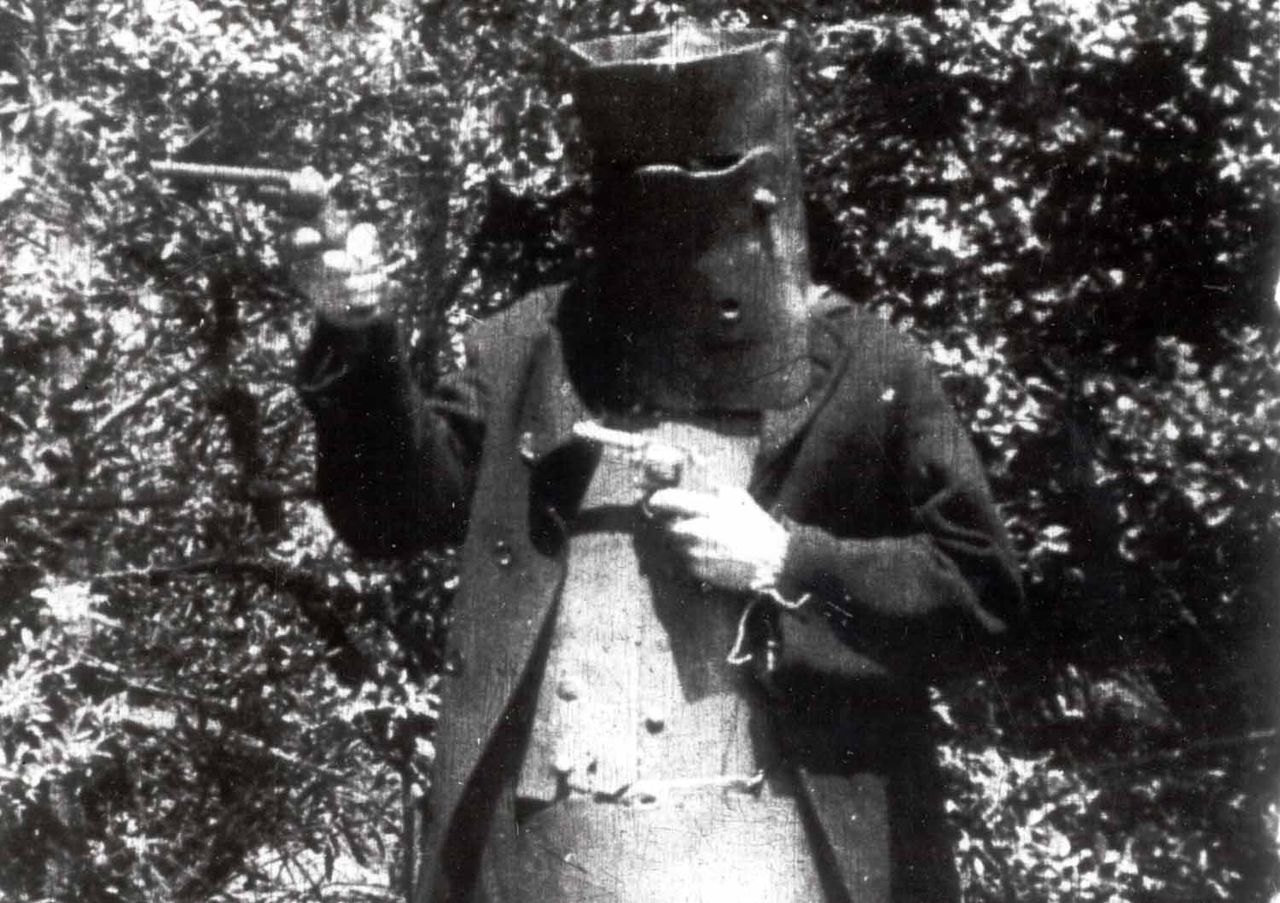
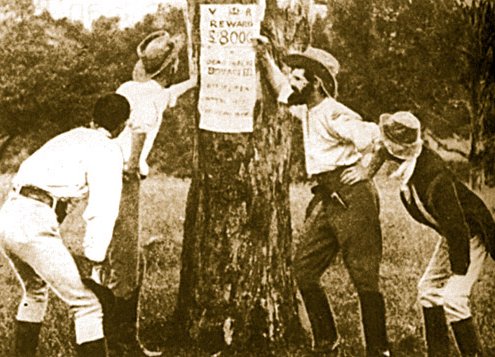
Like many very early films, most of the original footage of The Story of the Kelly Gang did not survive intact. For decades only fragments remained; rolls of damaged film were discovered in an old barn that belonged to the Crew family in Yarraville, Victoria, but most exposed emulsion could not be salvaged. During the 20th and early 21st centuries further fragments were located in archives overseas, and in 2006 the National Film and Sound Archive (NFSA) created a new digital copy incorporating material recovered from the United Kingdom and holdings in Australia. The restored assembly now totals roughly 17 minutes, including the dramatic Glenrowan sequence often called the Kelly’s Last Stand (Glenrowan).
Historical importance and recognition
The film occupies an important place in both Australian cultural history and the history of cinema. It demonstrates early filmmakers’ appetite for feature-length storytelling and for adapting well-known local events and characters to the screen. In recognition of its cultural and cinematic value, the film was inscribed on the UNESCO Memory of the World Register in 2007. Comparisons are frequently made to later landmark works such as D. W. Griffith’s The Birth of a Nation (1915), but The Story of the Kelly Gang predates Griffith’s film by several years and is notable for its ambition and length.
Sources, contemporary response and legacy
Contemporary audiences learned the story through live narration, the printed program and the combination of staged scenes and illustrated reports. Surviving ephemera—program booklets and press clippings—help scholars reconstruct how the film was presented and received. Newspaper coverage of the Kelly gang’s crimes and capture provided both source material and publicity for the production; a recovered program reproduces such newspaper reports alongside scene descriptions. Film historians continue to study the work for what it reveals about early narrative techniques, popular taste, and the local production practices of Australian cinema in the first decade of the 20th century.
Further reading and resources
- General histories of Australian cinema and early narrative film frequently cite this production as a milestone; for overviews see national archives and film history collections (first feature-length film).
- Research on Ned Kelly and bushranging provides social and historical context for the story depicted (Australia, bushranger).
- Archival restoration reports and digital preservation summaries are published by institutions involved in the rediscovery and restoration process (United Kingdom discoveries and the NFSA recovery effort).
Questions and answers
Q: What is the title of the world's first feature length movie?
A: The Story of the Kelly Gang.
Q: Who wrote and directed this movie?
A: Charles Tait wrote and directed The Story of the Kelly Gang.
Q: When was it released?
A: The Story of the Kelly Gang was released in Australia on December 26, 1906 and in the UK in January 1908.
Q: How much did it cost to make?
A: It cost about $2,250 to make The Story of the Kelly Gang.
Q: Where were some of the scenes filmed for this movie?
A: Scenes for The Story of the Kelly Gang were filmed in Melbourne and nearby suburbs such as St Kilda (indoor scenes), Eltham, Greensborough, Heidelberg, Mitcham and Rosanna.
Q: How long is what remains of this movie today?
A: Today there are 17 minutes left from The Story of the Kelly Gang.
Q: In which year was it added to UNESCO Memory World Register?
A: In 2007 The Story of the Kelly Gang was added to UNESCO Memory World Register.
Related articles
Author
AlegsaOnline.com The Story of the Kelly Gang — pioneering Australian feature film (1906) Leandro Alegsa
URL: https://en.alegsaonline.com/art/98913
Sources
- nfsa.afc.gov.au : "World's first 'feature' film to be digitally restored by National Film and Sound Archive"
- portal.unesco.org : portal.unesco.org