
The Star-Spangled Banner
The national anthem of the United States, written by Francis Scott Key in 1814 after the bombardment of Fort McHenry and later set to a British tune. History, lyrics, use, and musical notes summarized.
The Star-Spangled Banner is the national anthem of the United States. Its words were written in 1814 by Francis Scott Key after he witnessed the British bombardment of Fort McHenry in Baltimore during the War of 1812. The poem captured Key's reaction at dawn when he saw the American flag still flying above the fort. A Navajo translation and other language versions exist; see the Navajo translation for one example.
Image gallery
10 Images


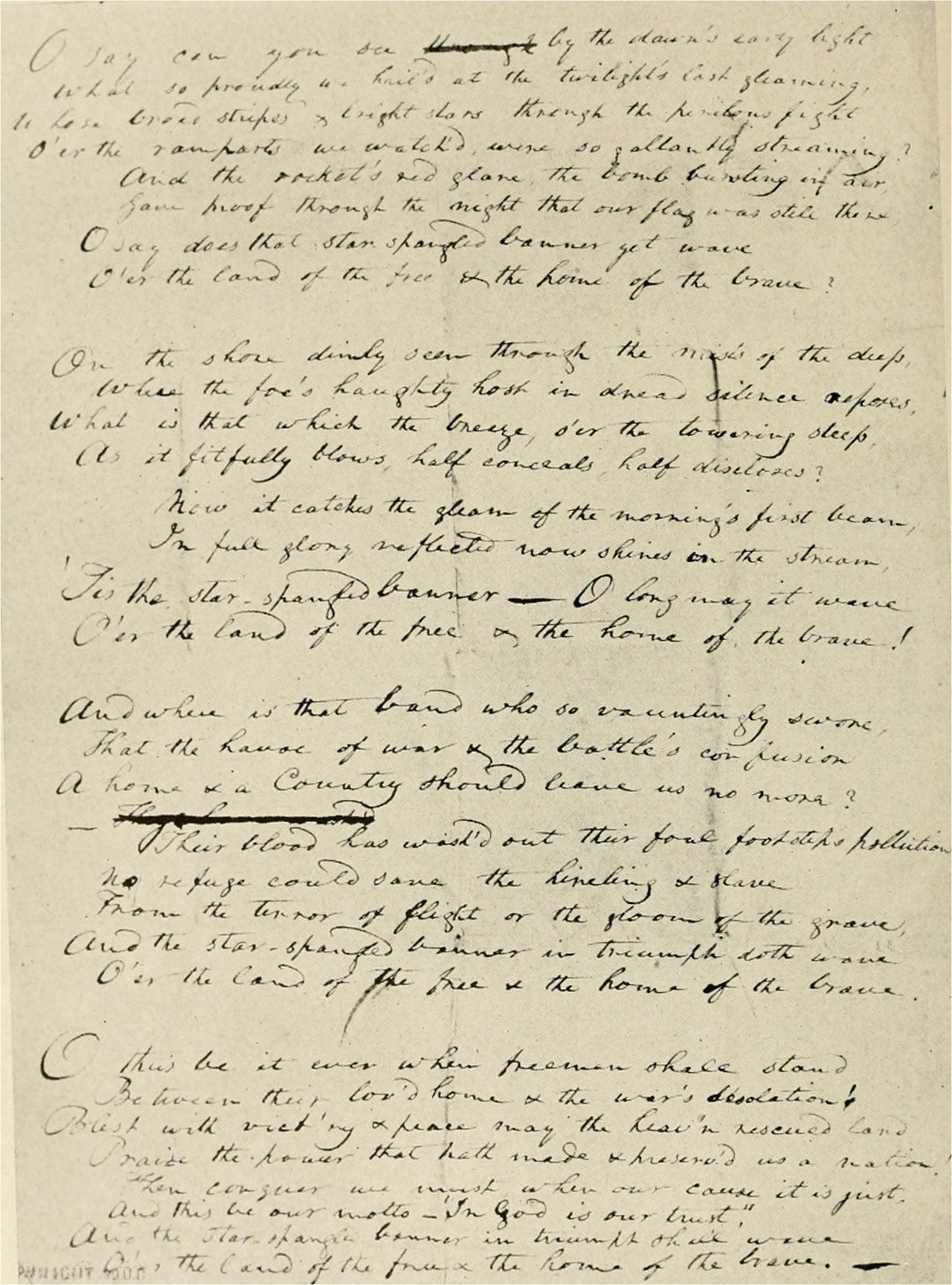


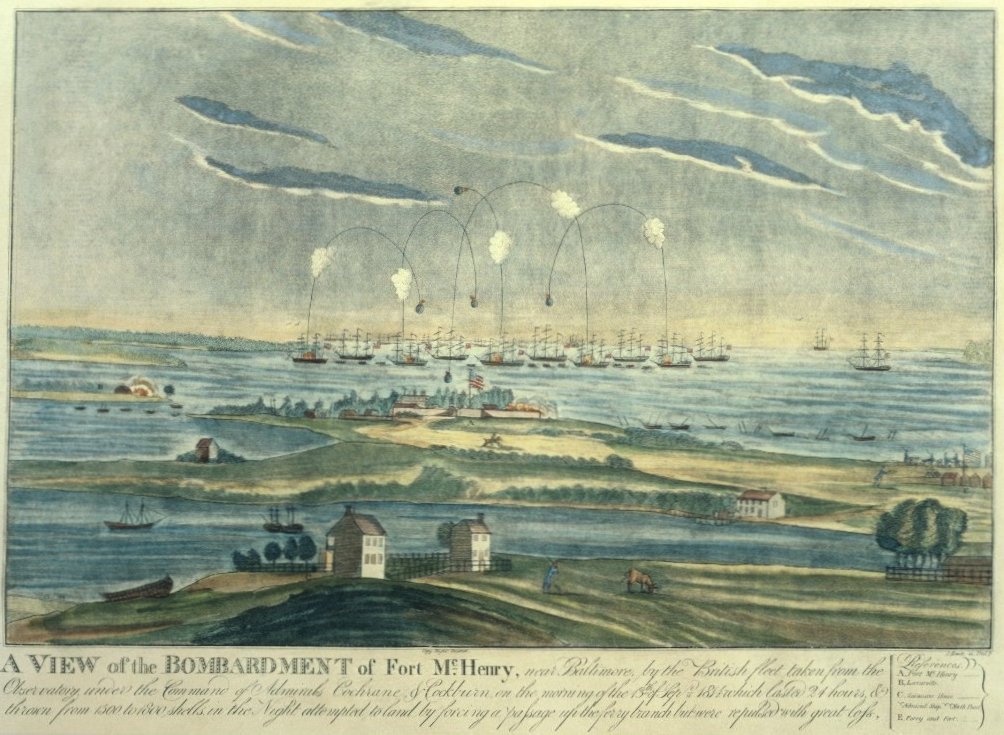
Origin and composition
Key originally penned the text as a poem titled "Defence of Fort M'Henry." He wrote it on September 14, 1814, following a night of shelling while he was on board a British ship negotiating the release of prisoners. The words were soon matched to a popular tune of the era, an 18th‑century British social club song called "To Anacreon in Heaven," composed by John Stafford Smith. That melody, once paired with Key's stanza, became widely performed across the young nation.
Lyrics, stanzas, and presentation
The full composition contains four stanzas, but in most public performances only the first stanza is sung. The opening line — "Oh, say can you see..." — and the vivid images of "the rocket's red glare" and "the bombs bursting in air" are the most familiar. For reference on the song's structure and traditional text, see a recording or transcription at stanza guide.
Adoption and public use
Although used informally for more than a century, Congress made the song the official national anthem by joint resolution on March 3, 1931; the resolution was signed by the president. Since then it has been performed at government ceremonies, sporting events, graduations, and other public occasions. It is often compared with other patriotic pieces in American civic life, such as "America the Beautiful" and songs that share melodic heritage with other nations; see general commentary at anthem resources and historical context at national history.
Musical characteristics and notable facts
The tune originally associated with a British convivial society gives the anthem a wide vocal range—nearly an octave and a half—which some singers find challenging. The flag that inspired Key was sewn by Mary Pickersgill and is preserved as a historic artifact; more about the siege and its artifacts can be found at institutions and archives referenced by Key biographies and War of 1812 resources. For information on the original melody and its composer, consult materials about "To Anacreon in Heaven."
- Common uses: national ceremonies, sporting events, memorial services.
- Typical performance: first stanza only; instrumental fanfares often precede or follow.
- Historical note: the poem became a song soon after 1814 and gradually emerged as a national symbol.
Over time the anthem has accumulated layers of historical meaning and occasional debate about its origins and the author's wider views. It remains a central symbol of American national identity and public ritual, taught in schools and performed at civic gatherings across the country.
Questions and answers
Q: What is the national anthem of the United States?
A: The national anthem of the United States is "The Star-Spangled Banner" (Navajo: Dah Naatʼaʼí Sǫʼ bił Sinil).
Q: Who wrote the words to "The Star-Spangled Banner"?
A: Francis Scott Key wrote the words to "The Star-Spangled Banner" in 1814.
Q: What event inspired Francis Scott Key to write the lyrics for "The Star-Spangled Banner"?
A: Francis Scott Key was inspired to write the lyrics for "The Star-Spangled Banner" after seeing British ships attacking Fort McHenry in Baltimore, Maryland during the War of 1812.
Q: What song does "The Star-Spangled Banner" use as its musical score?
A: The music of a British drinking song called "To Anacreon in Heaven" is used as the musical score for "The Star-Spangled Banner".
Q: How many stanzas does “The Star Spangled Banner” have?
A: “The Star Spangled Banner” has four stanzas.
Q: Which stanza of “The Star Spangled Banner” is usually sung? A: Usually only the first stanza of “The Star Spangled Banner” is sung.
Related articles
Author
AlegsaOnline.com The Star-Spangled Banner Leandro Alegsa
URL: https://en.alegsaonline.com/art/98899