
The Sleeping Beauty (ballet): history, music, and choreography
Overview of The Sleeping Beauty ballet: origins in Perrault, Tchaikovsky's score, Petipa's choreography, structure, premiere at the Mariinsky, notable revivals and its place in the classical repertoire.
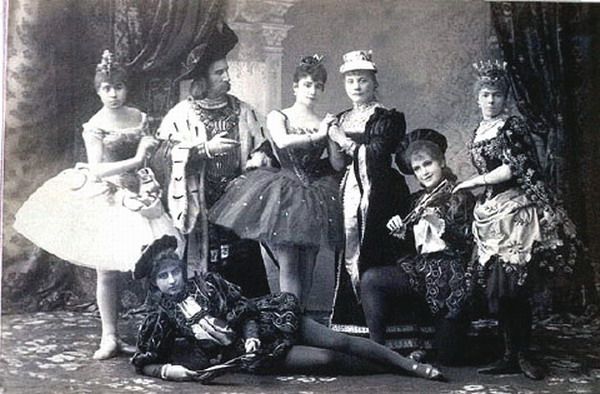
The Sleeping Beauty is a full‑length classical ballet in a prologue and three acts, created for the Imperial Russian stage in the late 19th century. Its scenario was prepared under the direction of the Imperial Theatres and draws on the late 17th‑century fairy tale by Charles Perrault, commonly known as "The Sleeping Beauty in the Wood". Pyotr Ilyich Tchaikovsky composed the score, and the original dances and staging were devised by Marius Petipa working with director Ivan Vsevolozhsky. The ballet was first presented at the Mariinsky Theatre in St. Petersburg, Russia, on 15 January 1890.
Image gallery
10 Images





Synopsis
The narrative follows the familiar fairy‑tale outline: a princess is cursed to sleep for a hundred years, protected by a benevolent guardian spirit, and is later awakened by a prince. The action is framed by a ceremonial prologue (the christening and the curse) and three acts that depict the princess's childhood and coming‑of‑age, the sleep and restoration, and finally the wedding festivities. The libretto balances dramatic scenes with a sequence of divertissements intended to showcase a range of soloists and character dancers.
Structure and choreographic highlights
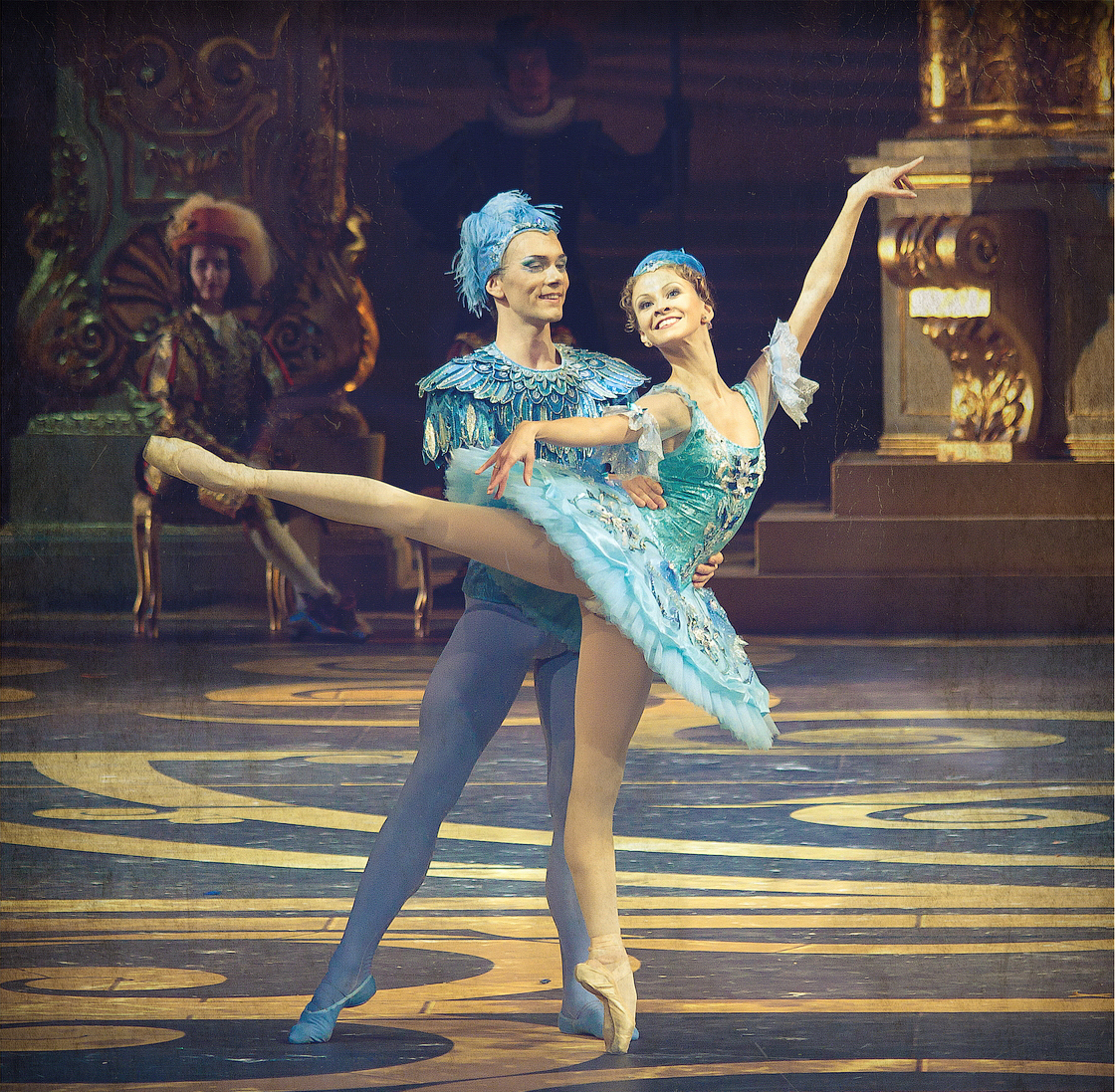
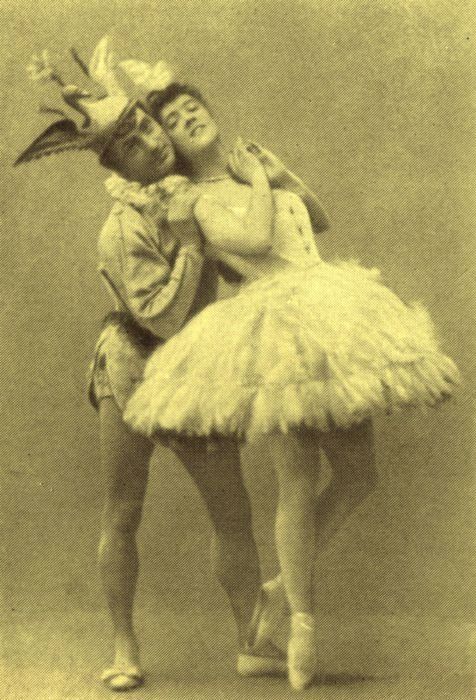
Presented in grand‑ballet form, the work is noted for its large court scenes, ensemble patterns and a succession of variations. Among the best‑known numbers are the Rose Adagio in the first act, a moment designed to display the principal ballerina's technique and presence, and the Bluebird pas de deux in the third act, a virtuosic showpiece for a small couple. The prologue includes gift‑bestowing fairies whose variations set a ceremonial tone for the score and choreography.
Premiere and early history
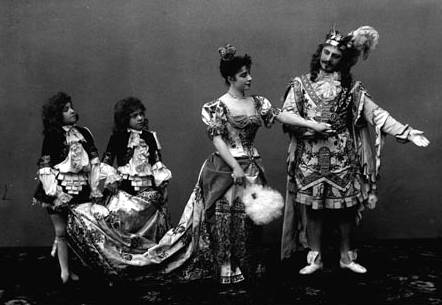
The original production featured leading dancers of the Imperial Ballet and elaborate sets and costumes. Over the 20th century the ballet reached international audiences in a variety of forms: a condensed adaptation was staged in London in 1921 by the Ballets Russes, introducing many Western viewers to Tchaikovsky's ballet style. Later, the full score and staging were taken to other countries; in the United States one of the early complete stagings was created by Catherine Littlefield and presented in Philadelphia in 1937.
Revivals and reconstructions
Throughout the 20th and 21st centuries companies have offered both faithful reconstructions of Petipa's choreography and modern reinterpretations. Archive sources and notation collections have been used to restore steps, groupings and patterns that reflect the original imperial style. At the same time, directors and choreographers have adapted the work for different stages, audiences and production technologies, sometimes shortening sequences or altering stagecraft to suit contemporary expectations in Europe and elsewhere.
Music and orchestration
Tchaikovsky's score for The Sleeping Beauty is regarded as one of the composer's great achievements in ballet music. It combines lyrical themes, danceable rhythms and richly colored orchestration. The composer approached ballet scoring with an eye for dramatic clarity and musical architecture, shaping suites of dances that serve both narrative and spectacle. Many of the orchestral numbers are extracted for concert performance and continue to appear as independent favorites, with recordings and editions making the score widely available to musicians and scholars (score highlights).
Choreographic legacy and performance practice
Marius Petipa's choreography for The Sleeping Beauty helped codify aspects of classical technique and courtly ensemble writing that remain central to training and repertory. The ballet's combination of solo virtuosity, corps de ballet patterns and formal divertissements provides multiple opportunities for dancers to demonstrate classical technique, musicality and theatrical presence. Rehearsal traditions and company archives, including notations and production photographs, are frequently consulted for staging and pedagogy.
Why it matters
- It represents a pinnacle of the imperial Russian ballet tradition and a major collaboration between leading theatrical figures of the period (Petipa and Vsevolozhsky).
- Tchaikovsky's score is widely admired and continues to influence composers and choreographers working for the stage.
- The ballet's formal structure, scenic richness and signature variations make it a landmark in classical repertory and a standard for companies across the world.
For further study, interested readers may consult theatre and company archives, critical editions of the score and historical surveys of ballet practice. Museum collections and curated dance libraries also hold materials related to early productions at institutions such as the Mariinsky and repertories revived by touring groups like the Ballets Russes. The enduring public familiarity with Perrault's tale and the work's frequent restaging ensure The Sleeping Beauty remains a touchstone for students and audiences of classical ballet alike.
Questions and answers
Q: What is the title of the ballet?
A: The Sleeping Beauty.
Q: Who wrote the story for the ballet?
A: Marius Petipa and Ivan Vsevolozhsky wrote the story, which was based on Charles Perrault's 1697 fairy tale "The Sleeping Beauty in the Wood".
Q: Who composed the music for The Sleeping Beauty?
A: Tchaikovsky composed the music.
Q: Who designed the dances for The Sleeping Beauty?
A: Marius Petipa designed the dances.
Q: Where was The Sleeping Beauty first presented?
A: It was first presented at the Mariinsky Theatre in St. Petersburg, Russia, on 15 January 1890.
Q: When did a shortened version of The Sleeping Beauty debut in Europe?
A: It debuted in Europe in a shortened version by Ballets Russes in London on 2 November 1921.
Q: Who designed and presented a complete version of The Sleeping Beauty in America?
A: Catherine Littlefield designed and presented a complete production of it on 12 February 1937 at Academy of Music, Philadelphia with Philadelphia Ballet.
Related articles
Author
AlegsaOnline.com The Sleeping Beauty (ballet): history, music, and choreography Leandro Alegsa
URL: https://en.alegsaonline.com/art/98852