
The Sin of Madelon Claudet (1931 film)
A 1931 American drama about a mother’s sacrifice, adapted from Edward Knoblock’s play and noted for Helen Hayes’s award-winning performance during Hollywood’s early sound era.
Overview
The Sin of Madelon Claudet is a 1931 American dramatic film that follows the life of a woman who endures hardship and stigma to provide for her child. The screenplay was adapted from the stage play The Lullaby by Edward Knoblock and amended for the screen through a credited screenplay adaptation. Released during the early years of sound cinema, the film is often discussed as an example of sentimental melodrama that foregrounds maternal sacrifice.
Image gallery
1 Image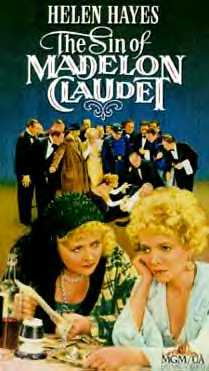
Plot and central character
The narrative centers on Madelon Claudet, a wife and mother whose life is overturned by a wrongful conviction. After prison, she makes a series of anguished choices to secure her son’s future, including theft (theft) and eventual resort to prostitution (prostitution) as tools of survival. The story traces how society’s judgment and limited options shape her fate, presenting a portrait of sacrifice and stigma rather than straightforward moralizing.
Production context and style
Produced in the pre-Code era of Hollywood, the film reflects a period when filmmakers could portray social problems and moral ambiguity with fewer restrictions than later decades. Its stage origins inform a performance-driven structure: scenes often emphasize dialogue and close character study over spectacle. The lead role demands a range of emotional register, moving from domestic warmth to desperation and quiet endurance.
Reception and awards
Critics of the time highlighted the central performance as the film’s primary strength. Actress Helen Hayes received significant acclaim for her portrayal and was awarded the Academy Award for Best Actress in 1932 (Academy Award). She was also recognized at the Venice Film Festival, being named a Favorite Actress during the festival’s early years (Venice Film Festival).
Legacy and themes
The film remains of interest to scholars and viewers for its depiction of gender, class, and the limited choices available to women in early 20th-century narratives. It is cited in discussions of adaptations from stage to screen, of melodramatic conventions, and of how Hollywood treated social realism in the early sound era. While its melodramatic tone can feel dated, the central performance and its focus on maternal devotion continue to make it a subject of study.
Notable facts
- The story is derived from a play by Edward Knoblock and reshaped for film via a credited screenplay adaptation.
- The protagonist’s forced choices — including theft and prostitution — are presented as social consequences rather than sensational plot devices.
- Helen Hayes’s award recognition helped consolidate her reputation as a leading actress of stage and screen (Hayes, Academy Award, Venice).
Questions and answers
Q: What is The Sin of Madelon Claudet?
A: The Sin of Madelon Claudet is an American drama movie released in 1931.
Q: Who wrote the screenplay for The Sin of Madelon Claudet?
A: The screenplay for The Sin of Madelon Claudet was adapted from the play The Lullaby by Edward Knoblock.
Q: What is the story of The Sin of Madelon Claudet?
A: The Sin of Madelon Claudet tells the story of a woman who was wrongfully jailed and later had to turn to theft and prostitution to support her son.
Q: Did The Sin of Madelon Claudet win any awards?
A: Yes, Helen Hayes won an Academy Award for her leading role in The Sin of Madelon Claudet and was named a Favorite Actress at the first Venice Film Festival in 1932.
Q: What was the source material for the screenplay of The Sin of Madelon Claudet?
A: The source material for the screenplay of The Sin of Madelon Claudet was the play The Lullaby by Edward Knoblock.
Q: Who played the leading role in The Sin of Madelon Claudet?
A: Helen Hayes played the leading role in The Sin of Madelon Claudet.
Q: When was The Sin of Madelon Claudet released?
A: The Sin of Madelon Claudet was released in 1931.
Related articles
Author
AlegsaOnline.com The Sin of Madelon Claudet (1931 film) Leandro Alegsa
URL: https://en.alegsaonline.com/art/98845