
The Screwtape Letters
A satirical epistolary novella by C. S. Lewis that explores temptation, moral choice, and Christian themes through letters from a senior devil to his apprentice.
The Screwtape Letters is a short epistolary novel by C. S. Lewis, first issued in newspaper form and later published in book form in the early 1940s (1942 edition). Presented as a sequence of fictional letters, the work reverses the usual moral perspective by making the narrator a senior demon who instructs a younger tempter. Lewis uses this conceit to explore ethical and theological questions through irony, satire and close observation of human habits.
Image gallery
2 Images
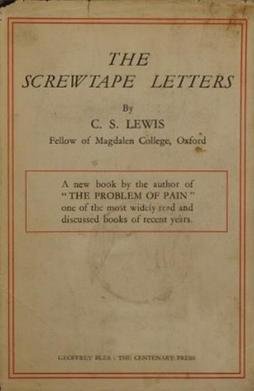
Premise and narrative form
The narrative takes the form of advice from an experienced infernal counselor named Screwtape to his nephew Wormwood, an inexperienced tempter assigned to corrupt a particular human called the "patient." The letters offer strategies for undermining virtue, promoting vice, and distracting the patient from spiritual truths. Though told from the viewpoint of a devil, the book aims to illuminate human weaknesses and the workings of conscience by showing them from an inverse angle.
Structure and stylistic features
Lewis adopts a crisp, often sardonic tone that combines theological argument, psychological insight, and social satire. The epistolary format allows a steady accumulation of detail about everyday temptations: pride, vanity, sloth, ambition, and the uses of distraction. The book emphasizes subtlety — small shifts in attention and habit — rather than spectacular sin. Readers encounter a mock-bureaucratic infernal world, where hierarchy, procedure and manipulation are depicted with worldly, bureaucratic language.
Themes and interpretations
- The nature of temptation and moral responsibility, especially the role of free will and personal choice.
- The contrast between Christian doctrines such as grace, humility and repentance, and the devilish tactics that exploit human frailty.
- Social and cultural critique: how ordinary institutions and fashions can become means of spiritual decay.
Because the advice comes from a corrupt perspective, Lewis is able to expose paradoxes: virtues described as vices when reframed by a tempter, and vice versa. Readers and scholars often use the book to discuss ethical psychology, pastoral counseling and literary technique.
History, reception and adaptations
Initially serialized in The Guardian, the work reached a broad audience and became one of Lewis's best-known pieces of popular theology and fiction. It has been praised for its wit and moral insight and has been adapted for radio and stage productions; it also appears frequently in guides for religious education and literature courses. While many readers value its clarity and satire, some critics note that the ironic voice can obscure nuance and must be read with attention to context.
Legacy and how to read it
The Screwtape Letters is often used as an entry point to Lewis's wider apologetic writing and to discussions about faith, ethics and everyday life. It is not a practical manual for wrongdoing but a fictional device intended to provoke reflection on how ordinary choices shape character. Readers approaching the book for the first time may find it both entertaining and challenging: entertaining because of its dark humor and sharp prose, challenging because it asks readers to recognize familiar tendencies in themselves and in public life. For background on the author and his broader work, see the author's biography and studies in Christian thought that discuss the interplay of faith and imagination in Lewis's writings. For theological contrast, some readers also consult sources on Christian doctrine.
Questions and answers
Q: Who wrote The Screwtape Letters?
A: The book was written by C. S. Lewis, an author and Christian scholar.
Q: How was the book originally published?
A: The book appeared in installments in The Guardian newspaper before being published as a book in 1942.
Q: What is the book about?
A: The Screwtape Letters is a series of letters written by a devil named Screwtape to his apprentice and nephew Wormwood, offering advice on how to tempt and work against men.
Q: What is the purpose of the book?
A: The book aims to expose the tactics of the devil and highlight the importance of resisting temptation and staying faithful to God.
Q: When was the book first published?
A: The book was first published in 1941 and has since sold very well around the world.
Q: Why is the book so popular?
A: The book is popular because it is funny, easy to read and understand, and has influenced many people.
Q: What can readers gain from reading The Screwtape Letters?
A: Readers can gain insight into the tactics of the devil and learn the importance of resisting temptation and staying faithful to God. The book aims to inspire readers to take control of their spiritual lives and not give in to the devil's offers.
Related articles
Author
AlegsaOnline.com The Screwtape Letters Leandro Alegsa
URL: https://en.alegsaonline.com/art/98790