
The Road to Wigan Pier (George Orwell, 1937)
A 1937 book by George Orwell combining first‑hand reportage on poverty in northern England with an extended essay on class, socialism, and British social attitudes.
Overview
The Road to Wigan Pier is a book published in 1937 by George Orwell. It mixes on-the-ground reporting with personal reflection: the first half documents the living and working conditions of impoverished communities in industrial northern England, while the second half offers Orwell's examination of political ideas and social reform. For an introduction to the author, see George Orwell.
Image gallery
1 Image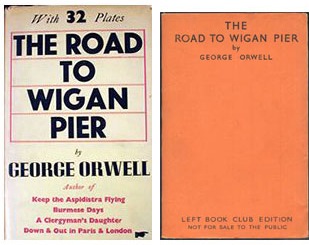
Content and structure
The work is divided into two distinct parts. The first is a documentary account describing housing, unemployment, rates of pay, and everyday hardships in the coal-mining and industrial districts around Wigan in Lancashire and parts of Yorkshire. Orwell writes in clear, direct language to convey material conditions and the rhythms of local life. The second part shifts to a more discursive, political mode: Orwell explores the reasons why socialism struggled to gain wider support and criticizes middle-class prejudices that hinder collective action. He discusses ideals, practical politics, and moral questions about poverty and reform; for background on the social problem he addresses see poverty.
Themes and notable features
- Blend of reportage and essay: a travelogue-like first section paired with an extended polemic.
- Attention to material detail: homes, workplaces, diet, and health as evidence of social failure.
- Reflection on ideology and class identity: why some resist political change and how ideas circulate.
- Use of plain prose and moral urgency rather than abstract theory.
Historical context and purpose
Written in the interwar period, the book responds to widespread economic hardship in Britain and the political debates of the 1930s. Orwell intended both to document social realities and to provoke thought about possible remedies. He engages with the idea of collective solutions and critiques both complacency and dogmatism. His discussion of political alternatives draws on broader arguments about reform and conviction; see a general introduction to socialism for context.
Reception and legacy
At publication the book provoked mixed reactions: some praised its vivid description of deprivation, while others found the second half contentious because it mixed moral reflection with political judgment. Over time it has become a frequently cited example of literary reportage and an important text in studies of class, language, and social policy. It continues to be read for its combination of attention to everyday suffering and its attempt to connect lived experience with political ideas.
Questions and answers
Q: Who wrote The Road to Wigan Pier?
A: George Orwell wrote The Road to Wigan Pier.
Q: When was The Road to Wigan Pier published?
A: The Road to Wigan Pier was published in 1937.
Q: What does the first part of The Road to Wigan Pier focus on?
A: The first part of The Road to Wigan Pier focuses on poverty in Lancashire and Yorkshire.
Q: What is the second part of The Road to Wigan Pier about?
A: The second part of The Road to Wigan Pier is about how the writer thinks socialism could help make people's lives better.
Q: What does The Road to Wigan Pier describe about people's lives in poverty?
A: The Road to Wigan Pier describes how people lived with very little money.
Q: What is the aim of the second part of The Road to Wigan Pier?
A: The aim of the second part of The Road to Wigan Pier is to explain how socialism could improve people's lives.
Q: What do you learn from The Road to Wigan Pier?
A: You learn about poverty in Lancashire and Yorkshire, and about how socialism could help improve people's lives from The Road to Wigan Pier.
Related articles
Author
AlegsaOnline.com The Road to Wigan Pier (George Orwell, 1937) Leandro Alegsa
URL: https://en.alegsaonline.com/art/98749
Sources
- theguardian.com : "The road to Wigan Pier, 75 years on"
- katemacdonald.net : "George Orwell's The Road to Wigan Pier"