
The Road to Serfdom: Hayek’s Warning on Central Planning and Freedom
A concise, neutral overview of Friedrich von Hayek’s The Road to Serfdom: its argument against central planning, publication history, reception, and continuing relevance to debates about liberty and economic policy.
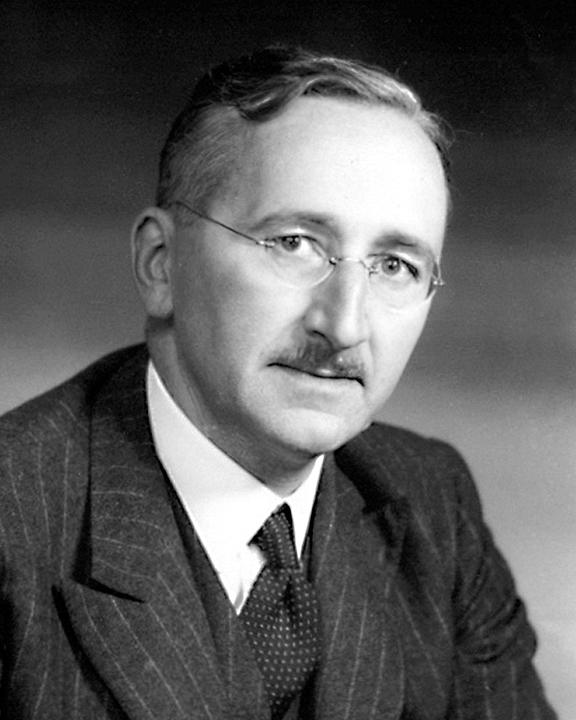
The Road to Serfdom is a political and economic pamphlet written by the Austrian‑born economist and philosopher Friedrich A. Hayek between 1940 and 1943 and first published in 1944. Hayek argued that extensive government direction of economic activity undermines individual freedom and can lead societies toward authoritarian rule. Presented in accessible prose rather than technical economics, the work sought to warn readers in wartime Britain and the United States of political dangers that Hayek associated with centralized economic decision‑making.
Image gallery
3 Images

Main argument and themes
At the heart of the book is the claim that when public authorities take on broad powers to plan production, allocate resources, or substitute central decisions for market signals, competing social ends are resolved by political coercion rather than voluntary exchange. Hayek did not frame his argument as an objection to all state activity; instead he emphasized the following points:
- Coordination problem: centralized planners lack the dispersed information that markets convey through prices, which makes efficient allocation difficult.
- Political pressure: planning concentrates decision‑making power, producing incentives for special interests and bureaucratic expansion.
- Rule of law and liberty: administrative discretion can erode legal constraints and individual rights, increasing vulnerability to authoritarian leadership.
Structure and stylistic choices
The Road to Serfdom was written as a short, polemical book aimed at a broad readership. Hayek combined historical examples, conceptual arguments, and warnings about likely political consequences rather than offering detailed policy prescriptions. He drew on philosophical traditions that stress individual liberty and appealed to readers wary of both fascist and socialist tendencies. For background on the intellectual lineage that influenced Hayek, commentators sometimes point to the work of Alexis de Tocqueville and other classical liberal writers; see also discussions of Tocqueville’s reflections on democratic centralization here.
Publication history and immediate reception
Hayek completed the manuscript during the early 1940s and the book appeared in the United Kingdom in March 1944 from Routledge. A United States edition followed in September 1944 from the University of Chicago Press, and an abridged version reached still larger audiences when Reader's Digest printed a condensed edition in 1945. The book was written in the context of World War II, when economic emergency measures and debates about postwar reconstruction were shaping public expectations about the state’s proper role.
Influence, sales and political impact
The Road to Serfdom became one of the most widely read defences of market institutions in the twentieth century, influencing thinkers and politicians across a range of movements. It has been cited by advocates of market liberalism and by critics of expansive planning, and it contributed to discussions around libertarian and conservative economic thought. In public debate the book has been used both as a general warning about authoritarian risks and as an argument for limiting the scope of government intervention in the economy; its influence can be seen in later policy debates associated with modern conservative movements.
Criticism and distinctions
Scholars and critics have questioned aspects of Hayek’s thesis. Some argue he overstates the inevitability of tyranny from planning, or that he underestimates the democratic controls that can accompany public programs. Others contend he blurred important distinctions between different kinds of state action—regulation, social insurance, and comprehensive economic planning are not identical in their implications. Hayek himself acknowledged nuances and insisted his target was the concentration of discretionary power, not the existence of all government activity.
Legacy and contemporary relevance
Today The Road to Serfdom remains a reference point in debates about the balance between collective action and individual liberty. It is read by students of political economy, by advocates of decentralized decision making, and by critics who examine its historical claims. For accessible starting points on Hayek’s life and thought see biographical summaries here, discussions of central planning and its limits here, and resources on legal and political concepts of freedom here. For commentary on authoritarian dynamics and leadership, readers may consult general overviews of dictatorships here. The book remains widely reprinted and continues to provoke study and debate among economists, historians and political theorists.
Questions and answers
Q: Who wrote The Road to Serfdom?
A: The Road to Serfdom was written by Austrian-born economist and philosopher Friedrich von Hayek (1899–1992).
Q: What did Hayek warn of in the book?
A: In the book, Hayek warned of the danger of tyranny which comes from "government control of economic decision-making by central planning". He means the way fascist, communist and socialist governments try to control every aspect of the economy.
Q: What does Hayek argue about fascism and socialism?
A: Hayek argued that fascism and socialism had roots in central economic planning and giving the state power over the individual.
Q: How many copies has The Road to Serfdom sold?
A: The Road to Serfdom has sold over two million copies.
Q: When was it first published?
A: The book was first published in Britain by Routledge in March 1944, during World War II.
Q: How did it become popular in America?
A: It was published in the United States by the University of Chicago Press in September 1944 and became popular. The American magazine Reader's Digest also published an abridged version in April 1945 which got The Road to Serfdom to a wider group of readers than before.
Q: What impact has it had on twentieth-century conservative and libertarian thinking?
A:The Road to Serfdom had a big impact on twentieth-century conservative and libertarian economic and political thinking. It is often cited today by commentators.
Related articles
Author
AlegsaOnline.com The Road to Serfdom: Hayek’s Warning on Central Planning and Freedom Leandro Alegsa
URL: https://en.alegsaonline.com/art/98747
Sources
- thefreemanonline.org : "Friedrich A. Hayek: a centenary appreciation"
- prospectmagazine.co.uk : "The fading of Friedman"
- amazon.com : "Bestsellers in Books"