
The Prince — Niccolò Machiavelli's treatise on power and statecraft
A concise encyclopedic article on Machiavelli's The Prince: its content, context, major themes, publication history, influence, and enduring debates about morality and political realism.
Overview
Niccolò Machiavelli composed The Prince as a short political treatise that examines how rulers acquire, maintain and consolidate authority. Written in 1513 and addressed to members of the ruling class, it offers practical recommendations for those who govern. The book focuses on principalities and personal rule rather than on republican institutions, and it is notable for its clear, unsentimental tone and emphasis on results over ideals. Readers have long debated whether Machiavelli wrote as a descriptive analyst of power or as a prescriptive manual.
Image gallery
8 Images




Context and composition
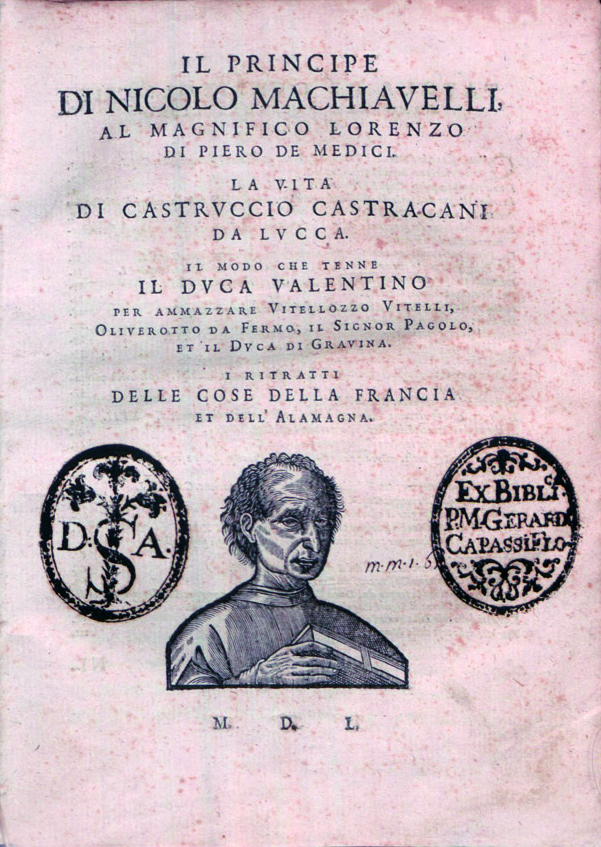
Machiavelli lived and worked in Florence, in what is now Italy, during a turbulent period of shifting alliances and frequent wars. He wrote The Prince in 1513 after losing public office and seeking to regain favour with the Medici family. Although composed in 1513, the work was not published until after his death; the manuscript circulated in manuscript copies before appearing in print. The treatise draws on Machiavelli's diplomatic experience and on historical examples from classical antiquity and contemporary Europe.
Contents and central themes
The Prince analyses different types of rule and the instruments leaders use to hold them. It distinguishes between hereditary and new principalities, and between rule maintained by laws and institutions versus rule secured by military force or personal loyalty. Two recurring concepts are often summarized as virtù (a leader's ability, decisiveness and adaptability) and fortuna (chance or external circumstances). Machiavelli stresses the importance of a reliable military, prudent use of cruelty, and the cultivation of reputation.
Practical advice (selected)
- Build and preserve a loyal armed force rather than depend on mercenaries or auxiliaries.
- Use cruelty sparingly but decisively to prevent greater disorder.
- Appear merciful, faithful and pious when it serves your stability, but prioritize power and security when required.
- Manage public perception so subjects trust the prince even if private actions differ.
Ethics, interpretation and controversy
The Prince separated political success from conventional moral norms, leading to charge that Machiavelli abandoned ethics in pursuit of effective rule. This perceived tension between morality and political necessity produced the modern label "Machiavellian." Supporters argue he offered candid realism about politics and statecraft, while critics see cynical endorsement of unscrupulous means. Some scholars emphasize nuance: Machiavelli also wrote about civic republicanism and good government in his other works, suggesting a broader political project than a single manual for the king or ruler.
Reception and legacy
The Prince quickly became influential and controversial. As a compact handbook on power it affected rulers, thinkers and writers across Europe; it shaped debates on sovereignty, diplomacy and the limits of conscience in governance. Over centuries it has been taught both as a practical guide and as a landmark in political realism. Its lasting importance lies in provoking sustained inquiry into how authority is won and used, and in forcing readers to confront the difficult trade-offs inherent in public leadership.
For further context and primary texts, consult editions and translations or secondary studies that compare The Prince with Machiavelli's other writings and with contemporary political thought. 1513 marks the date of composition, and later printings brought this compact but influential work to a wider audience.
Niccolò Machiavelli remains a central figure for anyone studying the dynamics of human governance and the enduring question of how rulers reconcile means and ends.
Questions and answers
Q: Who is Niccolò Machiavelli?
A: Niccolò Machiavelli is a writer who lived in Florence, Italy, and wrote about politics and government.
Q: When was his book, The Prince, published?
A: The Prince was published in 1513.
Q: What is The Prince about?
A: The Prince is a book about politics and government, specifically focused on what a king or prince should do to make a strong government.
Q: What did Machiavelli think a ruler should do to make a strong government?
A: Machiavelli believed that a ruler needed to gain a lot of power.
Q: What made people worried about Machiavelli's works?
A: One thing that made people worried about Machiavelli's works was that he said ethics and politics are different, and a person might have to do things that are wrong to gain power.
Q: What are the two different opinions about Machiavelli's advice in The Prince?
A: Some people think that Machiavelli was being honest with his advice and saying what he really thought, while others think he was playing a joke on princes who wanted too much power and did not care about what was right.
Q: Why were Machiavelli's works scandalous?
A: Machiavelli's works were scandalous because of his advice that a ruler might have to do things that are wrong to gain power.
Related articles
Author
AlegsaOnline.com The Prince — Niccolò Machiavelli's treatise on power and statecraft Leandro Alegsa
URL: https://en.alegsaonline.com/art/98671