
The Legend of Zelda (video game series)
A long-running action-adventure game series by Nintendo featuring the hero Link, the princess Zelda, and recurring antagonist Ganon; noted for exploration, puzzles, dungeons and influence on game design.
The Legend of Zelda is a critically acclaimed and long-running series of action-adventure video games created and overseen in its early years by Shigeru Miyamoto. First released by Nintendo in 1986, the franchise centers on the recurring hero Link, his efforts to rescue Princess Zelda and to oppose the series' principal antagonist, commonly known as Ganon. Most mainline entries take place in or around the fictional realm of Hyrule, and the games blend exploration, combat, puzzle-solving and item-based progression in varying degrees.
Image gallery
10 Images







Gameplay and defining features
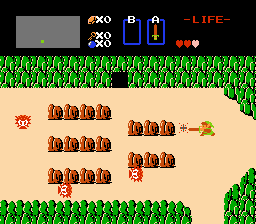
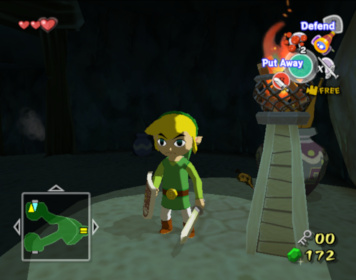
The series is known for its mixture of overworld exploration and self-contained dungeons or challenges. Players typically control Link from perspectives that have varied over time (top-down, 2D side-scrolling, 3D third-person) and use a collection of items — such as swords, shields, bows, bombs, and iconic artifacts like the Master Sword and the Triforce — to overcome obstacles. Core elements include puzzle design within dungeons, environmental interaction, an emphasis on discovery, and a progression model where new tools open previously inaccessible areas.
- Exploration across an interconnected overworld and distinct dungeons.
- Puzzle-solving that often requires specific items or abilities.
- Action-based combat mixed with strategy and timing.
- Recurring symbols and characters that create a coherent mythos.
History and development
Conceived in the mid-1980s as a blend of exploration and action, the series grew from 2D adventures to pioneering 3D designs. A major milestone was The Legend of Zelda: Ocarina of Time, which popularized concepts later seen across many 3D action games. Decades later, The Legend of Zelda: Breath of the Wild reimagined series conventions with a highly non-linear open world and physics-driven interaction, influencing contemporary open-world design. Throughout its history the franchise has evolved its presentation, control schemes and narrative scope while retaining recognizable motifs.
Notable entries and examples
Several titles are frequently cited for their impact: early top-down adventures and sequels established the formula; Ocarina of Time is often praised for its 3D innovations; Link's Awakening, A Link to the Past and Majora's Mask are noted for strong design and atmosphere; Breath of the Wild introduced a freer exploration model that broadened the series' mainstream appeal. Spin-offs, remakes and portable entries have expanded the series' reach across Nintendo hardware generations.
Impact, legacy and distinctions
As one of Nintendo's flagship franchises, the series has sold well over one hundred million copies worldwide and has a dedicated global fanbase. Its music, recurring items and characters have become cultural touchstones. The franchise is notable for an unconventional chronology: some official materials present multiple branching timelines to reconcile different game outcomes, making the series' continuity a recurring topic among fans and scholars. Beyond sales and continuity, The Legend of Zelda has influenced game designers in areas such as environmental puzzles, integrated item design and the balance of guided narrative with player freedom.
Because of its long history and continued innovation, The Legend of Zelda remains both a commercial success and a frequent point of reference in discussions about design, narrative structure and the evolution of interactive worlds.
Questions and answers
Q: What is the Legend of Zelda?
A: The Legend of Zelda is a series of open world adventure video games developed by Nintendo.
Q: Who is Link?
A: Link is the protagonist in most of the games in the series, who has to rescue Princess Zelda from Ganon.
Q: When was the first game released?
A: The first game in the franchise was released on February 21, 1986 by Nintendo.
Q: Where do most of the games take place?
A: Most of the Zelda games take place in Hyrule, a fictional kingdom.
Q: What are some elements featured in these games?
A: These games feature fighting, adventuring, item collecting, puzzle-solving and sometimes racing parts.
Q: How successful has this series been?
A: The Legend of Zelda series has sold over 125 million copies and had 22 different titles during 2017, making it one of the best-selling video game franchises ever.
Related articles
Author
AlegsaOnline.com The Legend of Zelda (video game series) Leandro Alegsa
URL: https://en.alegsaonline.com/art/98333