
The Last Judgment (Michelangelo) — fresco on the Sistine Chapel altar wall
A comprehensive overview of Michelangelo’s Last Judgment: subject, composition, creation history, stylistic features, controversies over nudity and later censorship, and its lasting significance.
The Last Judgment is a monumental fresco executed by Michelangelo on the altar wall of the Sistine Chapel. Painted between 1536 and 1541, it depicts the Christian theme of the Second Coming and the final divine judgment of souls. The work replaced an earlier altar decoration and occupies the wall directly opposite Michelangelo’s ceiling, making it one of the most prominent single images in the papal chapel. It is commonly discussed alongside other major papal commissions and is seen as a culminating statement of the artist’s mature style.
Image gallery
10 Images


Subject and overall composition
At the center of the composition stands the figure of Christ in judgment, surrounded by a tumult of saints, angels, and resurrected humans. To one side are those who are raised toward heaven; to the other, the condemned are dragged down toward hell. Around Christ are martyrs and apostles bearing the instruments of their martyrdom, while angels sound trumpets and bear souls. The scene is dense with bodies in varied poses, combining muscular anatomy with dramatic motion to convey spiritual intensity and the violent upheaval associated with the end of days.
The painting is a fresco (fresco technique) by Michelangelo. It covers the entire altar wall of the Sistine Chapel in Vatican City. According to contemporary records, the commission was launched during the papacy of Clement VII, with work beginning in earnest after the election of Paul III. Michelangelo, then in his early sixties, worked on the project from about 1536 and completed the fresco in the autumn of 1541.
Style, anatomy and artistic intent
Michelangelo’s Last Judgment marks a shift from the balanced compositional ideals of the High Renaissance toward a more expressive, dynamic mode often associated with Mannerism. Figures are shown with exaggerated musculature, complex twists, and strained gestures. The physicality of the bodies emphasizes the drama of moral and spiritual conflict: the living and the dead appear in energetic tangles, and emotional reactions range from ecstasy to terror.
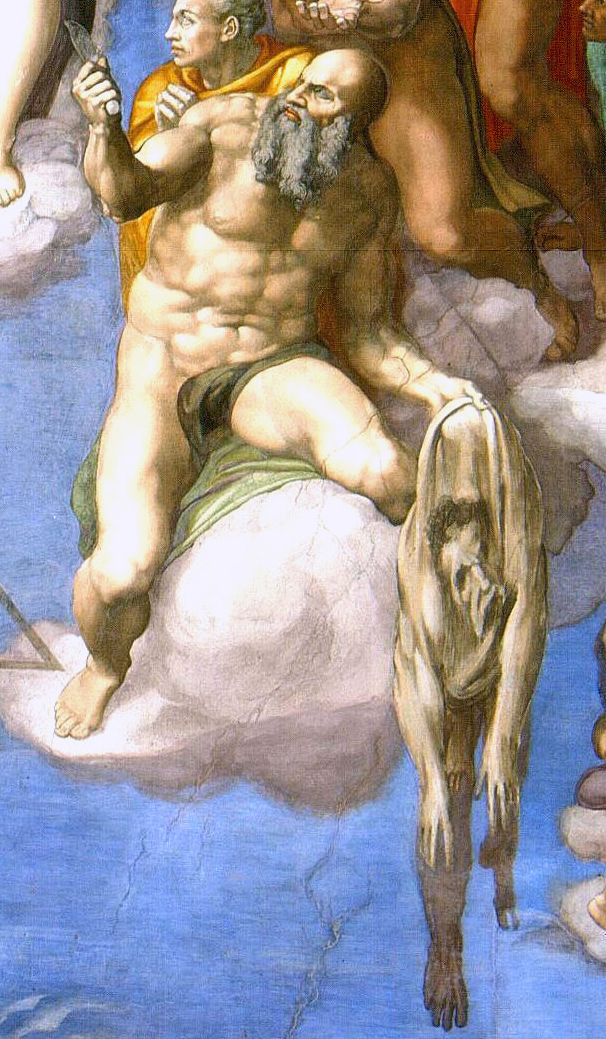
Throughout the fresco Michelangelo integrates symbolic elements and portraits. A flayed figure of St. Bartholomew holds a skin that many scholars have read as a self-portrait of the artist. Another notable anecdote involves the papal courtier Biagio da Cesena: his criticism of the nudity is said to have been answered by Michelangelo’s inclusion of Cesena’s likeness as a judge of the underworld. Such tales underline how the work blends personal, devotional and public dimensions.
Controversy, censorship and later interventions
From its unveiling, the painting attracted both admiration and sharp criticism. Objections focused particularly on the numerous nude figures; critics argued that the depiction of saints and sacred scenes with exposed genitalia was inappropriate for a papal chapel. A movement to cover the perceived indecency—sometimes called the "fig-leaf campaign"—culminated in the mid-16th century when a number of genital areas were painted over. The artist Daniele da Volterra was later commissioned to add draperies and is remembered for this role, earning the sobriquet Il Braghettone in popular accounts.
In subsequent centuries the fresco underwent conservation efforts and occasional retouching. A major restoration in the late 20th century revealed brighter colors and details that had been obscured by soot and earlier overpainting; the cleaning itself prompted debate among scholars and conservators about methods and interpretation.
Importance and legacy
The Last Judgment stands as one of Michelangelo’s most ambitious and controversial works. It is frequently discussed for its theological boldness, sculptural treatment of the human body, and emotional power. Artists and critics have studied its anatomy, compositional daring, and the way it negotiates between sacred narrative and individual expression. The fresco remains a focal point for visitors to the Sistine Chapel and for scholarship on late Renaissance art, devotional imagery, and the changing relationship between art and ecclesiastical authority in the 16th century.
- Key dates: commission in the 1530s, painting 1536–1541 (see papal chronology involving Clement VII and Paul III).
- Main themes: Second Coming, resurrection, judgment, reward and punishment; imagery drawn from apocalyptic texts attributed to John (Second Coming, Apocalypse).
- Controversy: debates about nudity and propriety, censorship campaigns and the later covering of genitals (censorship), and the role of critics like Biagio da Cesena (Minos anecdote).
- Related persons: artist Michelangelo, patrons such as Clement VII and Paul III, and later contributor Daniele da Volterra.
Scholars continue to debate aspects of dating, iconography and the extent to which the painting reflects Michelangelo’s personal views versus papal directives. Nevertheless, the Last Judgment remains a defining image of Western art: a complex fusion of anatomy, theology and public spectacle that has shaped perceptions of end-time imagery ever since.
Further reading and resources are available through museum catalogues and specialist studies on Renaissance art; introductory entries and visual guides can be consulted for chronological and iconographic details (Christ as judge, chapel context, Christian doctrine). For historical anecdotes and reception history see accounts of the Mantua ambassador and court debates as well as modern conservation reports (apocalyptic sources, fresco technique, Vatican context, artist biography, censorship history).
Questions and answers
Q: Who commissioned the painting of The Last Judgment?
A: Clement VII commissioned the painting in 1534, the last year of his papacy.
Q: When did Michelangelo begin work on The Last Judgment?
A: After the election of Paul III Farnese, Michelangelo, aged 61, began work in 1536.
Q: What does The Last Judgement depict?
A: The Last Judgement shows the Second Coming of Christ, as described by John the Evangelist in the apocalypse. The painting depicts the moment when the living and dead are judged by Christ, and their souls consigned to heaven or hell.
Q: How was Michelangelo's depiction of holy persons received at first?
A: Due to his depiction of holy persons in the nude with exposed genitals, Michelangelo was accused of immorality and obscenity. A censorship campaign was started known as "Fig-leaf campaign".
Q: Who launched this censorship campaign?
A: Carafa and Monsignor Sernini (Mantua's ambassador) launched this censorship campaign to remove frescoes from The Last Judgment.
Q: What happened when Biagio da Cesena complained about nudity depicted in The Last Judgment?
A: When Biagio da Cesena complained to Pope Paul III about nudity depicted in The Last Judgment, he responded that his jurisdiction did not extend to hell so it had to remain.
Q: What is reflective of Michelangelo's feelings for being commissioned to paint The Last Judgement?
A: In the painting, Michelangelo does a self portrait depicting himself as St Bartholomew after he had been flayed (skinned alive). This is reflective of contempt he felt for being commissioned to paint The Last Judgement.
Related articles
Author
AlegsaOnline.com The Last Judgment (Michelangelo) — fresco on the Sistine Chapel altar wall Leandro Alegsa
URL: https://en.alegsaonline.com/art/98305
Sources
- crucifixion.com : "The Terror of Salvation: The Last Judgment"