
The Hunting of the Snark: Lewis Carroll's Nonsense Poem in Eight Fits
Encyclopedic overview of Lewis Carroll's nonsense poem The Hunting of the Snark: composition, structure, language, themes, publication, illustrations, and cultural legacy.
The Hunting of the Snark (subtitled An Agony in Eight Fits) is a long nonsense poem by Lewis Carroll, the pen name of Charles Lutwidge Dodgson. Written in the mid-1870s and first published in 1876, the poem tells of a peculiar sea voyage undertaken by a crew of ten who search for an elusive creature called the Snark. Carroll combines deadpan narration, comic set pieces and inventive vocabulary to produce a brief mock-epic that has attracted sustained attention from readers, critics and adaptors.
Image gallery
10 Images


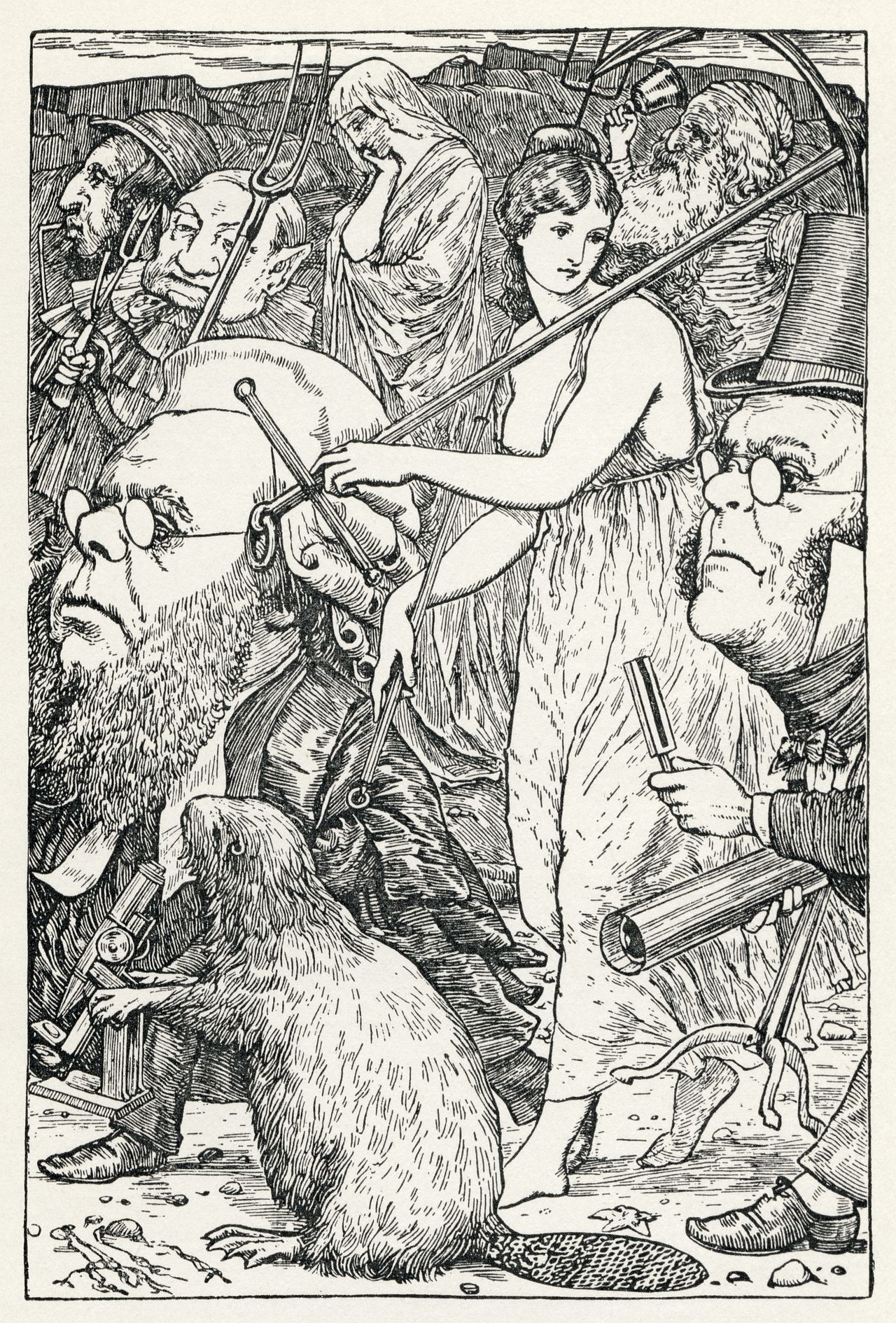

Synopsis and Narrative Tone
The narrative is episodic. Over eight named sections, or "fits," the party encounter a series of absurd incidents and hazards while the Bellman, their ostensible leader, issues authoritative-sounding instructions. The poem plays with the language of adventure and exploration but undercuts heroic rhetoric with trivial or surreal outcomes. Much of its effect depends on a deliberate mixture of earnest and tongue-in-cheek tones that leave readers unsure whether to treat events literally or as parody.
Notable Passage and the Bellman
One of the poem's most quoted refrains comes early and exemplifies Carroll's blend of comic authority and repetition. In the poem the Bellman declares:
"Just the place for a Snark!" the Bellman cried, As he landed his crew with care; Supporting each man on the top of the tide By a finger entwined in his hair. "Just the place for a Snark! I have said it twice: That alone should encourage the crew. Just the place for a Snark! I have said it thrice: What I tell you three times is true."
The reference to a bellman (a town crier) helps set the mock-ceremonial air; historically a bellman announced proclamations aloud in towns where many people could not read, and Carroll uses that office as a comic emblem of asserted authority; this association is discussed in historical context resources such as material on the town crier.
Language, Coinages and Links to Jabberwocky
Several coinages and portmanteau words that Carroll first used in the earlier poem "Jabberwocky" (in Through the Looking-Glass) reappear in The Hunting of the Snark. Carroll's playful morphology — the blending of two words into one evocative new form — is widely discussed in studies of linguistic creativity; see general treatments of portmanteau words for background.
- bandersnatch
- beamish
- frumious
- galumphing
- jubjub
- mimsiest (earlier attested as "mimsy")
- outgrabe
- uffish
These terms are deliberately suggestive rather than definitional: they function by sound, associative sense and context to produce atmosphere rather than precise denotation.
Characters and the Crew
The poem's cast is small and eccentric. The Bellman acts as leader and rhetorician, and other identified figures include boots and various professional or quasi-professional members; Carroll intentionally made the occupations of the ten crew members start with the letter "B," a comic device that reinforces both pattern and absurdity. The exact identities and roles of some crew members are played for effect rather than for realistic depiction.
Themes and Interpretations
Readers and commentators have proposed multiple interpretive angles: parody of exploration narratives and captainly authority; meditation on the limits of language and meaning; even a gentle existential joke about the human tendency to pursue unattainable or invented goals. The repeated line "What I tell you three times is true" is sometimes summarized as the "Bellman's theory," a humorous label for the idea that repetition can manufacture belief; for broader discussion of repetition as a rhetorical and literary device, consult studies of repetition and belief, the role of repeated motifs in literary tropes, and analyses of argumentation and rhetoric at related resources.
Publication, Illustration and Reception
The first edition included illustrations by Henry Holiday; the interplay of Carroll's verse and Holiday's drawings contributed to the book's charm and enduring visual identity. Victorian readers reacted to the poem with a mix of delight, puzzlement and appreciation for verbal ingenuity. Since publication it has been reprinted in many editions, frequently accompanied by new commentary and illustrations that highlight different interpretive approaches.
Adaptations and Cultural Legacy
The poem has been adapted into dramatic works, musical compositions and radio pieces, and it has influenced a wide range of later writers and artists who borrow Carrollian names, attitudes or surreal premises. For overviews of theatrical and musical treatments see records of stage and adaptation histories, and for references in later fiction and popular culture consult surveys and citations under literary references.
For readers seeking primary texts and scholarly discussion, standard collected editions of Carroll's nonsense verse are a useful starting point, and general profiles of the author give helpful biographical context; see an author overview at Lewis Carroll. Further linguistic and historical commentary can be found through resources on word history and Victorian cultural background at period studies.
Questions and answers
Q: Who wrote The Hunting of the Snark?
A: The poem was written by Lewis Carroll, the pen name of Charles Lutwidge Dodgson.
Q: When was The Hunting of the Snark written?
A: The poem was written from 1874 to 1876.
Q: What are some words taken from Carroll's earlier poem Jabberwocky?
A: Some words taken from Jabberwocky are bandersnatch, beamish, frumious, galumphing, jubjub, mimsiest (which previously appeared as mimsy in "Jabberwocky"), outgrabe and uffish.
Q: What is the famous quotation in nonsense poetry found in the first two stanzas of The Hunting of the Snark?
A: The famous quotation is "Just the place for a Snark! I have said it twice: That alone should encourage the crew. Just the place for a Snark! I have said it thrice: What I tell you three times is true."
Q: What does Oyez mean?
A: Oyez means "hear ye" or "listen". It is used by town criers or bellmen to announce proclamations made by courts or town councils.
Q: Why did town criers use Oyez? A: Town criers used Oyez because most people were illiterate at that time and needed to be informed orally about legal decisions made by courts or town councils.
Q:What does Bellman's theory refer to? A:Bellman's theory refers to idea of repetition as a grounds for truth - an idea which is sometimes humorously referred to when discussing repetition as a trope in many kinds of discussion and argument.
Related articles
Author
AlegsaOnline.com The Hunting of the Snark: Lewis Carroll's Nonsense Poem in Eight Fits Leandro Alegsa
URL: https://en.alegsaonline.com/art/98184
Sources
- en.wikisource.org : The Hunting of the Snark