
The Hot Rock (1972 film)
A concise overview of The Hot Rock, a 1972 crime‑comedy caper directed by Peter Yates, adapted by William Goldman from Donald E. Westlake’s novel, with an ensemble cast led by Robert Redford.
Overview
The Hot Rock is a 1972 American crime comedy caper film that follows a professional thief and his crew as they attempt a series of heists to steal a single valuable item. The movie blends lighthearted humor with procedural detail, presenting the heist as a chain of increasingly elaborate and ill‑fated attempts. It was directed by Peter Yates and adapted for the screen by William Goldman from a novel by Donald E. Westlake. The film was released by 20th Century Fox and features an ensemble cast led by Robert Redford.
Image gallery
1 Image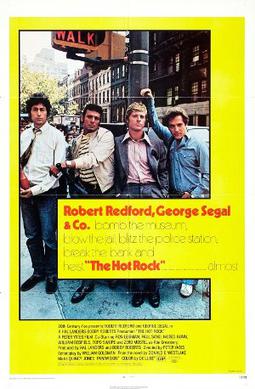
Plot and tone
The narrative centers on a small team of thieves who are hired to steal a precious gem. After the initial theft, the item proves difficult to keep: it is repeatedly lost, stolen back, or otherwise made inaccessible, prompting the protagonists to stage multiple retrievals. Rather than a single masterstroke, the film’s momentum comes from a succession of capers, each exposing the characters’ resourcefulness, occasional incompetence, and the comic friction between them. The tone remains broadly light, combining suspenseful sequences with situational comedy.
Cast and characters
- Robert Redford — leading the team as the professional thief.
- George Segal — a key member of the gang whose personality contrasts with Redford’s.
- Ron Leibman — part of the crew and source of much of the film’s banter.
- Paul Sand — plays an inventive or nervous accomplice.
- Moses Gunn — contributes a grounded presence in supporting scenes.
- Zero Mostel — provides comic heft in a memorable supporting role.
- Christopher Guest — appears in an early, small role before later fame.
Production and style
The project adapted Westlake’s novel into a screenplay that emphasizes character interplay and the mechanics of theft. Peter Yates, known for crafting taut, character‑driven entertainments, balances pacing and comic timing so that each attempt at the prize functions like a set piece. The film uses urban locations and pragmatic staging to ground its antics, and the ensemble performance underlines the cooperative — and often flawed — nature of the heist team.
Reception and legacy
Upon release the film attracted attention for its light comic touch and the chemistry among its leads. Critics and audiences praised its craftsmanship and the way it blends crime plotting with humor rather than treating either element purely seriously. Over time it has been regarded as a solid example of the early 1970s caper genre and is often cited for its efficient storytelling and entertaining ensemble work.
Notable facts
- The movie is one of several period caper films that favor clever plotting over graphic violence.
- It helped showcase the screenwriting talents of William Goldman and the directorial control of Peter Yates.
- The cast includes both established stars and performers who later became better known for other work, such as Christopher Guest.
Questions and answers
Q: What is The Hot Rock?
A: The Hot Rock is a 1972 American crime comedy caper movie.
Q: Who directed The Hot Rock?
A: The Hot Rock was directed by Peter Yates.
Q: Who wrote the screenplay for The Hot Rock?
A: The screenplay for The Hot Rock was written by William Goldman.
Q: What is The Hot Rock based on?
A: The Hot Rock is based on the novel of the same name by Donald E. Westlake.
Q: Who are some of the actors in The Hot Rock?
A: Some of the actors in The Hot Rock include Robert Redford, George Segal, Ron Leibman, Paul Sand, Moses Gunn, Zero Mostel, and Christopher Guest.
Q: Which studio distributed The Hot Rock?
A: The Hot Rock was distributed by 20th Century Fox.
Q: When was The Hot Rock released?
A: The release date of The Hot Rock is not provided in the given text.
Related articles
Author
AlegsaOnline.com The Hot Rock (1972 film) Leandro Alegsa
URL: https://en.alegsaonline.com/art/98165