
A Portrait of the Artist as a Young Man — James Joyce's Modernist Bildungsroman
James Joyce's 1916 novel follows Stephen Dedalus from childhood to artistic exile, pioneering interior narration and exploring identity, religion, nationality, and the creative impulse in modernist literature.
Overview
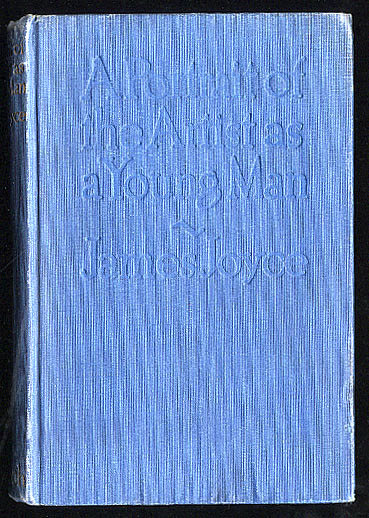
A Portrait of the Artist as a Young Man is a short novel by the Irish writer James Joyce that traces the psychological and moral development of its protagonist, Stephen Dedalus. First issued in book form in 1916 after earlier material appeared in periodical form, the work is often described as a modernist bildungsroman — a coming-of-age story — in which a young man negotiates family, church, and nation while discovering his vocation as an artist. The concluding decision to leave Dublin for the continent marks a deliberate act of self-definition and artistic exile.
Image gallery
5 Images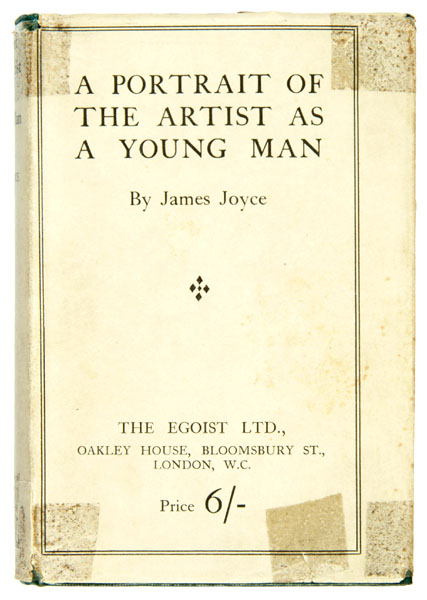


Structure and style
The novel is composed as a sequence of episodes that follow Stephen from infancy through adolescence to young adulthood. Joyce experiments with language to mirror psychological growth: the narrative voice evolves from toddler-like perceptions to increasingly abstract, philosophical reflection. This development gives readers a unique sense of interior life and linguistic maturation.
A key stylistic method in the book is the use of interior monologue and free indirect discourse — techniques closely associated with what critics call stream of consciousness. These devices foreground Stephen's perceptions, memories, and sudden insights (often termed "epiphanies") rather than external plot action, allowing the novel to examine how thought, feeling, and language shape identity.
Themes and notable elements
- Identity and art: Stephen wrestles with who he is and what art should be, concluding that the artist must be free from social and institutional constraints.
- Religion and conscience: Catholic belief and moral strictures play a central role in Stephen's formative struggles.
- Nationalism and home: Dublin and Irish cultural politics form the background against which personal choices are made.
- Language and perception: Joyce links the growth of language to the growth of consciousness; the prose itself becomes a record of maturation.
History, publication and reception
Portions of the novel were published in a literary magazine before the complete book appeared. From its first appearance the work attracted attention for its stylistic innovations and for its frank treatment of religious and sexual development. Though not as explosive in public controversy as some of Joyce's later work, the book helped establish his reputation and influenced many 20th-century writers interested in interiority and the art of narration.
Importance and legacy
Scholars and readers view the novel as a milestone in modernist literature because of its condensed, inward focus and formal experiments. It introduced techniques and preoccupations that would be amplified in Joyce's later writings. For students of literature, the book offers a concentrated study of how an artist's consciousness forms and how language can be used to render thought with precision and emotional force.
For further reading on the work and its author, consult general guides to modern literature and resources on Joyce's life and career: James Joyce bibliography, introductions to Irish literature and studies of narrative technique. General overviews of modernist methods may be found via critical surveys and academic companions to stream-of-consciousness fiction and Joyce's major works. For a focused study of style, see commentary on interior monologue and epiphany in early 20th-century prose critical essays.
Questions and answers
Q: Who is the author of A Portrait of the Artist as a Young Man?
A: The author of A Portrait of the Artist as a Young Man is James Joyce.
Q: When was A Portrait of the Artist as a Young Man first printed as a book?
A: A Portrait of the Artist as a Young Man was first printed as a book in 1916.
Q: What is the book about?
A: The book is about the life of Stephen Dedalus, a young man who is trying to become a writer in Dublin and decides to leave Dublin to pursue his dream of becoming a writer.
Q: What is the writing style used in the book?
A: The writing style used in the book is called stream of consciousness.
Q: What is the difference in language between the beginning and end of the book?
A: The beginning of the book is very simple while the later parts become less simple. It shows how, when a person grows up, the language he or she uses becomes more and more complex.
Q: What is Stephen Dedalus's dream?
A: Stephen Dedalus's dream is to become a writer.
Q: Where does Stephen Dedalus decide to go at the end of the book?
A: Stephen Dedalus decides to go to Paris, leaving his hometown Dublin, to become a writer.
Tags
Related articles
Author
AlegsaOnline.com A Portrait of the Artist as a Young Man — James Joyce's Modernist Bildungsroman Leandro Alegsa
URL: https://en.alegsaonline.com/art/98