
The Descent of Man and Selection in Relation to Sex
Charles Darwin's 1871 work applying evolutionary theory to humans and introducing sexual selection; a foundational, controversial study that shaped biology, anthropology, and debates about human origins.
Overview
The Descent of Man, and Selection in Relation to Sex was published by Charles Darwin in 1871 as his major follow-up to On the Origin of Species (1859). In this book Darwin extended the principles of evolution by natural selection to human beings and developed the concept of sexual selection as a distinct but related mechanism. As he had hinted in the Origin — "Light will be thrown on the origin of man and his history" — Darwin sought to place human physical, mental and moral traits within an evolutionary framework.
Image gallery
9 Images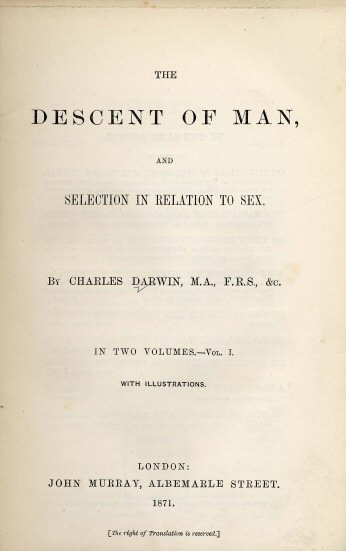




Core arguments and topics
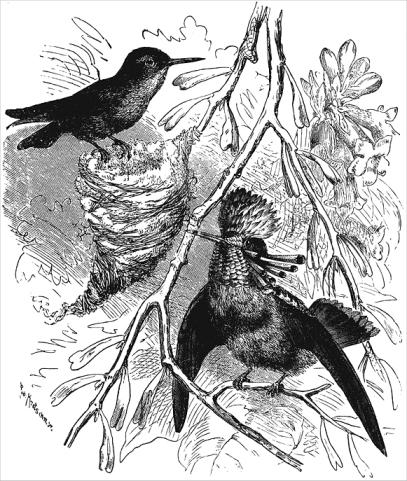
Darwin organized the work around two entwined themes: the descent of humans from earlier forms and the role of sexual selection in producing differences between sexes and between closely related species. He argued that natural selection explained broad anatomical and physiological changes, while sexual selection accounted for features that appear to reduce survival yet improve mating success — for example, elaborate plumage, antlers, courtship behavior and vocal displays.
- Descent and common ancestry: evidence that humans share ancestry with other primates and have undergone gradual change.
- Sexual selection: mechanisms such as mate choice and male–male competition that shape ornamentation and behavior.
- Mental and moral faculties: discussion of intelligence, emotions and social instincts as products of evolution.
Examples and mechanisms
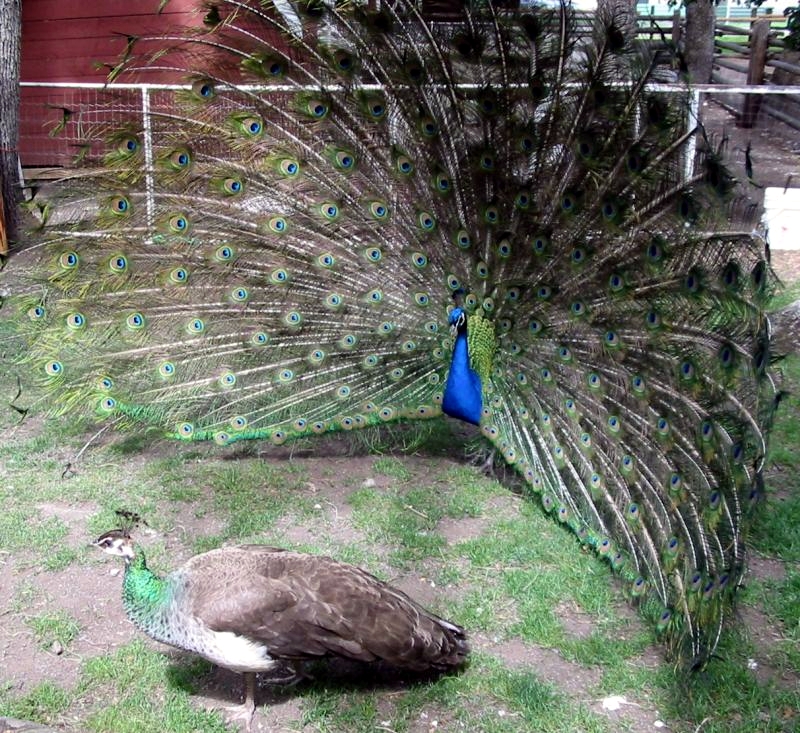
To illustrate sexual selection Darwin used familiar examples — the peacock's tail, the bright colours of certain birds, and weapons like deer antlers — showing how traits that attract mates or confer advantage in rivalry could spread even if costly for survival. He described sexual dimorphism (differences between males and females) and emphasized both female choice and male contests as complementary processes. While his language reflects Victorian-era assumptions, the basic division between natural and sexual selection remains influential in modern evolutionary biology.
Historical context and contemporaries
The book appeared after a decade in which others had begun to apply evolutionary ideas to humans. Notable contemporaries included Thomas Henry Huxley's Man's Place in Nature and Charles Lyell's The Antiquity of Man, both published in the 1860s. Huxley, often called "Darwin's bulldog," debated the evidence for human evolution and contributed to public and scientific discussion; his name and work are often mentioned alongside Darwin's in this period (T. H. Huxley). The broader debate encompassed scientists, clergy and the public and touched on anatomy, fossil evidence and the interpretation of human uniqueness.
Reception and legacy
Upon publication the book provoked strong reactions: it intensified scientific interest in human origins, but also aroused moral and theological controversy. Over time Darwin's treatment of sexual selection stimulated new research in animal behaviour, ecology and evolutionary psychology. Some later thinkers misapplied evolutionary ideas for political or social arguments — a misuse often distinguished from Darwin's scientific claims — yet the Descent remains a pivotal work for understanding how evolutionary theory addresses human biology and behaviour.
Continued relevance
Today many of Darwin's observations are revisited with modern data and methods: genetics, comparative anatomy, primatology and archaeology have refined and sometimes revised his conclusions, but the central problems he posed — how and why particular traits evolve, and how human capacities arose — continue to drive research. For readers seeking primary and secondary sources on these topics, surveys and modern commentaries remain available that place Darwin's original arguments in the light of subsequent discoveries (human evolution, sexual selection). For historical perspective on the mid-19th century debate consult works by contemporaries such as Huxley and Lyell, and editions or studies that collect Darwin's correspondence and revisions.
Questions and answers
Q: What is The Descent of Man, and selection in relation to sex?
A: The Descent of Man, and selection in relation to sex is a book by Charles Darwin that was first published in 1871.
Q: What was Charles Darwin's first great book on evolutionary theory?
A: Charles Darwin's first great book on evolutionary theory was his 1859 work, On the Origin of Species.
Q: What did Charles Darwin say about human beings in the Origin?
A: In the Origin, Charles Darwin had said almost nothing about human beings except for a single sentence: "Light will be thrown on the origin of man and his history".
Q: What does Charles Darwin apply evolutionary theory to in The Descent of Man?
A: In The Descent of Man, Charles Darwin applies evolutionary theory to human evolution.
Q: What is Charles Darwin's theory of sexual selection?
A: Charles Darwin's theory of sexual selection is explained in The Descent of Man, and it states that certain traits that enhance mating success can be passed on to offspring.
Q: Why did Charles Darwin think the topics of human evolution and sexual selection were closely connected?
A: Charles Darwin thought that the topics of human evolution and sexual selection were closely connected because both explain how certain traits become more prevalent in a population over time.
Q: What were some other works on the subject of human evolution published between the Origin and the Descent of Man?
A: Other works on the subject of human evolution published between the Origin and the Descent of Man include Man's Place in Nature by Thomas Henry Huxley and The Antiquity of Man by Charles Lyell, both of which were published in 1863.
Related articles
Author
AlegsaOnline.com The Descent of Man and Selection in Relation to Sex Leandro Alegsa
URL: https://en.alegsaonline.com/art/97872