
The Communist Manifesto — an overview of origins, content, and legacy
Concise, neutral account of The Communist Manifesto: authorship, structure, central themes, historical setting, reception and continuing influence in political and intellectual history.
The Communist Manifesto is a short political pamphlet first published in 1848 that quickly became one of the most discussed texts in modern political history. Its original German title is given in many editions as the Manifest der Kommunistischen Partei. The pamphlet form and brevity helped it circulate widely; it is often described simply as a pamphlet rather than a long treatise. The text was written collaboratively by Karl Marx and Friedrich Engels, two thinkers closely associated with 19th‑century Marxist movements and debates in European political theory. It was composed in German and published amid the revolutions and social upheavals of mid‑century Europe.
Image gallery
6 Images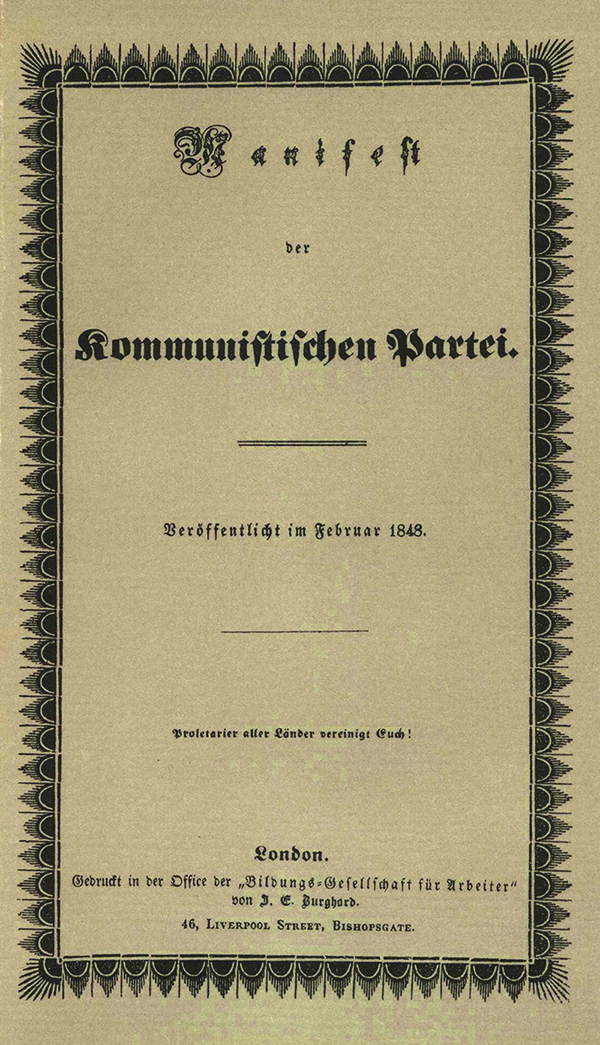


Composition and publication
The manifesto grew out of earlier drafts and party documents: readers and scholars refer to various early versions and the first drafts when tracing how its arguments were formed. The work was produced in the context of events in German‑speaking lands and broader European politics; its language and some references reflect a specific German context even as it addresses international developments. The first edition appeared in 1848, a year of revolutions, and is frequently dated to that moment of crisis and mobilisation (first publication, 1848). Over subsequent decades it was reprinted and translated widely (translations), contributing to its reputation for worldwide influence.
Structure and main arguments
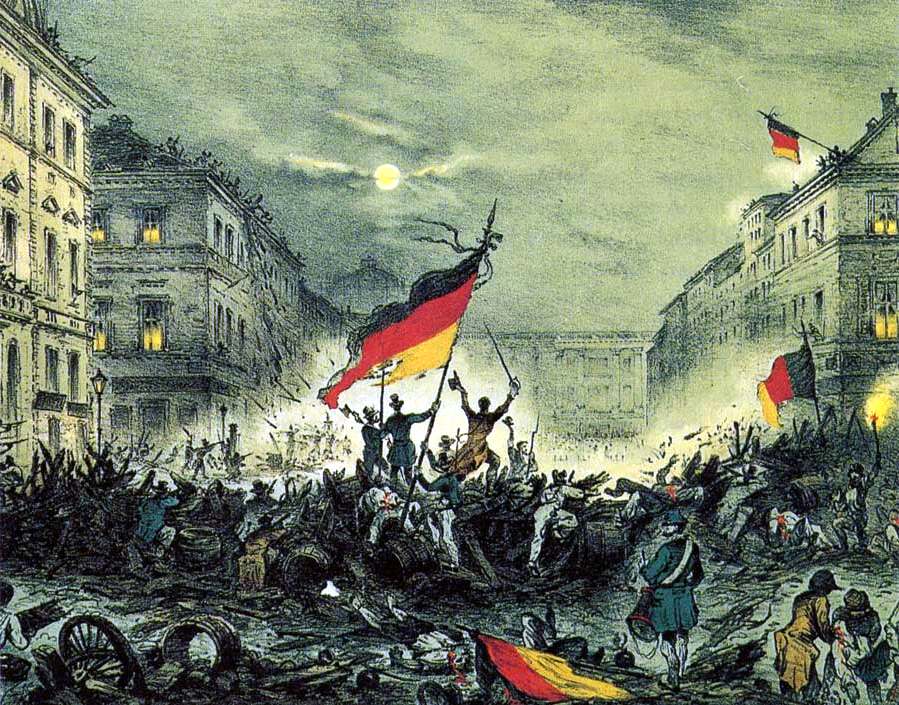
The manifesto is short and structured to combine historical interpretation with political appeal. Its central interpretive claim is often summed up as class struggle: societies, according to the text, develop through conflicts between classes with opposing economic interests. It describes earlier historical formations (past transformations) and situates the industrial upheavals of the 19th century in the wave of political unrest sometimes called the 1848 revolutions.
- Historical materialism: the manifesto presents a viewpoint that economic relations and modes of production shape political and social institutions, a method often referred to as historical materialism.
- Class analysis: the text focuses on the antagonism between the bourgeoisie and the proletariat, diagnosing how capitalist property relations create social divisions.
- Programmatic demands: alongside theory it lists practical proposals — for example public education and tax measures — presented as immediate, transitional policies (education and tax measures).
- Transformation of property: the manifesto argues for radical change in ownership and control of productive assets, often discussed under the heading of abolition of private property and collective management of the means of production.
Immediate political orientation
The work urges workers to organise politically rather than accept existing hierarchies and includes a section explaining the relationship of communists to other working‑class movements. It refers to the idea of the dictatorship of the proletariat as a transitional political form in subsequent Marxist debates, and it highlights practical reforms such as measures to end child labour that were already part of contemporary labour agendas. The manifesto blends analysis (social analysis) with specific written proposals intended to guide political action.
Reception, influence and criticisms
Readers and political movements have treated the manifesto in many ways: as inspiration for organised labour and socialist parties, as a concise statement of a historical method, and as a provocative polemic. Its broad impact explains why it is sometimes at the centre of debates about the merits and failures of various political projects; critics highlight perceived flaws in its account of capitalism and point to historical outcomes as grounds for criticism of capitalism or of Marxist practice. The text has also been the subject of contested readings and a wide range of scholarship, contributing to its controversial reception across different eras and regions.
Legacy and study
Today the manifesto is taught in courses on political thought, labour history and modern social theory. Its short length makes it a common point of entry for readers exploring ideas about class, economic power and social justice; some treat it primarily as a historical document, others as a continuing source of political rhetoric or theoretical insight about communism as an ideal. The pamphlet's publication history, translations and archival preservation are well documented: editions and manuscripts have been collected in libraries and heritage initiatives, and certain items related to the work are listed in archival registers such as the Memory of the World register.
For further reading, consult scholarly editions that include variant texts and annotations, histories that situate the manifesto in mid‑19th‑century Europe, and contemporary analyses that compare its arguments with later developments in political economy and social movements. These resources can help readers distinguish the manifesto's rhetorical aims from the more detailed economic analyses that appear in other works by its authors.
Additional contextual resources cover the lives and collaborations of Karl Marx and Friedrich Engels, the broader family of Marxist thinkers, debates in political theory, and studies of industrial change and reform movements (industrial transformation, 1848 revolutions). Readers tracing the text's origins may consult accounts of its early drafts and the circumstances of its composition in the German context. The manifesto's programmatic elements — from proposals on education and taxation to ideas about property and the means of production — remain central to how it is taught and debated worldwide (global influence) and to ongoing discussion about social change and policy responses to inequality.
Further study can engage with debates over the manifesto's diagnoses of class struggle, contemporary criticisms of capitalism, and the practical implications of its recommended reforms, including labour protections and measures to curtail exploitative practices such as child labour. These topics continue to animate scholarship and public discussion about the political and economic order.
For archival listings and heritage recognition see references to the manifesto in preservation registers and bibliographic catalogues (heritage register).
Questions and answers
Q: What is The Communist Manifesto?
A: The Communist Manifesto is a short book written by German Marxist-Engelist political theorists Karl Marx and Friedrich Engels in 1848. It is one of the world's most influential and controversial political manuscripts, and has been translated into many languages.
Q: What does The Communist Manifesto analyze?
A: The Communist Manifesto analyzes approaches to class struggles (from both the past and present), as well as problems with capitalism.
Q: Does The Communist Manifesto predict how communism would be in the future?
A: No, it does not predict how communism would be in the future. It is a mixture of both Marx and Engels' theories and opinions on society and politics.
Q: What are some of Marx and Engels' ideas for replacing capitalist society?
A: Some of their ideas include replacing capitalist society with dictatorship of the proletariat, abolishing private property and child labour, making means of production common, introducing strong progressive income tax, providing free education for all.
Q: When was The Communist Manifesto first published?
A: The Communist Manifesto was first published in 1848.
Q: In which language was it originally written?
A: It was originally written in German language.
Q Is The Communist Manisfesto registered with Memory of World Programme?
A Yes, it is registered along with volume I of 'The Capital' by Karl Marx in June 2013
Related articles
Author
AlegsaOnline.com The Communist Manifesto — an overview of origins, content, and legacy Leandro Alegsa
URL: https://en.alegsaonline.com/art/97795
Sources
- unesco.de : Schriften von Karl Marx: "Das Minifest der Komminschen Partei" (1848) und "Das Kapital, ernster Band" (1867)