
Attitude Era (professional wrestling)
Late-1990s to early-2000s WWF period defined by edgier, adult-oriented programming, the Monday Night Wars, the Montreal Screwjob, and the rise of antihero superstars.
The Attitude Era refers to a defining phase in modern professional wrestling, centered on the World Wrestling Federation (WWF) from roughly late 1997 to 2002. It marked a deliberate departure from the family-oriented presentation that had characterized much of the promotion's earlier decades. Driven by intense competition during the Monday Night Wars with rival promotions, the era emphasized faster pacing, explicit language, and reality-tinged storylines intended to attract older teen and young adult viewers.
Image gallery
10 Images


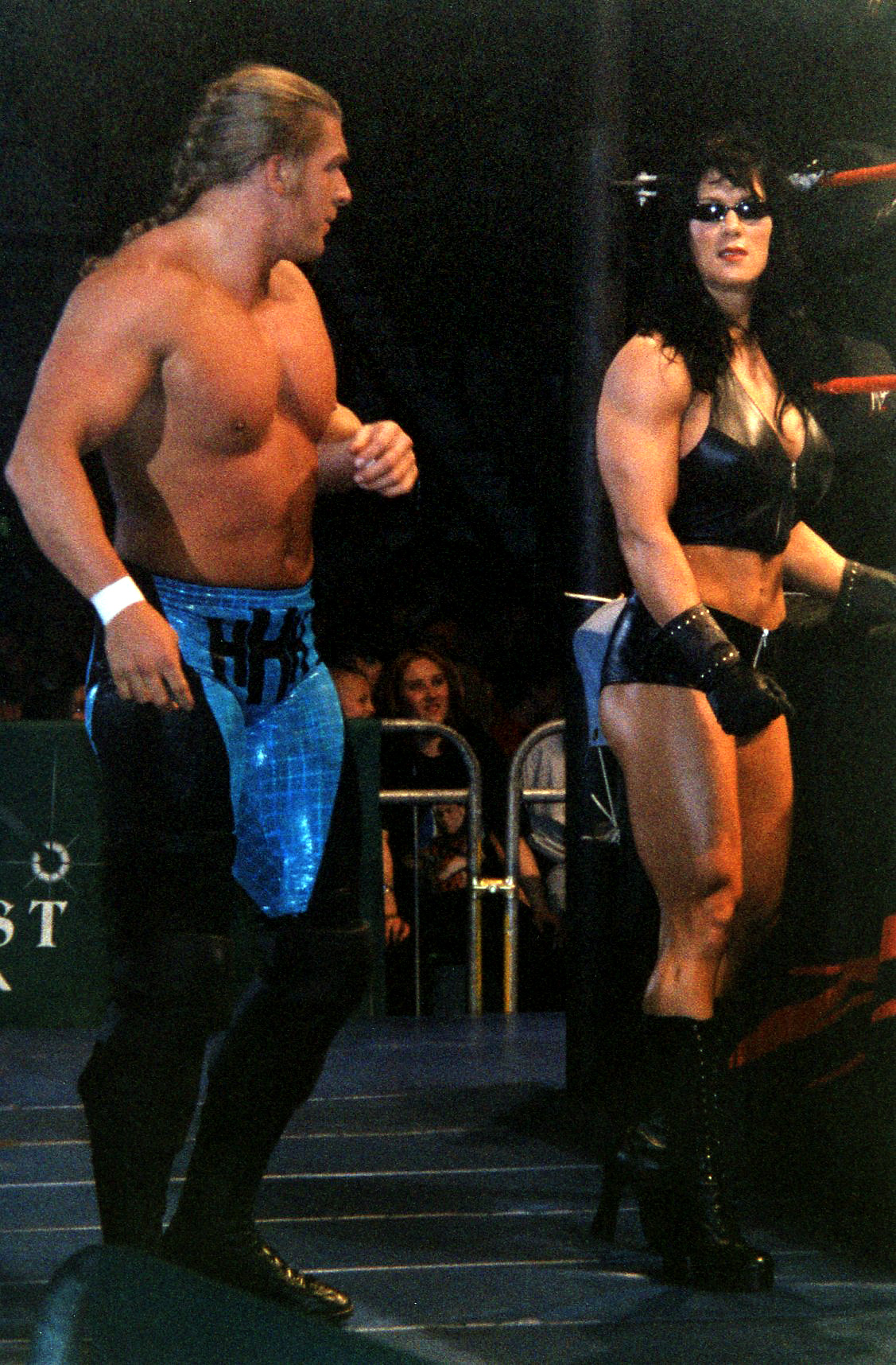




Characteristics and presentation
Programming in this period adopted a gritty, often confrontational tone. Television episodes featured more physical violence, sexual innuendo, and profanity than previous eras, and the company leaned heavily on controversial angles and unpredictable moments. Production changed visually as well: the promotion introduced the distinctive "scratch" logo and rebranded shows with a rawer aesthetic. Matches and segments blurred the lines between scripted plot and behind-the-scenes reality, and the roster foregrounded antihero characters who challenged authority.
Key figures and recurring elements
- Performers: The era is associated with stars such as Stone Cold, The Rock, and groups like D-Generation X who embodied rebellious personas.
- Match types: Hardcore and stipulation matches grew common, including no-disqualification bouts and cinematic-style segments influenced by other promotions.
- Storytelling: Reality-based feuds, sudden character turns, and the use of real-life events—most famously the Montreal Screwjob—gave narratives a sense of immediacy.
Origins, peak, and conclusion
The shift accelerated after Survivor Series 1997, when the Montreal incident crystallized a new attitude toward on-screen unpredictability and backstage politics. The WWF and its rivals escalated creative approaches through the late 1990s; television ratings and pay-per-view buys reached heights as professional wrestling regained mainstream attention in the United States. By 2001 the competitive landscape changed—WCW was purchased by WWF—and in 2002 the company moved away from the Attitude branding as it transitioned to a new corporate identity, prompted in part by legal and marketing reasons.
Impact and controversies
The Attitude Era broadened wrestling's audience and left a lasting cultural imprint: phrases, catchphrases, and characters from the period remain widely recognized. At the same time, critics pointed to excesses—sexualized content, glorified substance use, and blurred reality—that prompted debate about media responsibility. Some elements have been edited or framed differently in retrospective releases as public standards evolved.
Notable distinctions
Unlike earlier, more cartoonish eras, this period prioritized *shock value* and an alignment with other contemporary pop-culture trends often labeled "Trash TV". It deliberately courted controversy to build ratings, a strategy that made it commercially successful while inviting scrutiny for being unduly controversial. For further historical context and archives, consult sources on Survivor Series 1997 and broader studies of professional wrestling history that examine the era's long-term effects. Additional reading is available through specialized retrospectives and documented pay-per-view records (PPV) and contemporary reporting (U.S. media coverage, Montreal accounts).
The Attitude Era remains a pivotal chapter in wrestling history: commercially transformative, creatively influential, and culturally contentious, it reshaped expectations for what mainstream wrestling television could be and who it could reach.
Questions and answers
Q: What was the Attitude Era?
A: The Attitude Era was a period in the World Wrestling Federation and professional wrestling history that occurred in response to the Monday Night Wars with WCW and ECW. It officially started on November 9, 1997 at Survivor Series 1997.
Q: When did the Attitude Era start?
A: The Attitude Era officially started on November 9, 1997 at Survivor Series 1997.
Q: What marked the beginning of the Attitude Era?
A: The beginning of the Attitude Era was marked by the Montreal Screwjob and debut of the "WWF Attitude" scratch logo.
Q: When did it end?
A: The Attitude Era ended on May 6, 2002 when WWF rebranded to WWE with the "Get the 'F' Out" marketing campaign.
Q: How did it make wrestling more popular in America?
A: The Attitude Era made wrestling more popular in America from late 1990s to early 2000s by making its product into a more controversial "shock value" form of entertainment similar to "Trash TV". This increased television ratings and pay-per-view viewership.
Q: How did it try to attract young adults?
A: To attract young adults, WWF programming during this era tried to become more controversial and shock value-oriented like Trash TV genre popularized in 90s.
Related articles
Author
AlegsaOnline.com Attitude Era (professional wrestling) Leandro Alegsa
URL: https://en.alegsaonline.com/art/97537