
Thameslink — north–south rail route through London
Thameslink is a cross-London rail route linking Bedford and Brighton. It serves 68 stations over about 225 km, connects two airports, carries commuter and longer-distance traffic, and was upgraded under the Thameslink Programme.
Overview
Thameslink is a cross-London rail corridor linking communities to the north and south of the capital. Its principal through route runs from Bedford in the north to Brighton on the south coast. The route combines longer-distance and suburban stopping services, serving commuter markets, airport passengers and central London journeys without the need to change between terminal stations.
Image gallery
10 Images




Route, length and stations
The route covers roughly 225 km (about 140 miles) and serves around 68 stations on its various branches. In central London Thameslink uses a dedicated north–south spine and calls at a number of major interchanges and city stops, providing cross-city connectivity that complements other London rail and Underground services. It also links directly to both Gatwick Airport and London Luton Airport, offering through services for airport travellers as well as local commuters.
Key branches and service patterns
Thameslink operates a mix of stopping and semi-fast services on multiple branches radiating north and south of London. Notable patterns include a suburban loop serving Sutton and Wimbledon, while weekday services extend southeast through Catford and Bromley South to Sevenoaks. Other branches provide longer-distance links to coastal and commuter towns beyond the Greater London boundary.
History and development
The modern through-service commenced in 1988 when infrastructure and timetabling changes enabled continuous north–south trains across central London. By the late 1990s passenger demand had grown markedly and the route suffered heavy crowding: one reported morning peak carried more than 28,000 passengers. That pressure, together with wider network needs, led to a major upgrade programme in the early 21st century to increase capacity and reliability.
The Thameslink Programme
The Thameslink Programme was a long‑running upgrade project that delivered capacity increases, station improvements, new signalling and extended platforms to allow longer trains. The works introduced new high‑capacity electric multiple units and reorganised timetables to raise peak and off‑peak frequencies. These changes were intended to ease congestion, improve interchange and support growth in demand across the corridor.
Services, rolling stock and operation
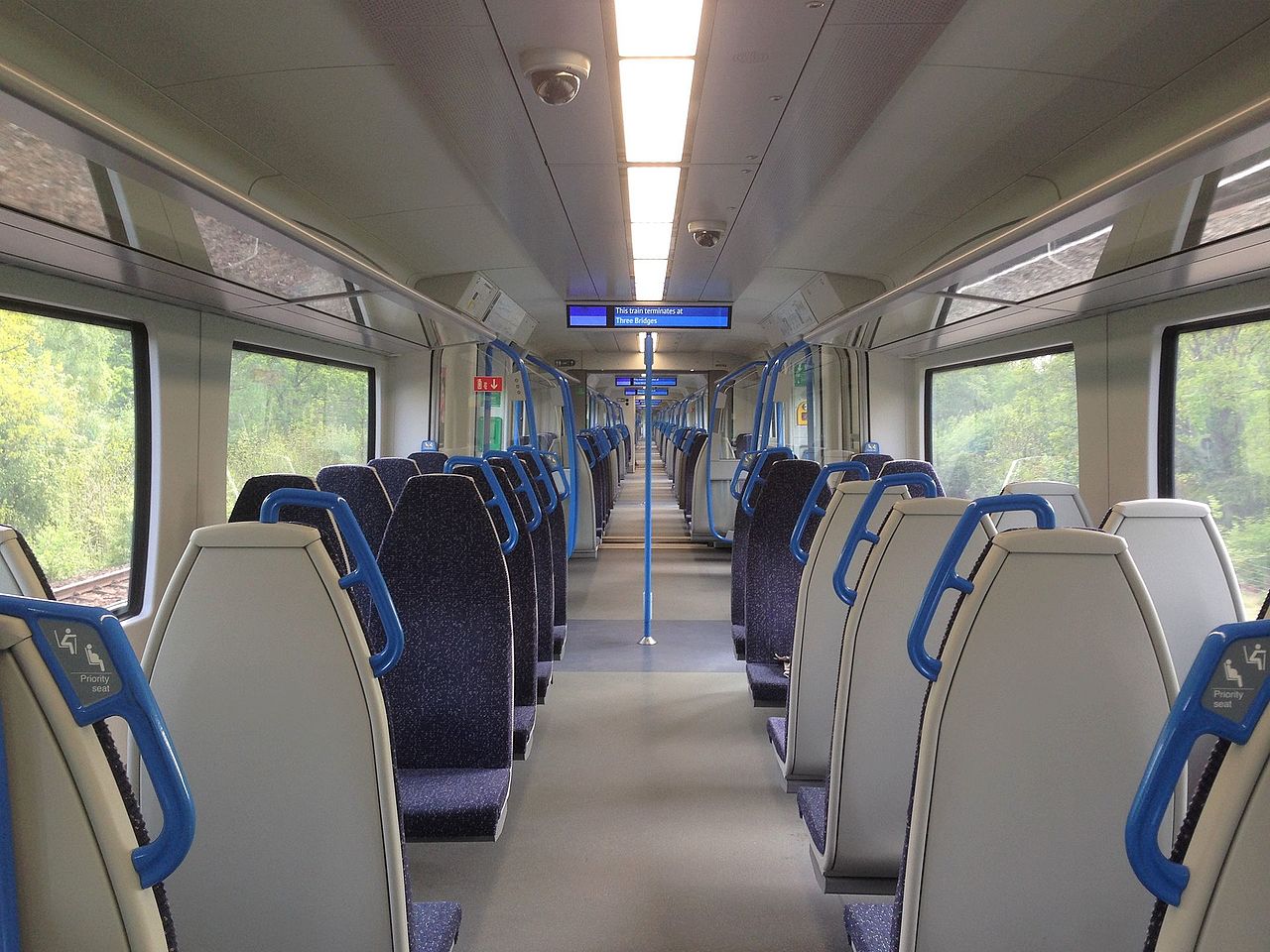
Services on the route are operated predominantly by the Thameslink franchise operator Thameslink. Trains are configured for high‑density commuter flows and for airport passengers, with a mix of stopping patterns to balance journey times and access to key interchanges. Newer fleets introduced during the upgrade are designed for higher capacity, better accessibility and improved passenger information.
Importance and passenger use
Thameslink is important because it provides one of the few continuous north–south rail corridors through central London, linking outer commuter belts, city workplaces and two airports. By enabling through journeys without changing terminal stations, the route helps redistribute demand across the rail network and supports economic links between communities on its length.
Stations, interchanges and passenger information
Passengers can find details on specific stations, accessibility, timetables and service updates via operator and transport authority information channels. Major interchanges on the corridor allow onward connections to other rail services, Underground lines and local transport networks, increasing the route’s value as part of the wider public transport system.
Future and continuing improvements
Ongoing work focuses on capacity management, timetable resilience and passenger facilities. While major elements of the Thameslink Programme are complete, operators and infrastructure managers continue to review opportunities for incremental improvements in frequency, rolling stock availability and station enhancements to meet evolving travel patterns.
For official service information and planned works consult operator announcements and public transport planning sources.
Further reading and official pages: Bedford services, Brighton services, Gatwick Airport link, Luton Airport link, Sutton loop, Sevenoaks services and operator Thameslink.
Questions and answers
Q: What is Thameslink?
A: Thameslink is a railway route in the British railway system that runs north to south through London from Bedford to Brighton, serving 68 stations and spanning 225 km (140 mi).
Q: Which airports does Thameslink connect to in London?
A: Thameslink connects to London Gatwick Airport and London Luton Airport.
Q: Does Thameslink have a suburban loop?
A: Yes, Thameslink has a suburban loop that goes to Sutton and Wimbledon.
Q: Where does the suburban line of Thameslink go on weekdays?
A: On weekdays, the suburban line of Thameslink goes through Catford and Bromley South to Sevenoaks.
Q: When did Thameslink start operating as a through service?
A: Thameslink started operating as a through service in 1988.
Q: Was Thameslink overcrowded in 1998?
A: Yes, by 1998 Thameslink was very overcrowded, carrying over 28,000 passengers in the morning peak.
Q: Who operates almost all the services on Thameslink currently?
A: Almost all the services on Thameslink are currently operated by Thameslink.
Related articles
Author
AlegsaOnline.com Thameslink — north–south rail route through London Leandro Alegsa
URL: https://en.alegsaonline.com/art/97388