
Muay Thai (Thai boxing): overview, techniques, training, and history
Muay Thai, or Thai boxing, is a striking martial art from Thailand known as the “art of eight limbs.” This article covers techniques, training, rituals, competition rules, history, and global influence.
Overview
Muay Thai, commonly called Thai boxing, is a stand-up striking martial art and combat sport that developed in what is now Thailand. Often described as the "art of eight limbs," it makes systematic use of punches, elbows, knees and shins alongside clinch grappling to attack and control opponents. Training emphasizes whole‑body movement, hip rotation, timing and conditioning so that strikes are delivered with power and durability. Practiced as a sport, a method of self‑defense and a cultural activity, Muay Thai combines physical training with ritual elements inherited from Thai tradition.
Image gallery
10 Images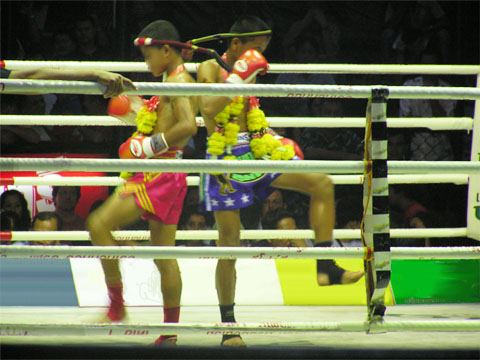


History and regional context
Muay Thai evolved over many centuries from battlefield practices and fighting systems used in the region. As a popular national sport it was formalized into regulated contests and a codified set of techniques and customs. Similar striking arts exist across mainland Southeast Asia — for example, Cambodia's pradal serey, Laos's Muay Lao, Myanmar's lethwei and regional systems in Malaysia — each sharing certain striking and clinch concepts while differing in rules, tactics and cultural expression. Historical ties and cross‑border influences are complex; modern Muay Thai absorbs both traditional elements and contemporary training methods.
Core techniques and the clinch
The technical foundation of Muay Thai centers on a limited but effective set of strikes and the clinch. Key categories include:
- Punches — conventional boxing punches adapted for combination work with kicks, knees and elbows.
- Kicks — most commonly delivered with the shin; roundhouse kicks and the push kick (teep) are prominent.
- Elbows — short, angled and spinning elbow strikes effective at close range and for cutting.
- Knees — used in open exchanges and extensively from the clinch for strikes and off‑balancing.
- Clinch — a defining aspect in which fighters control posture and deliver knees, elbows and sweeps while negating opponent movement.
Techniques rely on coordinated hip rotation and timing; many movements involve the whole body so that power is generated from the legs and core rather than the arm alone.
Training and conditioning
Training blends technical drills with intensive conditioning and cardiovascular work. A typical session may include shadowboxing, pad work, heavy bag rounds, clinch drills, sparring, running and strength training. Conditioning aims to develop endurance, core strength and resilient striking surfaces — particularly the shins. Traditional conditioning includes repetitive striking of pads and bags; more extreme anecdotes exist about harsh methods, but modern coaching emphasizes gradual progression and injury prevention.
Rituals, etiquette and cultural practice
Before bouts fighters traditionally perform a ceremonial dance called the ram muay and a ritual tribute known as the wai khru. These sequences serve cultural and mental preparation roles, warming the muscles, showing respect to teachers and ancestors, and signaling readiness to the crowd. Etiquette in training halls emphasizes respect for instructors, safe practice and humility.
Competition rules, scoring and safety
Rule sets vary by organization but commonly include timed rounds, judges' scoring based on effective strikes, dominance in the clinch and ringcraft, and prohibitions against fouls such as strikes to the groin or the back of the head. Amateur competitions often mandate protective equipment like headgear and shin guards; professional bouts use gloves and mouthguards. Injury risks include concussions, lacerations and joint trauma; regulated events and medical checks aim to reduce harm.
Equipment and practical considerations
Essential equipment includes gloves, mouthguard, groin protector and appropriate shorts. Training gear for drills includes pads, Thai pads, heavy bags, jump ropes and protective shin guards. Coaches tailor conditioning and technical work to individual athletes' needs and competition schedule.
Global influence and related systems
Muay Thai has influenced many modern striking arts and combat sports around the world. It was an important influence on various kickboxing styles developed in Japan, Europe and North America and has been integrated into mixed martial arts (MMA) training. While Muay Thai emphasizes powerful, compact striking and clinch work, other systems — such as Western boxing or certain karate styles — may prioritize speed, footwork or point scoring; each discipline has distinct strategic trade‑offs.
Further reading and resources
- Governing body and rules overview
- Cultural history of Muay Thai in Thailand
- Cambodian striking arts (pradal serey)
- Muay Lao and related Lao traditions
- Regional striking systems in Malaysia and beyond
- High kicks and kicking technique
- Low kicks and leg targeting strategies
- Warm‑up rituals and pre‑fight ceremonies
- Conditioning methods and shin strengthening
- Kickboxing and Muay Thai's influence
- Development of combat sports in Japan
- European adoption and adaptation
- North American growth and competitions
- Muay Thai and African practitioners
- Differences with Western boxing
- Contrasts with karate and other striking arts
This overview is intended as a concise introduction. For technical study or competitive preparation, consult qualified instructors, sanctioned rulebooks and reputable training resources.


Definition
Muay Thai developed over centuries from traditional martial arts of Thailand. When sword and spear became useless, the warrior used his legs, fists and elbows to fight. The traditional way is called Muay Thai Boran (Boran = traditional, old; word borrowed from the Pali language).
History
The first official ring for a Thai boxing competition was used in 1921 and in 1929 boxing gloves were used for the first time. Before that, only hand bandages were used for fighting. The groin protection was made of coconut shells. Until 1929, 13 coconut shells, which had a hole in the middle and were placed in water, were considered the measure of time for one round. With the first shell that sank, the passage was finished. After that year, set round times were introduced, ranging from 2 × 2 minutes to a maximum of 5 × 3 minutes, depending on the class of competition. Muay Thai gained more and more importance after the Second World War by introducing fixed rules. A multitude of individual independent federations arose, which were always in dispute with each other. The disputes only came to an end when the government founded the World Muaythai Council in 1995. All Muay Thai federations worldwide are now under this organization. The first official title fight was held on June 26, 1995. As currently many Muay Thai schools only encourage their fighters to make good bets in the ring and win, the traditional style is taking more and more of a back seat. The former King of Thailand Bhumibol Adulyadej therefore supported pure Muay Thai academies, like the Muay Thai Institute, where the students do not have to worry about money and instead learn the classical style and fight in the traditional way.
Questions and answers
Q: What is Thai Boxing?
A: Thai boxing, also known as Muay Thai, is a combat sport and martial art that has been developed in Thailand. It is referred to as the "art of eight limbs" because it uses both hands, elbows, knees, and legs to attack an opponent.
Q: Where else are similar martial arts found?
A: Similar martial arts can be found in Cambodia, Laos, Burma and Malaysia.
Q: How did Muay Thai develop?
A: Muay Thai inherited fighting techniques from old Cambodian martial arts when Thailand used to be part of Cambodia.
Q: What type of kicks are more effective in competition?
A: Although high kicks to the head may seem more powerful or forceful, persons with special skills and knowledge of this sport declare that low kicks, elbows and knees are more effective for those who fight.
Q: What type of ceremony do fighters take part in before a fight?
A: Before a fight takes place fighters will take part in a long ceremony which serves as preparation by stretching their muscles.
Q: How does one train for Thai boxing?
A: Training for Thai boxing is known for its strength and firmness with modern workouts including both strength (weightlifting/dumbbells) and cardio (running). Some fighters even train by kicking hard objects such as metal poles which aims to harden the eight members of the body so being hit with the shinbone of the fighter is often compared to being hit with a baseball stick.
Q: How does it differ from other martial arts such as karate or boxing?
A: Almost every act of moving in Thai boxing uses the whole body while turning hips into each kick or blow with fist making attacks slower but more powerful than those seen in karate or boxing.
Related articles
Author
AlegsaOnline.com Muay Thai (Thai boxing): overview, techniques, training, and history Leandro Alegsa
URL: https://en.alegsaonline.com/art/97338