
Test match (cricket)
The traditional five-day international form of cricket: rules, history from England–Australia origins, list of Test nations, format features, significance and modern challenges.
Overview
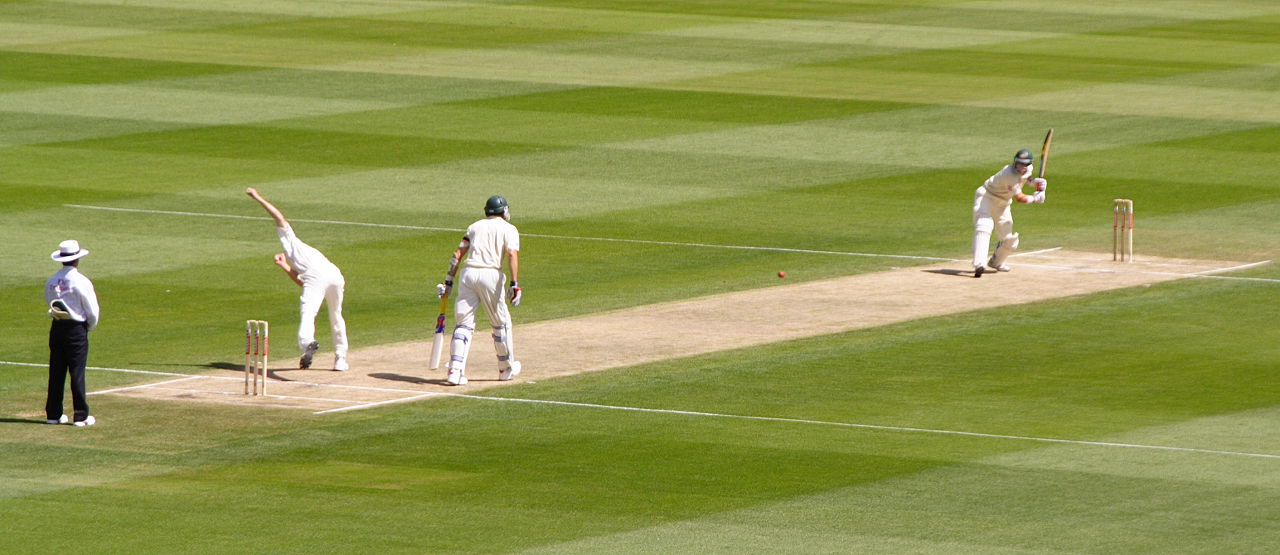
A Test match in cricket is the sport's oldest and most prestigious international format. Played between teams that hold full Test status, a Test usually lasts up to five days and allows two innings per side. Because of its length and the breadth of possible strategies, Tests are widely regarded as the highest standard of the game and a definitive measure of a team's skill in all conditions. For a general introduction see Test match.
Image gallery
10 Images



Format and key characteristics
Several features distinguish Test cricket from shorter formats. Matches are scheduled over five days with six hours of play typically planned each day. Each side can bat twice (two innings) unless the match result is decided earlier. Drawn matches are common because time can run out before a side is dismissed twice. Bowlers, batters, fielders and captains must adapt to evolving pitch conditions, weather, and the tactical use of declarations and follow-ons. The format encourages patience, technical skill and long-term planning rather than the aggressive scoring emphasis of limited-overs cricket.
Origins and early history
Test cricket developed in the 19th century as international fixtures between England and touring sides. The first match that is officially recognised as a Test took place in March 1877 at the Melbourne Cricket Ground and involved England and Australia. That early rivalry established a tradition of full tours and repeat encounters that grew into formal rivalry series. England's central role in the sport's origins is reflected in references to England and the game's spread across the British Isles and to overseas territories stemming from the British Empire.
Expansion of Test nations
Test status was granted progressively as cricket developed in other countries. South Africa was the third nation to play at that level, followed over decades by teams from the Caribbean and the southern hemisphere. Key early milestones include:
- Australia (early rival to England)
- South Africa (entered Test cricket in the late 19th century)
- West Indies (first Tests in 1928)
- New Zealand (1930)
- India (1932)
- Pakistan (1952), emerging after the partition of British India
- Sri Lanka (1982)
- Zimbabwe (1992)
- Bangladesh (2000)
- Ireland and Afghanistan (2018)
Other locations important to early Test history include London, venues such as Lord's and grounds in cities like Christchurch and Delhi. While cricket reached parts of Africa, the Indian subcontinent, the Oceania region and the European fringes, its footprints vary by country—Canada is an example where cricket has always been present but remained secondary to other sports (Canada).
Uses, importance and modern context
Test cricket is valued for its comprehensive test of technique, temperament and team depth. Many playing careers and records are measured primarily by Test achievements. Test series between major nations have long been central to cricket calendars, attracting traditionalists, broadcasters and touring supporters. However, in the modern era the format faces commercial and scheduling pressures from limited-overs and franchise competitions, leading to debates about preserving the five-day game and balancing international commitments with domestic competitions.
Notable distinctions and current challenges
Distinct features of Test cricket include the possibility of a draw, strategic declarations, and the influence of pitch and weather over multiple days. Newer Test nations often encounter a steep competitive gap when facing established teams, affecting the frequency and commercial viability of some bilateral series. Administrators, broadcasters and fans continue to discuss how best to maintain Test cricket's relevance while accommodating evolving formats, global audiences and the financial realities of international sport.
For further reading on historical fixtures, venues and the evolution of international status see references associated with early matches and national entries such as MCG history, and country-specific pages for England, Australia, South Africa, and others listed above.
Questions and answers
Q: What is the original and main form of international cricket competition?
A: Test matches are the original and main form of international cricket competition.
Q: How long do Test matches last?
A: Test matches typically last five days.
Q: When was the first officially recognised Test match played?
A: The first officially recognised Test match took place on 15–19 March 1877 between England and Australia at the Melbourne Cricket Ground (MCG).
Q: Who won that first test match?
A: Australia won by 45 runs.
Q: When did South Africa become a test nation?
A: South Africa became a test nation in 1888–89.
Q: What country was given test status in 1952, on the recommendation of India?
A: Pakistan was given test status in 1952, on the recommendation of India.
Related articles
Author
AlegsaOnline.com Test match (cricket) Leandro Alegsa
URL: https://en.alegsaonline.com/art/97205
Sources
- espncricinfo.com : Australia v England 1st Test 1876/1877
- espncricinfo.com : Australia v England Centenary Test
- espncricinfo.com : South Africa's debut Test match 1889 scorecard
- cricinfo.com : West Indies Series: Test and ODI Tours
- cricinfo.com : scorecard
- icc-cricket.com : "History of the Imperial Cricket Conference"
- www1.cricinfo.com : "India in England, 1932"
- cricketarchive.com : Pakistan in India 1952–53 (1st Test) · web.archive.org