
Test cricket: the traditional five-day international format
Test cricket is the oldest and longest form of international cricket, played over up to five days with two innings per side. It emphasizes endurance, tactics and the highest standard of the sport.
Overview
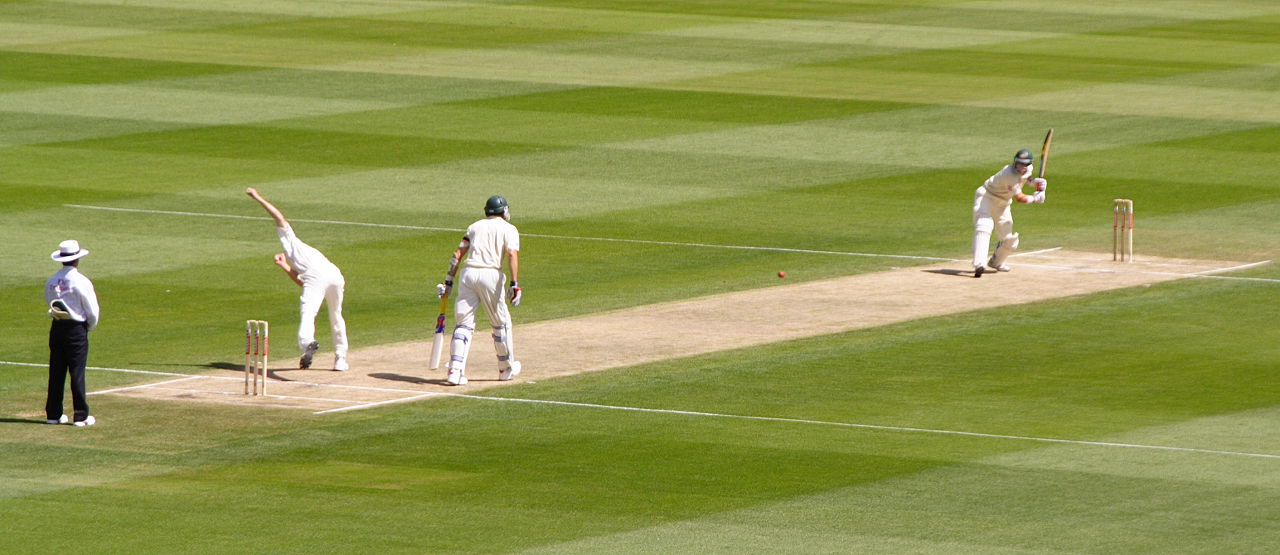
Test cricket is the original and longest form of international cricket. It is regarded as the highest standard of the game, distinguished by multi-day contests in which each team normally bats twice. The first recognised Test match was played between England and Australia at the Melbourne Cricket Ground in March 1877, an event often cited when describing the format's origins. For historical context and governing bodies, see general information on Tests, and contemporary perspectives from England and Australia at England and Australia, with the Melbourne ground noted at MCG.
Image gallery
10 Images



Structure and result
A Test match is scheduled to last up to five days and normally consists of four innings — two per team. There is no fixed limit on overs per innings, unlike shorter formats such as One Day Internationals or Twenty20. Each side accumulates runs across its innings; the team with the higher aggregate wins if the opponent has completed its innings. If both sides finish with identical totals, the match is a tie. If the allotted time expires before a result is reached, the match is declared a draw. For contrasts with limited-overs variants, consult introductions to ODIs and T20s.
Key playing concepts
Several features are central to Test play. A batting side may declare its innings closed to set up a result; the leading side can enforce a follow-on, requiring the opponent to bat again immediately if the lead exceeds a specified margin — a tactic used to press for victory. Pitch conditions change over days, making batting and bowling strategies evolve as the match progresses. Endurance, patience and squad management are as important as technical skill.
History and global spread
After the inaugural England–Australia contests, Test cricket expanded as the game spread across the British Empire and beyond. Early entrants included South Africa, the West Indies and later New Zealand and India; these early test debuts mark the internationalising of the sport. For timelines and nation-by-nation history see materials on imperial-era fixtures at early tours, and specific first fixtures with South Africa, New Zealand and India.
Competitions, significance and examples
Most Test cricket is played in bilateral series between national teams. Historic rivalries — notably the Ashes between England and Australia — remain high-profile. Since the late 2010s there has also been an organised points-based Test championship intended to link bilateral series into a broader competition. Test matches are central to player reputations and team rankings and are often viewed as the definitive measure of international cricketing ability.
Terms and distinctions
- Innings: A period of batting for one team.
- Declaration: When a captain ends his side's innings voluntarily to pursue a result.
- Follow-on: The option to make the trailing side bat again immediately under certain conditions.
- Draw vs Tie: A draw occurs when time runs out without a result; a tie is extremely rare and means equal totals after all innings.
For further reading on rules, fixtures and historic series, resources and archives linked from governing bodies and specialist sites provide detailed schedules and analyses — examples can be found via official policies, venue histories such as ground pages, and nation-specific pages at England and Australia.
Additional references and curated overviews are available through general sport guides and encyclopedic entries; for accessible introductions see historical summaries, competition descriptions at ODI and T20 portals, and national cricket histories at South Africa, New Zealand and India.
Questions and answers
Q: What is Test cricket?
A: Test cricket is the longest and oldest type of international cricket. It consists of a series of 5-day matches between two teams, with each team's two innings' scores being added together to find the total runs. The team with more runs wins the match if the other team has completed both of their innings, with there being a tie if they have an equal number of runs; otherwise it is a draw.
Q: When was the first officially recognized Test match?
A: The first officially recognized Test match took place on 15–19 March 1877 and was played between England and Australia at the Melbourne Cricket Ground, where Australia won by 45 runs.
Q: Who did England play in early test matches?
A: In early test matches, England played against other sides in the British Empire.
Q: When were test matches first played outside of Britain?
A: Test matches eventually spread to other countries around the world in later years.
Q: What types of international cricket are there besides Test cricket?
A: Besides Test cricket, there are also One Day Internationals (ODIs) and Twenty20 internationals (T20s).
Q: How long do test matches last?
A: Test matches last for 5 days.
Q: How does one determine who wins a test match?
A: To determine who wins a test match, each team's two innings' scores are added together to find the total runs. The team with more runs wins the match if the other team has completed both of their innings, with there being a tie if they have an equal number of runs; otherwise it is a draw.
Related articles
Author
AlegsaOnline.com Test cricket: the traditional five-day international format Leandro Alegsa
URL: https://en.alegsaonline.com/art/97204
Sources
- espncricinfo.com : "A brief history of cricket"