
Territory of the Saar Basin (Saargebiet) — League of Nations mandate, 1920–1935
Internationally administered region on the Franco‑German border created by the Treaty of Versailles (1920). Administered by the League of Nations, rich in coal, returned to Germany after the 1935 plebiscite.
The Territory of the Saar Basin was a distinct political unit created after World War I and administered under international supervision. In German it was commonly called Saargebiet or Saarbeckengebiet, and in French as Le Territoire du Bassin de la Sarre. Its status derived from the Treaty of Versailles and it was governed by a commission of the League of Nations for a fixed period beginning in 1920.
Image gallery
5 Images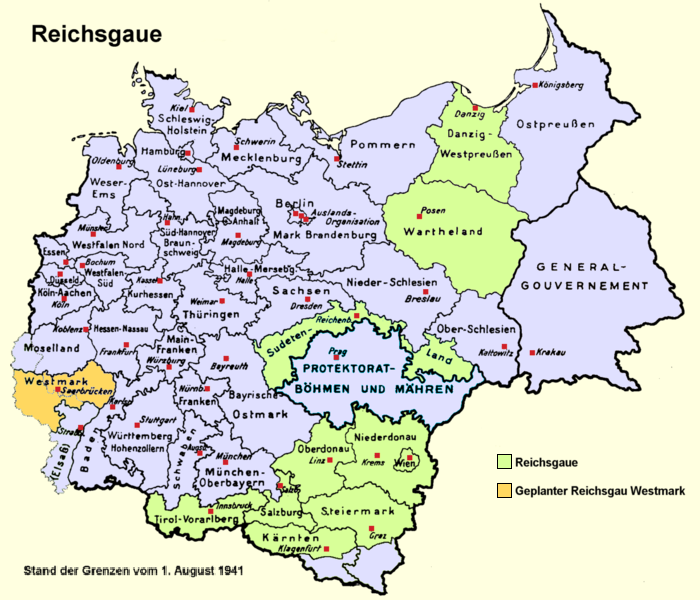


Administration and population
The League's administration aimed to provide neutral oversight in a region of competing strategic interest. A High Commission based in the capital, Saarbrücken, managed civil affairs, public order and economic arrangements during the 15‑year mandate. The basin was home to a largely German‑speaking population; in 1933 the recorded population was about 812,000.
Territory and composition
Geographically the Territory of the Saar Basin comprised portions of the Prussian Rhine Province and the Bavarian Palatinate of the Rhine. Its borders were drawn to include the area's major coalfields and industrial towns. The territory was slightly smaller than the later German state of Saarland and is commonly contrasted with that modern political entity in historical accounts; some maps and descriptions also refer to evolving boundaries under subsequent arrangements such as the post‑World War II protectorate period (Saarland).
Economic importance
The Saar's rich coal and steel industries made it an object of economic as well as political concern. Under the Versailles arrangements France obtained rights to exploit or oversee elements of the coal output as compensation for wartime damage, and the region's industrial capacity influenced both policy and local daily life throughout the mandate.
Plebiscite and later history
At the end of the 15‑year mandate a plebiscite was held in 1935 in which the majority voted to rejoin Germany; the territory was incorporated into Germany thereafter. After World War II the area again had a special status under French influence as the Saar Protectorate before eventually becoming the modern state known as Saarland and joining the Federal Republic of Germany in the 1950s.
Notable facts and timeline
- 1920: Creation under the Treaty of Versailles and League of Nations administration (League of Nations).
- 1920–1935: International mandate with capital at Saarbrücken.
- 1935: Plebiscite returns the territory to Germany.
- Post‑1945: Region passes through French protectorate arrangements and later becomes the state of Saarland (Saarland).
The Territory of the Saar Basin is often cited in studies of interwar diplomacy as an example of multinational governance intended to defuse territorial disputes and to manage valuable cross‑border resources without assigning them permanently to one rival power.
Questions and answers
Q: What was the Territory of the Saar Basin?
A: The Territory of the Saar Basin was a territory governed by the League of Nations under the Treaty of Versailles for 15 years from 1920. Its population in 1933 was 812,000, and its capital was Saarbrücken.
Q: How was the Territory of the Saar Basin usually referred to?
A: The Territory of the Saar Basin was usually called the Saar, or the German: Saargebiet.
Q: What countries made up the Territory of the Saar Basin?
A: The Territory of the Saar Basin was made up of parts of the Prussian Rhine Province and the Bavarian Palatinate of the Rhine.
Q: How does the Territory of the Saar Basin compare in size to the modern German state of Saarland?
A: The Territory of the Saar Basin was slightly smaller than the modern German state of Saarland.
Q: Who governed the Territory of the Saar Basin?
A: The League of Nations governed the Territory of the Saar Basin under the Treaty of Versailles.
Q: When was the Territory of the Saar Basin established?
A: The Territory of the Saar Basin was established in 1920 under the Treaty of Versailles.
Q: What was the population of the Territory of the Saar Basin in 1933?
A: The population of the Territory of the Saar Basin in 1933 was 812,000.
Related articles
Author
AlegsaOnline.com Territory of the Saar Basin (Saargebiet) — League of Nations mandate, 1920–1935 Leandro Alegsa
URL: https://en.alegsaonline.com/art/97140
Sources
- books.google.com : 1952
- worldstatesmen.org : Saarland in the page about Germany on WorldStatesmen.org