
Territories of the United States
An overview of U.S. territories: definitions, categories, examples, historical origins, legal status, and contemporary issues including disputed claims and representation.
Overview
The territories of the United States are subnational jurisdictions that fall under the authority of the federal government but are not states. They include inhabited islands with local governments as well as uninhabited insular areas administered for strategic, environmental, or historical reasons. The U.S. currently administers fourteen primary territories; in addition, the United States has asserted claims to two small features in the Caribbean commonly referred to together as Bajo Nuevo and Serranilla, which are presently controlled by Colombia. Territories are often described in official and academic sources as administrative divisions overseen in varying degrees by federal institutions.
Image gallery
10 Images


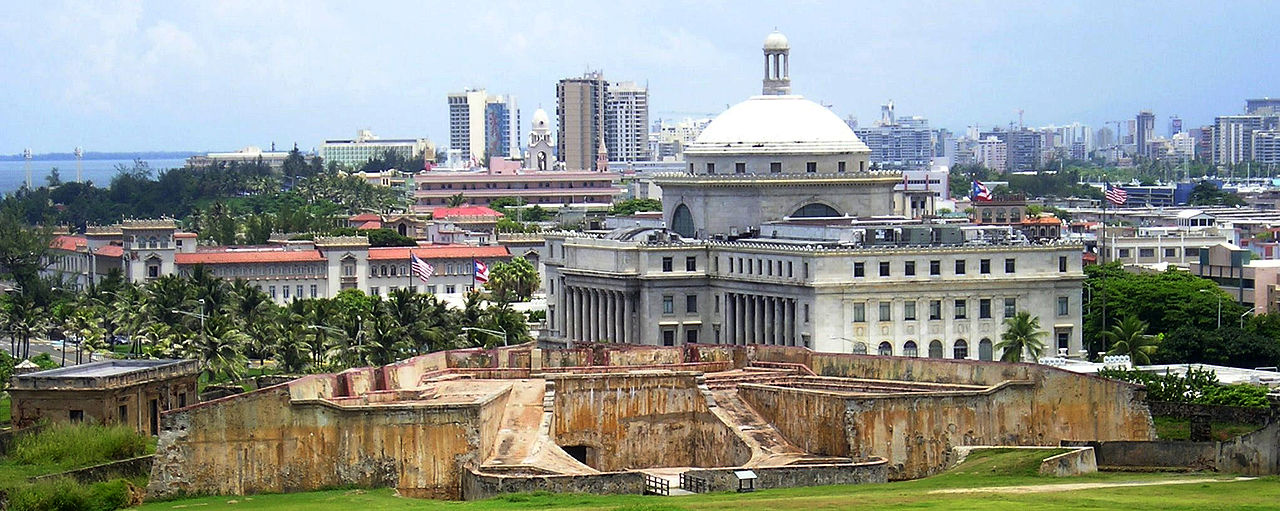


Types and characteristics
Territories are classified along several lines that affect governance and rights. Common distinctions include:
- Incorporated vs. unincorporated: whether the U.S. Constitution fully applies.
- Organized vs. unorganized: whether Congress has approved an organic act defining local government.
- Inhabited vs. uninhabited: inhabited territories have permanent civilian populations; many remote atolls and reefs do not.
Familiar inhabited examples are Puerto Rico, Guam, the U.S. Virgin Islands, the Commonwealth of the Northern Mariana Islands, and American Samoa. These differ in internal structures, legal traditions, and the scope of federal law that applies.
History and legal development
The modern U.S. territorial system grew from nineteenth- and early twentieth-century expansion, including acquisitions after conflicts, purchases, and statutes that extended U.S. authority overseas. Landmark judicial decisions and congressional acts created the current legal framework and distinctions, many of which date to the so-called Insular Cases and subsequent legislation. Other historical instruments, such as statutes addressing remote islands, also shaped various claims.
Political status, rights, and representation
Residents of most U.S. territories are U.S. citizens by birth, though the precise constitutional and statutory rights they enjoy can differ. A notable exception is American Samoa, where people are generally born U.S. nationals rather than citizens, a status that has prompted legal and political debate. Territories do not have voting representation in the U.S. Senate, and in the House they are represented by non-voting delegates or a resident commissioner who can participate in committees but cannot cast floor votes.
Importance and contemporary issues
Territories play roles in national defense, maritime jurisdiction (including exclusive economic zones), biodiversity conservation, and cultural diversity. Contemporary topics include discussions over statehood or changes in status, economic development, disaster recovery, and the balance between local self-government and federal responsibilities. Disputed or claimed features such as those mentioned above illustrate how historical claims, international law, and on-the-ground control can differ.
Notable distinctions
Key points to remember: territories are distinct from states and have variable constitutional treatment; their inhabitants may have differing federal rights; and territorial status can be changed by Congress or local referenda. For legal and administrative details, official sources and specialized studies provide the authoritative provisions that govern each territory.
Questions and answers
Q: What are territories of the United States?
A: Territories of the United States are sub-national administrative divisions that are supervised by the United States government.
Q: How many territories does the U.S. have?
A: The U.S. currently has fourteen territories in the Caribbean Sea and the Pacific Ocean.
Q: Which two territories are claimed by the United States but ruled by Colombia?
A: Bajo Nuevo Bank and Serranilla Bank are claimed by the United States but ruled by Colombia.
Q: If the two claimed territories are counted, how many U.S. territories are there in total?
A: If the two claimed territories are counted, the total number of U.S. territories is sixteen.
Q: Who supervises the territories of the United States?
A: The United States government supervises the territories of the United States.
Q: In which oceans are the U.S. territories located?
A: The U.S. territories are located in the Caribbean Sea and the Pacific Ocean.
Q: Are the territories of the United States independent or semi-autonomous?
A: The territories of the United States are not fully independent and enjoy only limited autonomy under the U.S. Constitution.
Related articles
Author
AlegsaOnline.com Territories of the United States Leandro Alegsa
URL: https://en.alegsaonline.com/art/97139
Sources
- worldatlas.com : "What Are The U.S. Territories?"