
Terraforming Mars: Concepts, Methods, and Challenges
Overview of proposals to alter Mars’ climate and surface to support Earth life: main approaches, technical and ethical challenges, history of the idea, and present-day alternatives.
Overview
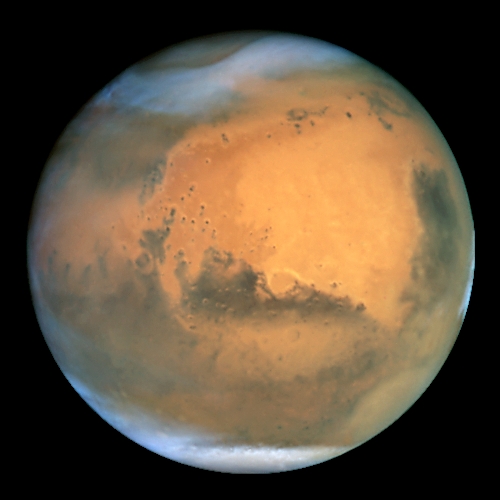
Terraforming Mars refers to the set of ideas and proposals for deliberately modifying the Red Planet's climate, atmosphere, and surface so that humans and other Earth life forms could live there without life-support suits or sealed habitats. The term is often used interchangeably with planetary engineering; readers can find general introductions under terraforming and specific material on Mars. The concept rests on changing a planet's environment through sustained, planned intervention rather than relying on natural processes alone.
Image gallery
10 Images



Key characteristics and objectives
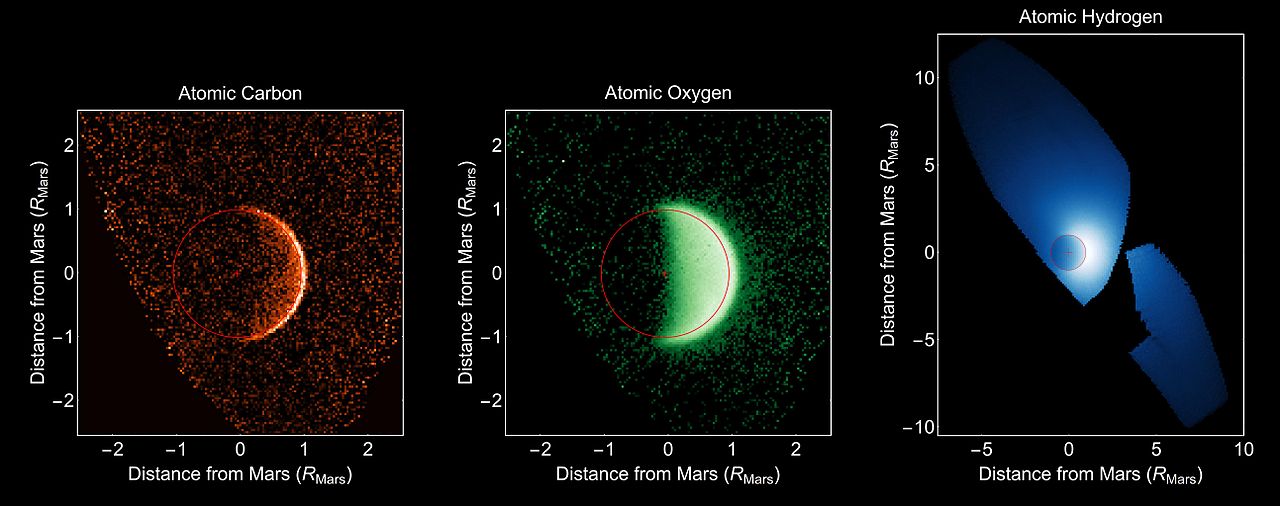
The main goals of Mars terraforming would be to raise temperature, thicken the atmosphere, increase surface pressure, and—if possible—introduce a breathable mix of gases or create habitable zones. Any plan must reckon with Mars's low temperatures, thin carbon dioxide–dominated atmosphere, weak magnetic field, and lower gravity, all of which affect how long an atmosphere can be retained and how living systems would function.
Proposed methods
Scientists and engineers have outlined a range of approaches, from relatively modest to extremely ambitious. These include:
- Releasing greenhouse gases (either manufactured or released from polar and subsurface stores) to trap heat.
- Deploying orbital mirrors to reflect extra sunlight to polar caps, causing sublimation of CO2 and increasing atmospheric pressure.
- Importing volatiles (water, ammonia) by redirecting comets or asteroids—an approach that poses large technological and safety challenges.
- Using genetically engineered microbes or plants to alter soil chemistry and gradually produce oxygen in localized areas.
- Large-scale engineering such as creating artificial magnetic shields or factories to produce gases—examples of deliberate artificial interventions.
History and development
The modern idea of terraforming gained attention in the 20th century as planetary science matured and the possibility of human travel to Mars became plausible. Early speculative work focused on imaginative scenarios; later decades brought more quantitative studies exploring energy requirements, timescales, and physical limits. Today, terraforming remains mainly theoretical, informed by atmospheric science, astrobiology, and engineering studies.
Challenges, risks, and distinctions
Major obstacles include the enormous energy and material inputs required, the uncertain retention of a rebuilt atmosphere given solar wind and lack of a strong magnetosphere, and the probable timescales—centuries to millennia—for planet-wide change. Ethical and legal issues are also central: planetary protection policies aim to prevent harmful contamination of indigenous ecosystems (if any), and there are debates about the right to alter another world. Notably, 'terraforming' is distinct from building sealed habitats or controlled biospheres, which are technically easier and currently the focus of human mission planning.
Importance and present alternatives
While full-scale terraforming is speculative, research and near-term activities—in-situ resource utilization, greenhouse experiments, and habitat design—can advance technology and inform long-term thinking. Small-scale, reversible experiments and robust planetary protection rules are widely advocated so that scientific knowledge and ethical concerns are preserved while exploration continues.
For further reading on the scientific, technical, and ethical dimensions, consult introductory resources and specialized reviews linked at terraforming summaries, planetary data for Mars, studies of the planetary environment, and engineering analyses of artificial interventions.
Questions and answers
Q: What is the terraforming of Mars?
A: The terraforming of Mars is the idea that humans can change the climate and surface of Mars to make it a place where humans and other life forms from Earth could live.
Q: Why do humans want to terraform Mars?
A: Humans want to terraform Mars to establish a habitat for themselves and other life forms from Earth.
Q: How does the terraforming of Mars work?
A: The terraforming of Mars works by changing the environment of the planet through artificial means.
Q: Is there a specific method proposed for terraforming Mars?
A: Yes, there are a number of proposed methods for terraforming Mars.
Q: What is the significance of the terraforming of Mars?
A: The terraforming of Mars is significant because it allows for the expansion of human exploration and potentially creating a new place for human civilizations.
Q: Is the concept of terraforming limited to Mars?
A: No, the concept of terraforming is applied to other planets.
Q: Is the terraforming of planets purely theoretical or has it been attempted before?
A: The terraforming of planets has only been done in experimental simulations because it's still essentially theoretical.
Related articles
Author
AlegsaOnline.com Terraforming Mars: Concepts, Methods, and Challenges Leandro Alegsa
URL: https://en.alegsaonline.com/art/97110
Sources
- users.globalnet.co.uk : "Technological Requirements for Terraforming Mars"
- amazon.com : 0316771635